Online Reporter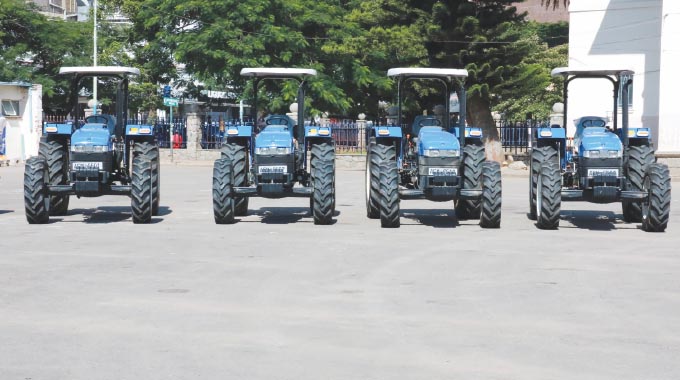
Sikhumbuzo Moyo,[email protected]
THE Zimbabwe National Road Administration (Zinara) will henceforth prioritise equipping all road authorities across the country, a move expected to significantly reduce the outsourcing of road maintenance machinery by local councils.
For years, both urban councils and rural district councils have relied heavily on hiring road construction and maintenance equipment, incurring substantial costs and straining limited budgets, often compromising broader service delivery obligations.
Under the new strategy, Zinara will focus on capacitating road authorities with essential plant and equipment, enabling them to carry out routine and periodic maintenance in-house.
Speaking on Friday at the commissioning of the City of Bulawayo’s road maintenance equipment — procured with part of the 2025 Zinara disbursements, Zinara chief executive officer Mr Nkosinathi Ncube, represented by Engineer Enock Masocha, said the initiative will improve efficiency, reduce project delays linked to procurement processes, and lower long-term operational costs.
“The strategy is aimed at enhancing accountability in the use of road funds while strengthening the capacity of local authorities to respond promptly to infrastructure challenges such as potholes, washways, and road surface failures,” he said.
By investing directly in equipment, Zinara seeks to build sustainable maintenance systems that will improve the condition of the country’s road network, enhancing mobility, safety, and economic productivity, said Mr Ncube.
“As we move forward, Zinara is adopting a more targeted approach to road infrastructure support. Our focus going forward is clear — we will prioritise the equipping of all road authorities across the country.
“In the next five years, we are looking to a Bulawayo City Council, which can do all the works they want to do in-house, as opposed to hiring. Even though contractors will still have a part to play, a resident should be able to walk to the city and ask for service and get that service without being referred to procurement processes,” he said.
Mr Ncube described the commissioning as more than a handover, calling it “a demonstration of what becomes possible when national institutions and local authorities work together with a shared commitment to improving the country’s road network.”
He acknowledged the dilapidated state of most Bulawayo roads and the city’s plea for about US$15 million funding per year to maintain the road network.
While the full funding may not be immediately available, Mr Ncube said the procurement of in-house equipment could allow the local authority to carry out essential maintenance at a lower cost.
He commended the city for prioritising durable, high-impact machinery, noting that no amount of funding can achieve desired results without local capacity to execute road works efficiently.
“In the past, procurement issues have caused the City Council to sometimes fail to access Zinara funding. Equipped with your own equipment, that will be a thing of the past,” he said.
Meanwhile, Zinara has reported a significant increase in revenue collections for 2025, raising ZiG12,5 billion (US$469,3 million), up from ZiG6,4 billion (US$366,95 million) in 2024. Of this, ZiG9,1 billion (US$341,8 million) was disbursed — 73 percent of revenue, exceeding the target of ZiG8,3 billion (US$305 million) — to road authorities and high-impact projects, including maintenance of the Mutare-Plumtree Road financed through the Development Bank of Southern Africa.
Of the total disbursements, ZiG1,173 billion went directly to road authorities, while ZiG68,95 million (equivalent to 2 million litres of fuel) was allocated to capacitate local authorities to carry out in-house road works. By December 31, 2025, local authorities had drawn more than 1.76 million litres of fuel.
Disbursements towards high-impact projects managed through Treasury and the Department of Roads amounted to ZiG5,6 billion (US$208,8 million) — 23 percent above target. A further ZiG85,02 million was released for emergency road works and fully utilised.
Zinara is mandated to collect and disburse road user fees to the country’s four road authorities — the Department of Roads, Rural Infrastructural Development Agency (Rida), Urban Councils, and Rural District Councils, for maintenance, rehabilitation, and construction projects.