Chronicle Editor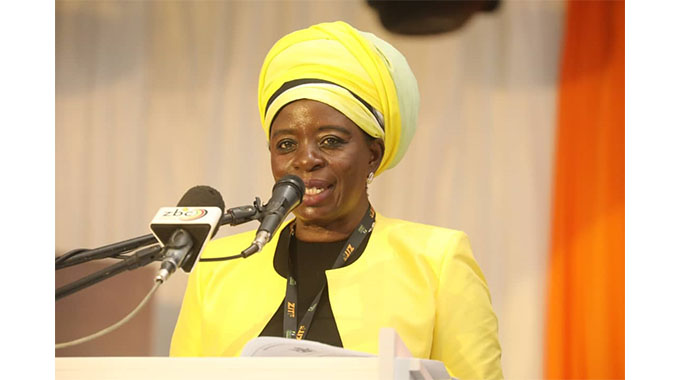
Michael Magoronga, Midlands Correspondent
THE new deal between the Zimbabwe Iron and Steel Company (Zisco) and Kuvimba Mining House came at a time when some huge international companies had failed to make the grade.
The revival of Zisco has been on the cards for a long time and industries that used to rely on it for raw materials had lost hope.
The company stopped production in 2008 due to a myriad of challenges blamed mostly on mismanagement but when the Second Republic came into office, there were loud calls to prioritise the revival of Zisco which could save the country about US$1,1 billion it is spending on importing steel and steel products annually.
Several global steel giants including Essar Holdings, Jindal Steel and Power and Global Steel Holdings all from India and R and F from Hong Kong have shown interest in investing in Zisco but have been reluctant to commit funds.
The sleeping steel giant has a potential to export steel worth US$1 billion annually and this should push a serious investor to commit funds in its revival but that has not been the case.
This has somehow led the Government and the Zisco board to invest trust in a local company — Kuvimba which has shown interest in reviving the company.
In the approximately US$1 billion deal, Kuvimba is expected to sign a three-year deal which is meant to strengthen the balance sheet and pave way for other potential investors. It is tasked with the objective of revitalising the iron ore mining side.
Kuvimba has won the hearts of the Government and the board with its track record where it has assisted the revival of Zim-Alloys, Trojan, Fredda Rebecca, Jena and Shamva mines to name but a few.
Zisco Board Chair Engineer Martin Manuhwa expressed confidence in the project which he said was aimed at using local companies in line with Vision 2030 of import substitution, value addition and job creation as momentum builds towards attaining an upper middle-income economy.
“Kuvimba has a proven track record given the due diligence that we carried and the CVs that they gave us.
They have the technical expertise as well as the financial capacity to revitalise the company in no time,” said Eng Manuhwa.
Unlike some foreign companies who demanded a certain percentage in equity, Kuvimba came with financial and technical support to boost the balance sheet and pave the way for other investors.
The company, being local is grounded in what needs to be done.
“We got nine responses and from the nine, only seven meet the standard requirements of what we wanted in terms of utilising local resources, revitalising the plant as soon as possible and maintaining the shareholding status of the company.
It was quite a laborious task but we are glad that after a long search we did find the best for what we were looking for,” he explained.
“Most investors were looking for 98 percent equity which we don’t even have as we only have an 89 percent equity in the company.
They were asking for a bring everything and take everything approach which we could not settle for.”
Industry and Commerce Minister Dr Sekai Nzenza said Kuvimba was local and understood the current situation in the country.
“We wanted to ensure that the investor shares the same vision that the country has in line with NDS1. All of the potential investors did not meet the Government requirements.
The Second Republic is about production, value addition, import substitution and employment creation and we believe Kuvimba is focused on that,” she said.
She said the country had vast amounts of iron ore lying idle but lacks the necessary technology to extract them.
“That is where Kuvimba came in to say we will assist you mainly on the mining side, bring in equipment to complement what we already have, add value and cut on imports,” she said.
“Zisco is a national asset and the Government wants to ensure everyone benefits from the natural resources that are available.
The resuscitation of Zisco will not only create employment for people but will mean that we no longer import iron and steel for our industry and for infrastructure development.”
The coming in of a local company is confirmation of President Mnangagwa’s “Nyika inovakwa nevene vayo” (a country is built by its owners) mantra where local solutions are applied to local problems.
“We have the resources and we need the technology. Kuvimba is going to create a special purpose vehicle where we will have state-of-the-art equipment from Germany to complement what we already have,” she said.
The company’s CEO Dr Fari Karonga is equally excited about the deal while stakeholders have expressed optimism with Business Economic Forum (BEEF) president Dr Solomon Matsa saying giving trust to local investors was the best decision made by the Government as it was developing local skills during the reconstruction process and the skills to operate the plant afterwards.
He said there was going to be minimal externalisation of profits.
“There is minimal externalisation of profits which allows money to flow and circulate in the country. Profits from other businesses are invested locally as opposed to foreign investors who take the profit to their country.
It is a very positive development when our people are given a chance to be involved in big economic revival projects,” said Dr Matsa.
He also said the fact that local currency was likely to be used in the revival of the company, would again lessen the burden of borrowing forex.
Zimbabwe Institute of Foundries chief operations officer Mr Dosman Mangisi said there was a lot of iron demand within the country which could be satisfied by the reopening of Zisco.
“We have a demand of about 500 tonnes of pig iron in the country which cannot be met currently.
We also need manganese and silica amongst others and I am saying Zisco can be able to supply this and we cut on our import bill. I believe Kuvimba has the capacity to resuscitate Zisco,” he said.
He said Kuvimba should also work together with other players in the iron and steel industry like foundry companies so that they could help to close all the existing gaps.
Speaking during the Zimbabwe International Trade Fair (ZITF), Confederation of Zimbabwe Industries (CZI) president, Mr Kurai Matsheza said the manufacturing sector should wean itself from import dependence as this was unsustainable for the economy.
Mr Matsheza called for a quick shift towards upscaling local products’ value addition.
“When you look at the six contributors to the Gross Domestic Product (GDP); agriculture, mining, manufacturing, wholesale, information, finance and insurance, the biggest is the wholesale sector.
The manufacturing sector is lagging. This is an issue because the manufacturing sector should take the lead,” he said.
The Government is already pushing the drive towards improving investment in domestic value addition and beneficiation under its US$8 billion Industry and Commerce Roadmap.
This is critical under Vision 2030 where the Second Republic is targeting to grow the economy to an upper middle-income economy with a Gross Domestic Product per capita of US$3 500 from US$1 720 in 2018.
The Government has already started implementing the National Development Strategy (NDS 1), which runs from 2021 to 2025 with a focus on stimulating productivity across the economy. @michaelmagoron1


 Online Reporter