Edgar Vhera
Specialist Writer – Agribusiness
THE Zimbabwe Mercantile Exchange recorded a 60 percent increase in turnover, from US$803 850 to US$1 289 000 in the session of its weekly trading after its launch.
This comes as more farmers are embracing the system.
According to the Agriculture Food Systems and Rural Transformation Strategy 2 (AFSRTS 2) 2026-2030, the ZMX is the most diversified agricultural marketing centre expected to facilitate price discovery and provide an alternative marketing channel for a broad range of crop, fisheries and livestock products.
The Grain Marketing Board (GMB) has a 25 percent shareholding of the ZMX.
The ZMX, as an alternative market, should raise capital for farmers and be available from the village to the national level.
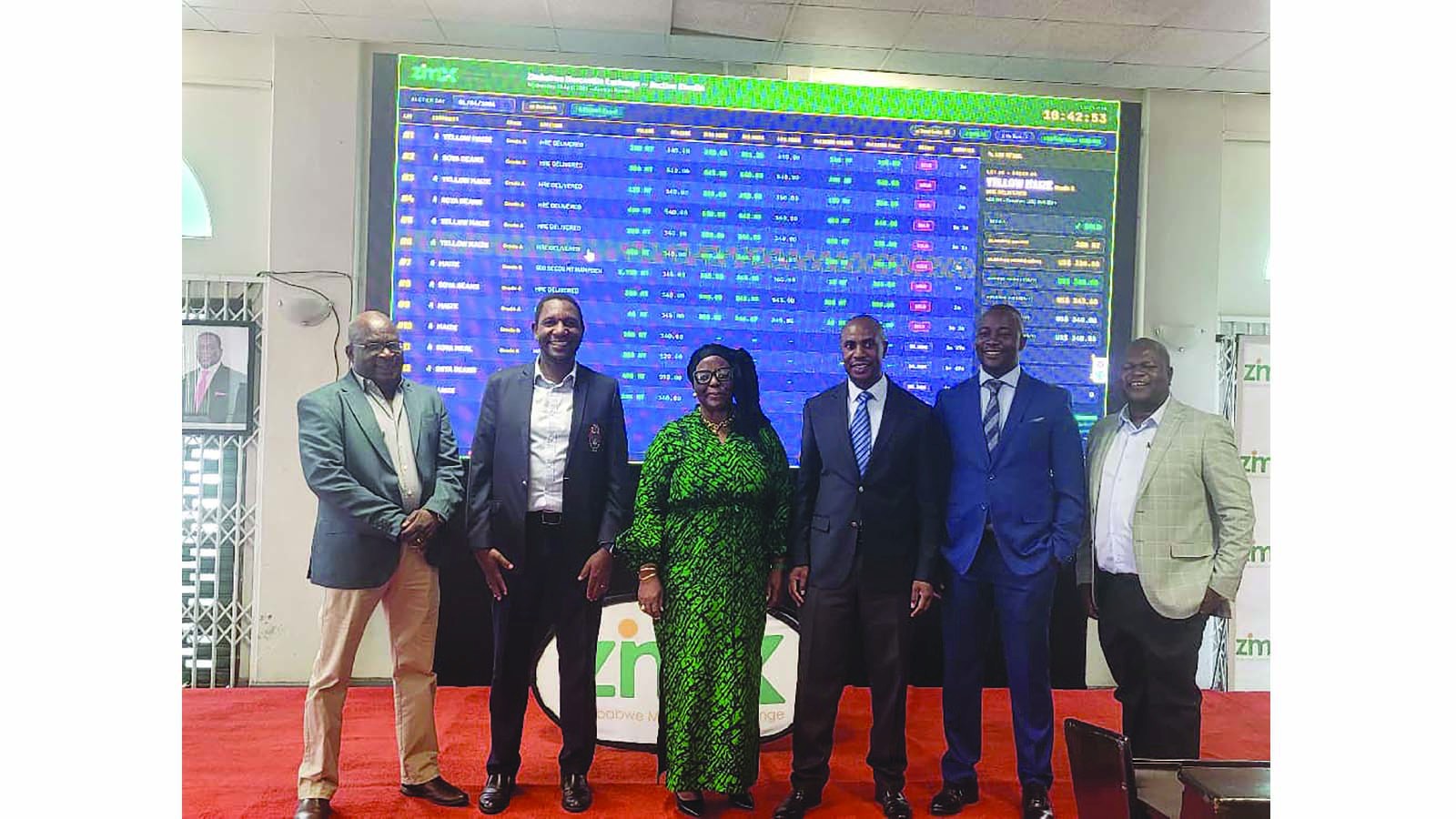
ZMX successfully launched the 2026 auction marketing season in Harare on April 1 under the theme: “Building Transparent Markets for a Prosperous Agricultural Future.”
On the launch day, 1 740 tonnes of maize and soyabeans valued at US$803 850 were traded. Yellow maize was sold at US$350 per tonne while soyabeans had the volume weighted average price (VWAP) of US$545 per tonne.
The ZMX said there were unmatched trades where 300 tonnes of soya meal were demanded at US$510 per tonne.
The auction results revealed that there was an outstanding demand of 1 000 tonnes of yellow maize at US$310 per tonne and 460 tonnes of white maize at US$360.
The results from the initial auction disclosed that an outstanding supply of 765 and 120 tonnes of white maize at US$365 and US$360 per tonne, respectively and 300 tonnes of soya meal at US$360 were unmatched.
The ZMX had initially set April 15 as the next auction date, but this was moved by three weeks to May 6 to allow the harvested crop to dry and lower the moisture level to the required percentage.
Latest statistics from ZMX auction results dated May 6, show that 3 200 tonnes of yellow maize and soya beans were traded and racked in US$1 289 000 under nine different lots from seven active buyers.
“Soyabean price marginally rose one percent to US$550 from US$545 per tonne, while yellow maize price decreased by four percent to US$336 from US$350 per tonne.
“Maize supply increased on the exchange as moisture normalises and price deadlock remains persistent for white maize, which affected trading,” said the ZMX.
The auction results indicate that 2 000 and 200 tonnes of soyabean bids were rejected. The same fate affected 2 500 tonnes of white maize at US$330 per tonne.
Livestock and Meat Advisory Council (LMAC) and Stockfeed Manufacturers Association of Zimbabwe (SMAZ) executive administrator, Dr Reneth Mano, said for the 2026/27 marketing year, Zimbabwe’s domestic maize-based agro-processing food and feed industry would require at least 1, 2 million tonnes of maize.
“The stockfeed and livestock production industry alone will require 650 000 tonnes of maize and 200 000 tonnes of soya beans for livestock production and supply of animal proteins to keep Zimbabwe 100 percent self-sufficient in the production of meats, table eggs and farmed fish.
“The ZMX’s weekly public grain and oilseed auctions are a welcome development because they will provide real-time, accurate weekly updates on grain and oilseed market prices to farmers in every district and every village,” he said.
Zimbabwe Farmers union (ZFU) secretary general, Mr Paul Zakariya, said ZMX’s weekly auction was a very good initiative for popularising the strategic role of a transparent, efficient private sector-anchored grain marketing system and regionally integrated competitive domestic price discovery mechanism for globally tradable grains and oilseeds.
Grain Millers Association of Zimbabwe (GMAZ) spokesman, Mr Adolf Chirimuta, said the industry was ready and willing to purchase whatever volumes are made available through the exchange, as processors require consistent and reliable supplies of raw materials to sustain operations and support value addition.