Online Reporter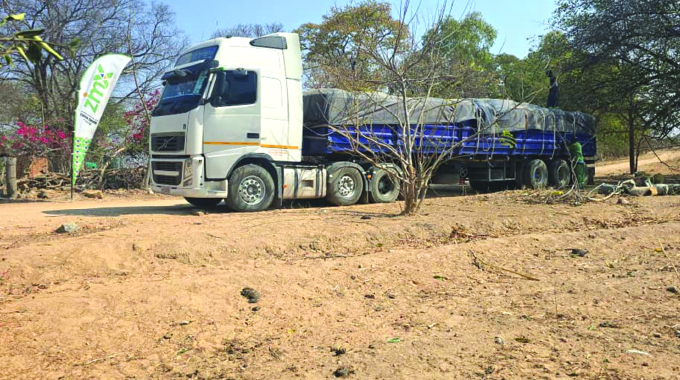
Edgar Vhera
The Zimbabwe Mercantile Exchange is setting up grain purchasing points near farmers to ensure a smooth marketing process.
Buying points have already been set in Hurungwe.
The aggregation process is designed to streamline the buying process, allowing for efficient transportation of the maize to designated delivery centres where it is needed.
ZMX chief executive officer, Mr Collen Tapfumaneyi, said farmers would be paid through various secure channels, such as Mukuru and EcoCash.
“This approach is aimed at ensuring security and convenience for all participating farmers. The collected maize will undergo grading, weighing and moisture testing to avoid rejection by prospective buyers,” he said.
The Government recently announced that the Grain Marketing Board (GMB) would purchase all strategic commodities financed under the Presidential Input Scheme (PIS) and would be the buyer of last resort, with ZMX as the buyer of choice, which allows price discovery starting this marketing season.
The ZMX has been buying grain at collection points in Hurungwe.
In a notice to farmers, the ZMX said it would be buying grain directly from farmers from Wednesday to today.
“Attention farmers, we will be buying maize in Hurungwe directly from farmers, at very good prices September 3 and 4. Bring maize to these collection points: Kapfunde, Kasimure, Karoi, Matiki, Mauya, Mudzimu, Moroko, Nyarumwe and Zvarai.”
Mr Tapfumaneyi said there was a warehouse covering the Hurungwe area to aggregate grain intake.
He said farmers would not need to wait indefinitely for payment, as the system is designed to expedite the selling process while ensuring quality standards.
ZMX established buying points in the Hurungwe area in response to an outcry from some farmer unions’ uncontracted farmers, who indicated that they had maize for sale but were worried about the long distance to the centralised warehouse receipt and high transport cost.
“Our choice to operate in Hurungwe is based on statistics provided by the Zimbabwe Farmers union (ZFU), which indicate a significant supply of maize in the region.
“This data-driven approach allows us to effectively meet the needs of local farmers and buyers,” he said.
Mr Tapfumaneyi said farmers could bring any quantity of maize from 50kg upwards and the grain is graded and given a warehouse receipt, a financial instrument they can use to get cash or inputs.
Currently, the price varies per order or buyer between US$375 and US$380 per tonne if it is delivered in Harare.
ZMX recently signed a five-year memorandum of understanding (MoU) with the largest grain consumer, the Grain Millers Association of Zimbabwe (GMAZ), to provide farmers with a ready market for their produce.
The deal is aimed at creating a reliable, market-based system for buyers and sellers, with millers accessing grain through forward commitments while farmers and aggregators gain the ability to raise financing before actual sale.
This year, grain marketing is done in five different categories, namely: climate-proofed Presidential Input Scheme (PIS)(Pfumvudza/Intwasa), self-financed, private contractor financed, Agricultural and Rural Development Authority (ARDA) financed and National Enhanced Agriculture Productivity Scheme (NEAPS) financed by Agriculture Finance Corporation (AFC), Commercial Bank of Zimbabwe (CBZ) and NMB.
The GMB will purchase all strategic commodities financed under the PIS and will be the buyer of last resort.
The ZMX will provide a central warehouse receipt system and a spot market trading platform for agricultural commodities.
Self-financed farmers will sell to the best advantage on the market or to GMB, with the latter providing commercial warehouse receipt services to all players.
The Government is promoting the use of the ZMX in the marketing of agricultural produce to enhance farmer income and reduce post-harvest losses.
In this regard, the GMB will be focusing only on procuring grain for the strategic grain reserve (SGR), with the rest of the produce being sold to private players through the ZMX.
Broadening market options for farmers reduces fiscal burden and over-reliance on the GMB.
This will allow market access for farmers, price discovery and convenient trading of agricultural commodities.