Online Reporter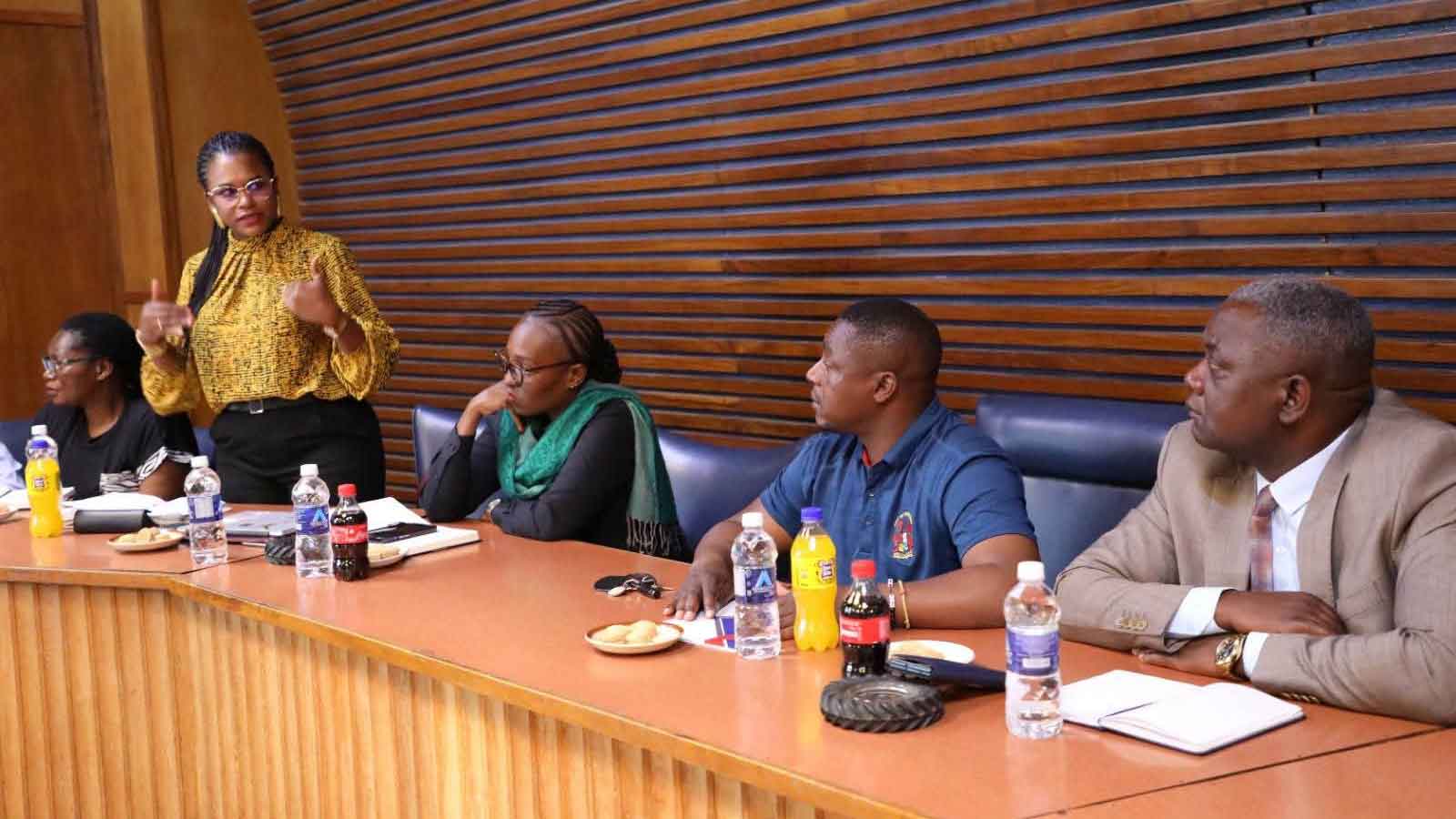
THE Zimbabwe Olympic Committee have officially revealed a series of ambitious new development projects in their latest annual report, presented during their indaba.
Following their annual meeting, ZOC have laid out a transformative vision for the future of sport, anchored by a sweeping infrastructural development pipeline. The highlight of this new strategy is the establishment of the OlympAfrica Centre in Masvingo.
This milestone development follows the City of Masvingo’s landmark donation of at least three hectares of land for the project.
To be constructed in partnership with the Association of National Olympic Committees of Africa and the OlympAfrica Foundation, the multi-purpose complex is designed as a legacy investment intended to boost both elite sporting success and broader community development within the province. In the capital, the administrative heart of the organisation is also receiving a major upgrade.
ZOC have secured a US$50 000 grant to fund a comprehensive facelift of its Harare headquarters.
The renovation project aims to transform the property into a modern, state-of-the-art Olympic House that befits the organisation’s institutional stature.
Construction and interior modernisations are targeted for completion by the end of 2026.
Beyond brick-and-mortar facilities, the ZOC Board is aggressively expanding its nationwide talent pipeline.
In December 2025, the board approved the roll-out of five High Performance Centres strategically positioned across the country.
These hubs are located in Nyanga, Victoria Falls, the Northern Region, the Southern Region, and the Central (Mid-lands) Region. These five centres will serve as the physical infrastructure backbone for ZOC’s “Elite Performance Engine.”
They will be directly linked to local Nursery Development Centres to ensure structured talent identification, rigorous profiling, and continuous athlete development — guiding promising youths all the way to the elite international level.
By decentralising high-performance training and investing heavily in rural and provincial talent hubs, ZOC are signalling a new era of accessibility, structured growth, and modernised administration for Zimbabwean sports.
High-level talks held with Masvingo mayor
ZOC) held high-level talks with Masvingo civic leaders, led by Mayor Aleck Tabe, to fast-track plans for the construction of the country’s OlympAfrica Centre. The milestone development follows the Masvingo City Council’s decision to donate a minimum of three hectares of land to host the multi-purpose sports and community facility.
The high-powered ZOC delegation included board members Tawanda Sithole and Abel Chimukoko, alongside secretariat leader and chief executive Marlene Gadzirayi.
They were joined by OlympAfrica Foundation Programme Manager, Marieme Coumba, who travelled from Senegal for a critical site visit and project presentation. The project is a collaborative venture funded and implemented alongside the Association of National Olympic Committees of Africa (ANOCA) and the OlympAfrica Foundation.
Once functional, the hub will serve as a socio-economic catalyst for the region, blending youth sports development with income-generating projects to ensure long-term financial self-sustainability.
Project coordinators expect the facility to anchor local youth empowerment, talent identification, employment, and regional sports tourism.
During her presentation, Coumba thanked the City of Masvingo for donating the land and revealed that the foundation will inject US$180 000 toward infrastructure construction, with ZOC providing part of the funds.
“For us to build a centre somewhere, the budget from the foundation is US$180 000, and the NOC has to come also with US$30 000 and the land, obviously, because they are the ones spreading the Olympic values locally. So, the budget for our centre is US$210 000 that we bring in to build the centre,” Coumba said.
She noted that the complex will feature a football pitch, a multi-purpose court, and an indoor activities hall.
“So, the foundation builds centres all over Africa, basic facilities with a basic football pitch, a multi-purpose court, and a big hall where we can do indoor sport, cultural activities, etc. Once we build those centres, we just don’t leave it with the National Olympic Committee.”
Coumba emphasised that the foundation’s involvement extends far beyond construction, focusing heavily on community legacy and structural ownership.
“But what is important here is the legacy and the impact that we have on society after building those sport complex. Once we build the sport complex, we don’t just leave it with the National Olympic Committee, because the Olympic Africa centres belong officially to the National Olympic Committee,” Coumba added.
“We come with the project, we come with the money, we built the centre, and also we come with the programme, but officially it belongs to the NOC. What does it mean? It means that for Olympic Africa to come to a country, the request should come from the National Olympic Committee, because the centres are centres that spread Olympic values. And the institution that does that in each country is the NOC.”
The facility primarily targets school-going children, giving them a structured environment to nurture their athletic talents.
“Most of the time when we are building a centre somewhere, we ask that it be surrounded by schools. Because the programme we’re providing, the children from those schools and the children from the community are the ones coming to the centre to practise daily sport activities and also benefit from the programmes that we’re providing. — zocwebsite


 Bongani Ndlovu