Online Reporter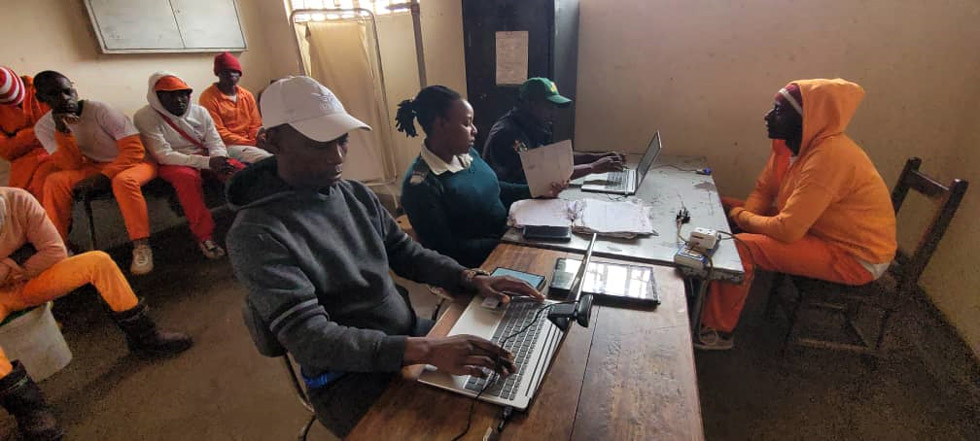
Tendai Gukutikwa
Post Reporter
THE Zimbabwe Prisons and Correctional Service (ZPCS) has implemented the Electronic Inmate Data Capturing Programme (EIDCaP) across its prisons – in a move that seeks to modernise record-keeping, and pave the way for advanced correctional reforms, including the introduction of a parole system.
In an interview at Mutare Farm Prison, ZPCS Assistant Commissioner Alois Sibanda, said the digitisation of inmate records marks a significant milestone for the organisation, which has historically relied on paper-based systems.
“This is a giant step forward. For a long time, our operations have been manual. We had not yet fully embraced technology in storing inmate data, but this programme will reduce paperwork, and ensure easy access to accurate inmate information and records,” said Assistant Commissioner Sibanda, adding that the EIDCaP will provide prison authorities with reliable data to inform decisions on rehabilitation and future correctional policies.
“The data we are capturing will be crucial for management when making decisions on programmes such as parole, which we are likely to adopt in the near future.
This aligns with global trends in corrections, where the emphasis is shifting from punishment alone to rehabilitation and reintegration into society,” said
Assistant Commissioner Sibanda.
If implemented, the parole system will mark a radical departure from the current framework, which requires inmates to serve their sentences in full, save for Presidential mnesties and remissions.
Parole will allow carefully selected inmates, based on their behaviour, rehabilitation progress, and risk assessment, to serve part of their sentence under supervised release.
While the country has a total of 25 000 inmates within its prisons, Manicaland houses2 242 of them in its five main prisons and various satellite prisons.
In total, the nation has 48 main prisons.
Correctional experts have long argued that parole, not only reduces overcrowding in prisons, but also incentivises good behaviour and rehabilitation among inmates.
By linking release to conduct, inmates are given a clear stake in reforming themselves.
The introduction of EIDCaP is part of a broader digitalisation drive by the ZPCS, which is aligned with Government’s vision of creating smart prisons. Assistant Commissioner Sibanda said smart prisons will integrate technology to improve security, enhance inmate management, and support rehabilitation processes. These innovations also include virtual court hearings, which will reduce the need to transport inmates, and digital tools for monitoring rehabilitation progress.
Assistant Commissioner Sibanda stressed that ZPCS is, not only investing in digital systems, but also strengthening rehabilitation programmes across its prisons, ranging from agriculture and vocational training to counselling and education.
The aim, he said, is to ensure that when inmates eventually return to their communities whether through parole, remission, or after serving their full terms, are better equipped to contribute meaningfully to society.
“This digitalisation and data capture programme is about knowing our inmates better, tracking their progress, and making evidence-based decisions. That is how we can identify those who are truly rehabilitated and eligible for programmes like parole. The exercise, which we are doing at all our prisons, and covering all convicted inmates, forms part of a wider nationwide initiative that will eventually cover all correctional facilities in Zimbabwe. Once complete, it will allow ZPCS to build a centralised database of inmates, accessible to management for decision-making. This will, not only streamline administrative efficiency, but also improve transparency and accountability in the system,” he said.
The move aligns with Government’s broader thrust to modernise public institutions through digitalisation, while also addressing long-standing challenges in the correctional system, such as overcrowding, limited resources, and re-offence.
For inmates at Mutare Farm Prison, the prospect of parole has already stirred hope.
One inmate, Editor Chihwayi who comes from Nyanga, serving a nine-year sentence for stock theft, said he sees the initiative as a lifeline.
“If parole is introduced, it will give people like me a second chance to prove that we can change. I made mistakes, but I have been working hard in the farm rehabilitation programmes here. I want to go back to my children while they are still young.
“With supervised release, I can still be a better father to them,” he said.
Another inmate, Prosper Mangwiro, who was also convicted of stock theft and serving a lengthy jail term, said the prospect of parole has given him renewed motivation to stay disciplined.
“Our names and data being in the data base that might make parole possible is a welcomed initiative. Right now, you just serve your time and hope for amnesty, but if parole is introduced, it will push us to work harder to show that we are ready for social reintegration. I believe I can start afresh if I get that opportunity,” he said.
If parole is introduced, Zimbabwe will join the growing list of African countries, including South Africa, Kenya, and Zambia, which have long used parole systems to balance justice with rehabilitation.