

 admin
admin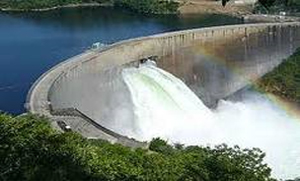
Walter Nyamukondiwa
Kariba Bureau
The Zambezi River Authority (ZRA) is considering increasing the Kariba rations for the last three months of this year and is working on how it will set the rations for next year as it undertakes new hydrological simulations.
With almost all of Southern Africa, and in particular south-east Angola and north-west Zambia where most Kariba water comes from, likely to have good rains next season, the ZRA, which manages Lake Kariba and allocates the annual rations for Kariba South and North power stations, is having another look at the end of this month.
The Zimbabwe Electricity Supply Authority (Zesa) has been working within its ration of 21 billion cubic metres for this year, having now used 15,75 billion cubic metres.
There is never enough Zambezi water for Zesa to run Kariba South flat out at 1 050MW for 24 hours. But the oversized power station is now used to cope with surges.
Zesa can ramp up output at peak hours to the maximum and then cut back for the rest of the day and even cut down to just a single generator at say midnight if the base load from Hwange can cope with demand then.
Hydro is the most flexible element in its mix, since a turbine and generator set can be brought up to full speed in a few minutes.
In his latest status update, ZRA chief executive Engineer Munyaradzi Munodawafa said while the outlook was positive, hydrological simulations needed to be undertaken to consider all factors that could influence an upward, constant or downward review of water allocations.
The Southern African Regional Climate Outlook Forecast SARCOF-25 and forecasts from the Meteorological Services Department of Zimbabwe and their Zambian counterparts predict normal to above normal rainfall for SADC.
While farmers are keen on knowing what falls in their area, ZRA looks at rainfall in south-eastern Angola, the largest source of Kariba water, and western Zambia the second largest source.
Not much water flows into the middle of Zambezi up to Kariba Dam wall from southern Zambia or north-western Zimbabwe.
“The authority is scheduled to undertake the next quarterly hydrological review at the end of September 2021, and this may result in either maintaining, increasing, or reducing the volume of water allocated for power generation operations at Kariba for the year 2021,” said Eng Munodawafa.
“The authority has accordingly scheduled hydrological simulations that will inform decisions on the water to be allocated for power generation operations at Kariba for the year 2022.”
ZRA has increased the total water allocation for both power stations by 12 billion cubic metres after initially allocating 30 billion cubic metres this year.
The allocation is split between Zesa and Zesco of Zambia, so both received 21 billion cubic metres as their ration.
While the inflows into Lake Kariba vary dramatically through the year, building up to peaks round about April and May, the huge storage capacity of the lake allows these flood waters to be retained.
So, the outflow tends to be very even.
The river downstream of the dam wall is now filled from the outflows from the two power stations, with the floodgates not opened for years.
But ZRA manages the outflow using the annual rations, ensuring that even if there is a severe drought in the upper catchment, the two power stations can continue functioning at reduced loads.
The good rains last season and the resulting high inflows allowed ZRA to rebuild these critical reserves after several years of drought.
Lake Kariba water levels are characteristically decreasing during this time of the year, standing at about 6,05 metres above the minimum operating level for power generation, losing more than half a metre from last month’s reading, owing mainly from power generation, but with some evaporation.



 Online Reporter