Online Reporter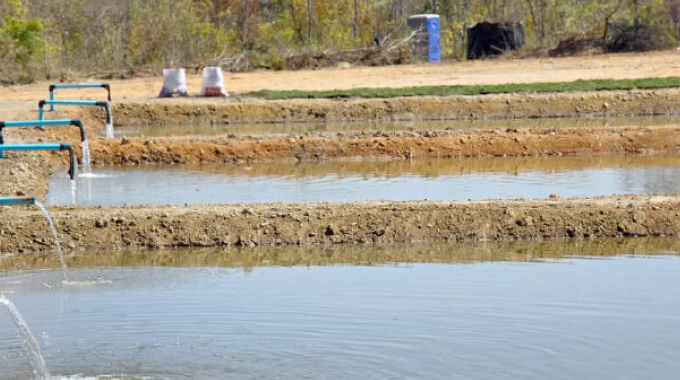
Patrick Chitumba, [email protected]
The Holy Cross Dam rural ecotourism project is 75 per cent complete and is already yielding positive results, having created over 150 jobs while stimulating growth in the local eco-economy.
President Mnangagwa commissioned the Holy Cross Dam in Chirumhanzu District, Midlands Province, in August last year. This milestone marks a significant step towards achieving Vision 2030, aimed at transforming Zimbabwe into an upper-middle-income economy.
The Holy Cross Dam is expected to bring substantial benefits to the local community, including a reliable water supply for irrigation, support for local agriculture, and drinking water for both domestic and wild animals. The dam will service Holy Cross Mission, local schools, a hospital, and the business centre, covering a catchment area of 158 square kilometres.
This project is part of the Second Republic’s broader efforts to develop infrastructure, targeting roads, dams, and buildings under President Mnangagwa’s leadership. The Holy Cross Dam is anticipated to play a pivotal role in catalysing food security, helping Zimbabwe reclaim its status as Africa’s breadbasket.
By showcasing the area’s natural beauty and rich cultural heritage, the project has not only created jobs but also fostered a sense of pride and ownership among community members, transforming their lives and livelihoods forever.
So far, the project has created 107 jobs and provided internships for an additional 60 students under the International Strategic Opportunities Programme (ISOP).
Project supervisor Mr Shepherd Hlomwa, in a recent interview, said the first phase of construction will be completed by April this year.
“We are currently working on chalet number six. Chalets one and two were officially opened by President Emmerson Mnangagwa and are now fully furnished,” he said.

Mr Hlomwa added that aluminium fittings were being installed for chalets three, four, and five, while chalet six was being thatched.
“Upon completion, the Holy Cross tourism project will feature a conference centre with a seating capacity of 1 000, 24 chalets accommodating approximately 100 people, a bar, a canteen, a changing room, and a sitting area,” he said.
Tourists will also have access to various recreational activities, including fishing, boat cruises, and other water-based experiences.
Mr Norman Chomba from Chizhou Ward 5, who has already benefited by securing employment in the construction of the chalets, said working on the project has improved his livelihood.
“We faced many challenges as villagers, but this project turned our fortunes around. With my earnings, I was able to pay lobola, buy goats, and even purchase a cow,” he said.
“I have also gained valuable building skills and now feel confident in taking on construction projects.”
Another beneficiary, Ms Martha Shumba, said the project has empowered women in the community.
“As single mothers, we have been taught to be independent and to take on tasks traditionally reserved for men. I can now mould bricks and mix mortar just as well as any man. We have learned that women should not stay at home but actively participate in development.”
Mr Rangarirai Nyika noted the visible transformation in his life.
“This project has helped us build homes, support our families, and ensure our children receive an education.
“The community has witnessed our progress and how our lives have improved,” he said.
He added that beyond employment, the project had also provided essential skills training and contributed to local infrastructure development.
“The facilities being built were once unimaginable in our area. Soon, we will be welcoming tourists to our community,” he said.
Mr Albert Chamuka of Ward 3 echoed similar sentiments, stating that the past year had been particularly beneficial for his personal growth and financial stability.
Chirumhanzu Rural District Council Ward 6 Councillor Winnie Dzingira praised the project for its role in job creation.
“The fact that about 200 people are working here demonstrates how this initiative has changed lives through employment. Many young people who were previously involved in drug abuse and crime have now reformed because of the opportunities provided by this project,” she said.
Clr Dzingira said that as the project nears completion, expectations are high that it will become a major economic driver for Chirumhanzu, boosting tourism and further improving livelihoods in the area.