Chronicle Editor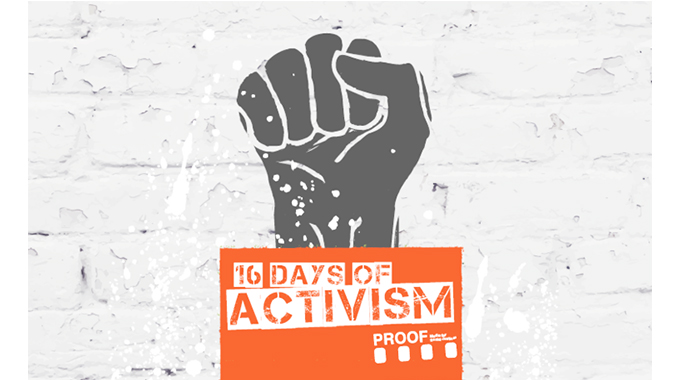
Dr Tatenda Simango
I hope I find you well and in good health. The heavens have been generous, giving us good rains and giving us hope for a bumper harvest. The 1st 16 days of December was an important time in raising awareness against gender-based violence.
These days are meant to create a paradigm shift in conflict resolution between genders. The patriarchal society has misunderstood their role as domineering, creating untold suffering to the woman and girl-child.
Gender-based violence (GBV) refers to harmful acts directed at an individual based on their gender. In Zimbabwe, about one in three women aged 15 to 49 have experienced physical violence and about one in four women have experienced sexual violence since the age of 15, these statistics are heart-breaking.
In my years of practice, I have seen depressing cases of physical, emotional, psychological and even spiritual gender-based violence perpetrated by, predominantly, men against women and girls. Most women are abused by the very men they have trusted with their love: husbands/boyfriends, relatives and friends. GBV mainly affects women and girls but can also affect boys and men.
Other forms of violence such as wife beating are actually regarded as part of everyday life in other communities (ZimStat). When we were at college there was a “slap her once on the first day’’ so that she knows her place mantra.
This was the advice that the immature college boys would share in jest, showing the low point that our culture has reached on this matter. In retrospect, I for one did not understand that in condoning such mantra I was part of the problem. Fast forward, when we meet as men, the talk of women being a “problem”, unspecified, is common stay.
Rarely do we discuss constructive conflict resolution ideas; ego plays centre stage and paves way for abuse.
There is an increase in SGBV incidence and complaints during disasters, Covid-19 has not been an exception, GBV issues related to the disaster (loss of family income and livelihoods, insufficient food) or those related to broader cultural attitudes (toleration towards some types of SGBV).
Other causes of gender-based violence:
Poverty.
Extramarital affairs.
Child marriage.
Intimate partner violence.
Physical punishment.
Sexual, emotional or psychological violence.
Female genital mutilation.
Trafficking for sex or slavery.
Honour killings/cultism.
Beyond its negative effects on survivors, gender-based violence is also damaging to economic and social structures as a whole. According to the World Bank, gender-based violence results in a loss of about 3,7% of a country’s total GDP.
Violence against women has also been proven to contribute to poverty. Poverty cannot be alleviated without the protection of and equality for women and girls around the world
A bottom-top approach has to be taken in the fight against GBV; the girl-child has to be educated and given career guidance, thus, empowered. Women need access to capital and advice on project management so that they do not have to be subservient to the male breadwinner.
According to the Zimbabwe Demographic Survey (2012), the child mortality rate is lower in families where the mother understands that family violence is never justifiable. Women who participate in household decision making are more likely to receive services that support a safe pregnancy. Girls who finish secondary school are less likely to marry while they are still a minor.
Women with more than a secondary education are more likely to be employed.
Young men should be taught to treat girls with respect, chores should be shared equally so respect of the role played by woman in the household is not downplayed. Fathers should be present and involved in the raising of their sons so that they instil the right morals and values that uphold all persons’ rights, particularly women.
I once worked in a mining community where the boy child was revered and the girls were objects of future trade (lobola). One incident stood out, a five-year-old boy and his father sat on chairs during a consultation while the mother stood for 15 minutes.
The father would blame the mother for the young-man’s flu and refuse to offer his wife a seat. With such training that boy will never respect or “stand up” for a woman because in his mind he is superior and sees the opposite gender as insignificant. Such upbringings propagate the oppression and abuse of women.
Conflict resolution techniques are mandatory to teach from a tender age. Communication should be taught at household level and anger management education started early. Most behaviour is learnt; thus, parents should be careful how they handle conflict in front of their children as this will have a bearing in determining how the child will respond under stress in the future.
Fighting, harsh verbal exchanges, tantrums and mood swings can be avoided and mature conversation conducted to resolve most misunderstandings.
Focus being on prevention through working with communities.
Let’s stop violence against each other, a little love will go a long way in making this world a better place. Till next week stay safe.
Dr Tatenda Simango can be contacted on [email protected] or follow him on Facebook@ 9th Avenue Surgery.



 Online Reporter