admin
admin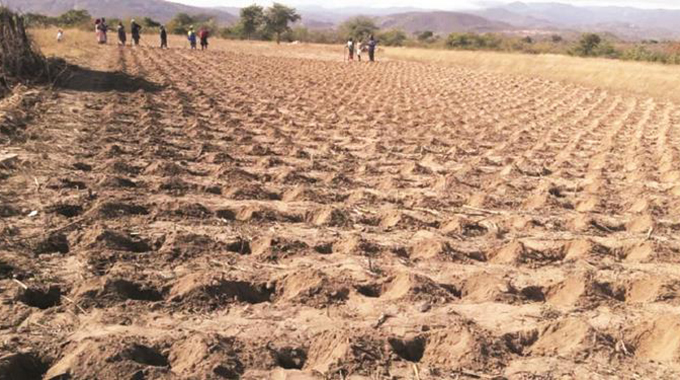
Elita Chikwati–Senior Agriculture Reporter
Over 1,8 million households are preparing land to qualify for the Climate Proofed Presidential Inputs Scheme (Pfumvudza/Intwasa) with more than 207 022 households having competed the preparations by holing all five plots.
All smallholders participating in the programme are expected to have received their inputs by November 15.
According to Agritex’s latest weekly report, 207 022 farmers have prepared their planting holes for all the five plots while at the other end of the smallscale 544 305 have holed out one plot and 226 499 have gathered mulch while 38 609 households have applied lime.
Those moving fast to be ready on time are the 212 446 who have prepared four plots, 442 310 two plots and 394 958 have prepared three plots.
Those who complete land preparations are entitled to join the scheme, having shown their commitment.
On Pfumvudza cotton, Agritex director Mr Stancilae Tapererewa said 18 335 households had holed up, 744 had gathered mulch while 309 had limed.
He said 207 860 farmers and 2 508 staff members had been trained on Pfumvudza cotton.
The Presidential Inputs Programme is targeting 2,3 million smallscale farms in communal, A1, small scale commercial farming and old resettlement sectors for cereals, oilseeds and legumes. The scheme provides training a scientifically-proven system of conservation agriculture as well as the inputs and the aim is to ensure that the farms are run as proper businesses, with the farmers retaining what they need for on-farm consumption and selling the rest of the harvest.
The scheme adopts the Pfumvudza/Conservation Agriculture concept based on the principles of minimum soil disturbance (holing out), mulching to conserve moisture, timeliness of operations and adoption of good agronomic practices.
Agritex chief agronomist Mrs Rutendo Nhongonhema recently urged farmers to intensify land preparations so they plant early to attain high yields.
“We are targeting to start planting November 1 as it is anticipated that most areas would have received enough rainfall for germination by then.
“Farmers in areas that would not have received rainfall will have to plant with 2 litres of water per hole. Early planting is beneficial and doubles yields,” she said.
Mrs Nhongonhema said the success of the Pfumvudza programme last season saw more farmers adopting the cropping technique this time and they have undergone training.
“We are training both old and new farmers. And only when one would have finished the recommended land preparations are inputs distributed.
“We have had an overwhelming response from farmers who did half plots last season and those who ignored the programme. After seeing the high yields from the Pfumvudza plots during the past season, most of these farmers have adopted the technique this season,” she said.



 Online Reporter