Online Reporter
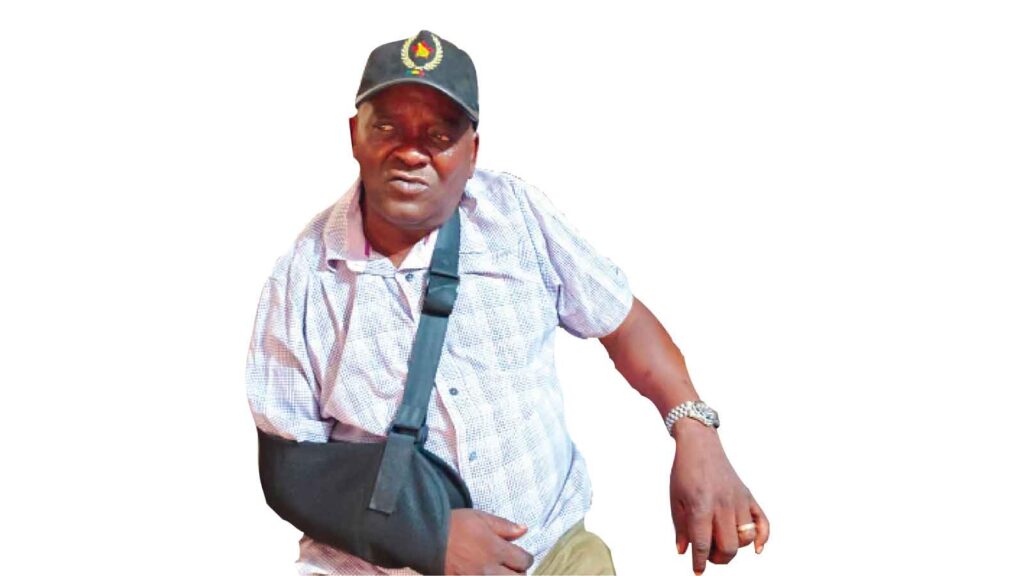
Last week, war veteran CDE KOSSAM MUTSINZE, whose Chimurenga name was Cde Ignatius Toda Zimbabwe, spoke with our Politics, Foreign Affairs and Opinions Editor, KUDA BWITITI, about how he honed his political consciousness at Mzingwane High School in Matabeleland South. He revealed that although he was a bright student who earned top class passes at O-Level, he could not proceed to A-Level due to his deepening political involvement, a testament to the atmosphere of the time that prioritised national destiny over individual ambition. This week, Cde Mutsinze recounts the pivotal juncture when he decided to cross to Botswana to join the war effort.
Q: Was it an easy decision for you to abandon A-Level entirely, given that you had scored first-class grades at O-Level?
A: It was not an easy decision at all. The promise of advanced education and the future it heralded was a powerful lure. At one point, I actively considered pursuing my A-Level studies outside the country, where I could continue learning while remaining in a politically sympathetic environment. However, after much introspection, I ultimately followed the conviction of my heart and the clarity of my mind. The injustice we faced under Ian Smith’s brutal rule was a constant, gnawing presence. I resolved that the most meaningful contribution I could make was not through delayed academic pursuit, but through immediate action. I, therefore, solidified my plan to cross the border and join the liberation struggle, a path I knew would not be easy, but was necessary.
Q: How did you cross the border, and where did you go?
A: My case differed from the journeys of many other comrades who slipped across the borders of the eastern and northern parts of the country into Mozambique.
My strategy was to cross legitimately into Botswana. Using the necessary documentation. I obtained a passport and boarded a train from Bulawayo. I felt that this method was less suspect for a young man of my student background, though the anxiety of the journey was ever-present.
Q: Why did you choose Botswana specifically instead of Mozambique or Zambia, which were more popular with other comrades?
A : The year was 1973, which was still the early, part of the struggle. It was fundamentally different from the later years. Most comrades who crossed to Mozambique did so after Frelimo’s monumental victory in Mozambique in 1975. That is why crossing into Mozambique became popular with thousands of other cadres who joined the struggle after me.
I can say I chose Botswana for two primary reasons. Practically, having attended school at Mzingwane, I was familiar with that western region and its proximity to the Botswana border. Secondly, through the whispers and networks of student activism, I had also heard encouraging stories of other cadres who had successfully gone to Botswana as a stepping stone to the struggle. So, in essence, it presented a viable point of entry for me.
Q: Who did you travel with to Botswana?
A: I undertook this journey alone. This was a deeply personal pilgrimage, a covenant between myself and the cause. I did not need to accompany anyone, as my aim was to meet colleagues on the other side of the border.
Q: Since you were alone, describe the solitude nature of the train ride?
A: I was filled with reflection, resolve, and the silent weight of the unknown future.
Q: So when you travelled to Botswana, what was your destination?
A: I was headed specifically for Francistown. My mind was focused on the task ahead. I was aware, through the same informal channels, that comrades like Cde Chademana, the dedicated ZANU representative in Botswana, were operating there. My hope was to find him immediately upon arrival, to connect with the structure and direction I desperately sought. I knew that if I met Cde Chademana, everything would be smooth sailing. However, the reality set in immediately after I arrived.
Q: What happened after your arrival?
A: I encountered challenges from the moment I arrived. The Botswana police, who were vigilant and cautious, questioned my purpose and upon suspicion, they arrested me. They suspected that I was involved in political activity aimed at destabilising Rhodesia. It is crucial to understand the context. The Botswana administration, under President Sir Seretse Khama, was very afraid of provoking Ian Smith’s regime. Their independence, achieved in 1966, was fragile and their neighbour Rhodesia under Smith was powerful, belligerent and unpredictable.
Botswana was a relatively new, peaceful state that did not have much military clout. They did not want to ruffle the feathers of Ian Smith. Rhodesia was considered a militarily and economically powerful pariah state. They legitimately feared that Smith would launch retaliatory cross-border raids or even more significant incursions into their territory if they were seen to openly harbour liberation fighters. Remember, we were relentlessly labelled as terrorists by Smith. Botswana’s detention policy was a delicate balancing act, a form of protective custody that shielded both us from potential Rhodesian abduction or assassination, and themselves from catastrophic military aggression. So, their official stance was to detain anyone suspected of being a political fugitive.
Q: How long were you detained in Botswana?
A: I believe it was between four to six months. It was a time of immense frustration, but also of crucial political meditation and networking within the detention cells.
Q: How would you describe the conditions?
A: For a prison, the conditions were not that bad. We were not treated as hardcore criminals. We had not committed any crimes under Batswana law. The conditions were not deplorable. However, it was the loss of liberty and the stagnation that weighed heaviest. We were in a state of suspension, yearning for the front.
As time went on during this detention, our situation began to shift. Representatives from ZANU eventually managed to come and speak with us, providing a vital link to the external leadership. Furthermore, our case was taken up internationally, and some officials visited us.
During this process of evaluation, we were presented with unexpected options. I learned, to my surprise, that I could still receive a scholarship for further education. This presented a profound internal conflict. But for the second time, after deep contemplation, I chose to set aside further education in favour of joining the trenches.
This decision was solidified by the counsel of Cde Chademana, who by then was able to engage with us more directly. He was instrumental in convincing me to stand by my original resolve. He was adamant, passionately so, that the immediate and overriding goal for all of us was to secure independence.
“The books will wait,” he would say, “but the nation is bleeding now. We can and will pursue education after winning the liberation struggle.”
His clarity of purpose resonated deeply with my own convictions. I agreed with him completely that this was the only way to go. Cde Chademana then informed us that he would work on the necessary paperwork and arrangements to facilitate our transfer from Botswana to Zambia, the heart of the external liberation movement.
Q: Tell us about the journey from Botswana to Zambia.
A: Finally, after the months of waiting, movement began. By then, our group had coalesced, and there were about 10 of us ready for the next phase. We did not travel by the long land routes; instead, we were flown to Zambia. Upon arrival in Lusaka, we were received and shortly thereafter taken to a camp known as Mboroma.
Next week, Cde Mutsinze will share his experiences in Zambia, where he received military training and witnessed critical, formative events that shaped the liberation struggle and ultimate destiny of the Zimbabwean nation.


 Bongani Ndlovu