

 admin
admin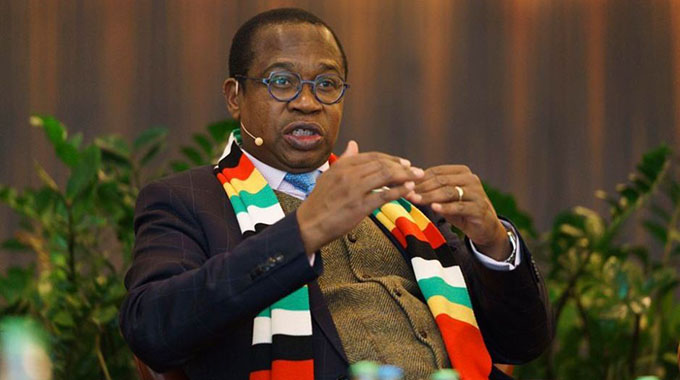
Finance and Economic Development Minister Mthuli Ncube is expected to present his 2020 National Budget Statement any time in November 2019, bar any other inconveniences.
To me, this is the last chance for the country to catch up on the lost one of two decades, a period which has left many Zimbabweans without food, without jobs, without water, without electricity, without houses, without savings and many other necessities enjoyed by citizens of other countries.
When Minister Ncube was appointed to his role, many had high expectations of him. Having held high ranking posts at the African Development Bank (AfDB) made him fit the bill for the task at hand albeit a difficult one as many would attest to now. There has been a huge variance between the expected outcome of his policies and the actual out-turn.
Having called on the nation to accept austerity measures, nothing short of a prosperous ending would endear him to many. Austerity for prosperity is what he promised but he is fast running out of time.
Confidence in him has since waned as he continues to miss his own forecasts one after the other. Where he projected GDP growth, he is likely to close the year with a negative 6,5 percent growth. Where he had forecast inflation to close the year in single digit he now projects 10 percent, highly unlikely as well. The promised exchange rate stability has a volatile one in action and wreaking havoc while at it.
His 2 percent Intermediated Money Transfer tax has been painful and could have even crippled many a business. Like a bitter pill to swallow, it made the cost of doing business expensive at a time local businesses have to be competitive and export to mitigate a crippling import bill.
Use of the 2 percent tax as a means of mopping out excess liquidity or as a revenue enhancing measure has not had a noticeable impact. If its liquidity it intended to mop out, then it must have missed the targeted pockets for liquidity has continued to wreak havoc in the economy as evidenced by the rampaging exchange rate.
If it was a revenue enhancing measure, its use has not left a noticeable impact on the lives of the tax payer. If it really had, then there would be appreciation from both the business community and other tax payers who have had to endure its punitive impact. Hope is thus that, the tax will be reviewed, after all the minister is on record saying days of focusing on austerity are over. We wait and see.
In his 2020 Pre-budget Strategy Paper, Minister Ncube says his focus will now shift from austerity to measures that help grow the economy through competitiveness and job creation.
“In order to enhance the virtues of macroeconomic stabilisation, Government will pay more attention on promoting strong, shared and sustainable growth and development, meaning taking the economy to higher levels that emphasise on enhanced production and productivity, jobs creation, strengthening competitiveness and inclusive participation and empowerment,” reads the 2020 Pre-budget Strategy Paper.
Good move, but there is very little in the strategy paper that speaks to how this will be achieved. The Zimbabwean economy is supposed to be anchored by two sectors, the agriculture and mining sector.
Therefore, one would expect Minister Ncube, supported by his cabinet colleagues, to rise to the occasion to address shortcomings bedevilling these sectors. Take for instance his revelation or is it acknowledgement that one of the factors behind low productivity is “farmer absenteeism” on the land.
At a time when the country is food insecure, it would be irresponsible for beneficiaries of land reform to let any piece of arable land lie idle. There must be a cost to holding on to State land and if levied, such farmers will either till the land or vacate in favour of those who can.
The value chain of the agriculture sector cannot be overemphasised. It’s immense. The bulk of Zimbabwe’s problems can be put down to Government’s unwillingness to impose policy requirements that will deal with the root cause, nationalisation of land.
Our land must have collateral value as absence of property rights and security of tenure impose limitations on farmers not only in terms of access to finance, but lack of confidence in developing the land.
Before reforms, land had market values totalling billions of dollars and was offered as security for most of the money lent by the banks.
Government could restore this collateral value of land and restore farmers’ access to billions of dollars-worth of credit that would immediately improve the country’s production volumes across board.
Making our land productive will get us closer to solving our currently unmanageable foreign and domestic debts, very high unemployment rates, dependence on food imports, and a serious trade imbalance among others.
Of course fast paced implementation is needed in areas such as ease of doing businesses and cost of doing business. Why are we still talking about Zimbabwe Investment Development Agency (ZIDA), which should be up and running by now? The minister has been talking up Venture Capital Funding for too long now, but there seems to be no concrete plan to put it into action. SOEs reforms cannot be talked about forever. Did we not have timeliness for these? There must also be no room for currency manipulators, cartels and all forms of corruption. We will be Taking Stock!



 Online Reporter