

 admin
admin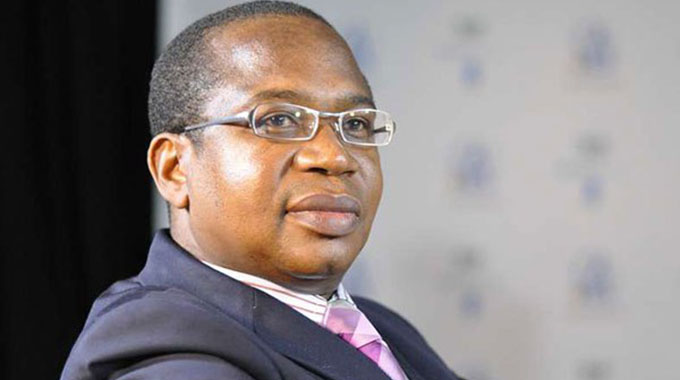
Golden Sibanda
THE business environment in Zimbabwe will continue to squeeze overburdened firms and market players this year largely due to acute shortage of foreign currency and depreciation of the Zimbabwe dollar, analysts say.
Finance and Economic Development Minister Mthuli Ncube sees the economy rebound by 3 percent in 2020, after a 6,5 percent projected decline last year, on the back of improved power supply, good rains and a cocktail of incentives to boost production.
However, economic analysts expect the prevailing challenges that haunted the economy for most of 2019 to persist, especially persistent foreign currency shortages and a continually weakening domestic currency.
Analysts IH Securities, said the chief catalyst of Zimbabwe’s stagflation trap is burgeoning broad money supply, which registered growth of 135 percent from $10 billion in December 2018 to $23 billion in September 2019.
Although Zimbabwe generated circa US$2,6 billion foreign currency in the first half of 2019, down 24 percent from US$3,4 billion in 2018 first half, burgeoning broad money exacerbated the demand for hard currency.
This saw rates peak at 1: 25 on the parallel market. Increased aggregate expenditure, which was revised to $18,6 billion late in 2019, with treasury anticipating a $4,6 billion fiscal deficit, posed further risk of growing money supply.
While the central bank wants to keep a leash on inflation and exchange rate stability, it is anticipated that persistent demands for higher salaries and wages will still drive public expenditure and drive money supply, which would exert pressure on the Zimbabwe dollar exchange rate.
In 2019, Zimbabwe’s economic landscape was characterised by significant policy reforms, local currency depreciation mounting inflation, intense electricity load shedding and reduced aggregate demand across all sectors of the economy.
Acute power shortage is also forecast to persist given the low water levels at Kariba following the drought experienced last season, which will maintain elevated energy costs for most productive sectors.
According to the African Development Bank (AfDB), the Government’s austerity measures through the Transitional Stabilisation Programme 2018 – 20 and attendant monetary reforms constricted economic activity in 2019.
The regional banking group made the remarks in its latest report dubbed African Economic Outlook, 2020. AfDB has projected Zimbabwe’s economy to grow 4,6 percent if correct economic measures are taken.
“Any 2020–21 recovery would depend on quick turnaround in the real sector. In the medium term, however, fiscal and monetary reforms are expected to stabilise the economy and begin to generate positive results,” AfDB said.
The banking group also said in the short term, recovery would depend on performance of the real sector, which faces headwinds of a slowing global economy on account of the US – China trade war and weaker commodity prices, the source of most of Zimbabwe’s foreign currency.
Despite a global mineral price recovery in 2019, production in Zimbabwe dropped below 2018 levels and fundamentals currently do not support convincing likelihood of significant improvement on this situation this year.
Widespread hard currency shortages, extreme Zimbabwe dollar depreciation and elevated parallel exchange rate premiums have applied severe pressure to local corporates who are typically net importers of raw materials.
And amid ongoing reforms by Government to realign economic fundamentals following decades of structural decay, annual inflation in Zimbabwe spiked from 5,39 percent in September 2018 to 175,6 percent by June 2019.
The reforms are contained in a policy document dubbed the ‘Transitional Stabilisation Programme (TSP)’ which is to be implemented between October 2018 and December 2020. As part of consequences, TSP has unleashed inflation.
Among TSP reforms that have jerked the economy were currency changes, specifically scrapping of the US dollar and floating of the reintroduced local currency on the interbank forex market.
As a result, annual inflation rate is now estimated over the 500 percent mark. Calculation of the annual rate was suspended in July last year though after the country scrapped the US dollar and introduced a mono-currency.
This scenario, coupled with other constraints that include rolling power cuts, high cost of borrowing, lack of long term funding, high utility costs and poor infrastructure, are expected to further weigh on business.
“Recent monetary and fiscal policies have had a contractionary effect on consumption, and we believe this trend will continue in the rest of 2020 and a greater part of 2021,” leading equities firm IH Securities said.
IH further predicted significant contraction in corporate earnings, attributable to a depreciating Zimbabwe dollar and limited working capital funds as borrowers’ increasingly lack capacity to provide loans.
The equities and economic research firm said companies with offshore obligations and regional operations but domiciled in Zimbabwe that cannot capitalise their off-shore subsidiaries easily are most affected.
Household incomes will continuously be under pressure following policy reforms that have been highly inflationary, forcing migration of consumption from discretionary to basic goods given the rising cost of living.
Nonetheless, the government anticipates a rebound in economic activity in 2020 at approximately 3 percent growth, a slightly higher prediction than the 2,7 percent growth forecasted by the International Monetary Fund.
Turnaround is premised on recovery in key sectors of agriculture, which is anticipated to grow 5 percent in 2020, a 4,7 percent improvement in the mining sector and marginal growth of 1 percent in the manufacturing sector.
In May 2019, IMF approved on a Staff-Monitored Programme (SMP) for Zimbabwe, covering the period of 15 May 2019 to 15 March 2020, designed to support the governments’ reform agenda and access to external funding.


 Online Reporter