

 admin
admin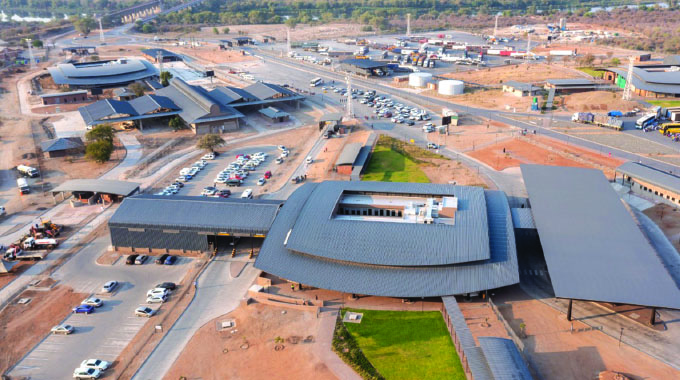
Thupeyo Muleya
Beitbridge Bureau
In the last three years, Beitbridge district has been undergoing a massive infrastructure and economic development revolution as part of the Second Republic’s thrust of leaving none and no place behind.
Since 2018, the government has been fully implementing the National Development Strategy 1 (NDS1), a key enabler of the envisaged Vision 2030 of attaining an upper middle income economy.
This was done through Private Public Partnerships (PPP), government funding under various initiatives including devolution, Constituency Development Fund and the Emergency Road Rehabilitation Programme (ERRP).
Such initiatives also helped to breathe life in many communal irrigation schemes that were fast grinding to a halt.
Regional and International Trade Facilitation
The slow movement of cargo and human traffic has in the past 10 years become a perennial headache for many people within Sadc, Africa and internationally.
At some point, cargo was spending between 24 and 72 hours to cross into either South Africa or Zimbabwe due to a number of trade barriers.
However, things have turned for the better in 2022 following the completion of the US$300 million Beitbridge Border Modernisation programme.
This is the only land port between Zimbabwe and South Africa, which is a major player in regional and international trade in SADC.
The project has set the border and the town on the road to real transformation due to its other spill over effects.
The border was modernised in three phases to improve efficiency systems.
The first phase being the freight terminal opened last year, while the second phase of the bus terminal and the light vehicles and pedestrian terminal were opened to traffic this year.
This made the border more user friendly to importers/exporters and general travellers as they are now spending less time at the border due to obtaining efficiency management systems.
Each category of traffic is getting customised services from border authorities depending on their specific needs.
This is opposed to the previous setup where everyone was being cleared from one point, with limited infrastructure and staff, leading to staff burning out and creating a room for rent seeking activities.
The three terminals have an estimated carrying of capacity of 3 000 commercial trucks, 1 000 buses and 5 000 cars, and 50 000 ordinary travellers daily.
President Mnangagwa also commissioned the project this year, marking the beginning of a new era at the country and Sadc’s busiest land port. This is the year, the Zimbabwe Revenue Authority (ZIMRA) and other government agencies were able to automate services and systems.
Resultantly, the pre-clearance system has helped improve the turnaround time for cargo clearing processes, thereby aiding the border decongestion.
The separation of traffic into freight, buses, and light vehicles has helped address perennial logistical challenges at the border.
Transport and Infrastructure development
Through funds from the Zimbabwe National Road Administration (ZINARA) and Treasury, the government was able to fix most damaged roads around Beitbridge district.
A 5km dual carriageway that links the border and major roads leading to Bulawayo and Harare which had taken over eight years to be fixed during the First Dispensation, was this year completed within six months.
Most impassable roads under Beitbridge RDC and the town council were maintained and upgraded through the ZINARA sponsored Emergency Roads Rehabilitation Programme (ERRP).
As part of the out of port works, the Zimborders Consortium, which is modernising the border in partnership with the government, was able to this year complete a new sewer oxidation dam, a 11,4 mega litres water reservoir, a new fire station and an animal plant and quarantine facility. In addition, civil works for another 220 housing units for border workers are already underway and will be completed by March next year.
A road linking the town with the new staff village has been completed.
Councils and Devolution Projects
The cash-strapped Beitbridge local authorities have for several years struggled to provide people centred services until the government through Devolution Funds helped them to address their deficiencies.
Beitbridge district has so far received a total over $100 million in devolution funds which were used to procure service delivery equipment and infrastructure development projects in the area.
The Beitbridge Municipality was able to procure a refuse compactor truck, backhoe loader (TLB), and a water and sanitation vehicle, make payments for a sewer jetting machine and to construct a new primary school with two classroom blocks in Kwalu 2 suburb.
They also used some of the money to upgrade its Information Communication and Technology facilities.
The Beitbridge Rural District Council managed to build Tshabili, Mazunga, and Dumba clinics, repair damages at the Shashe Clinic, and construct Nhovhe Primary School in Beitbridge West, repair of roofs at Chabeta Primary and Tshituripasi Secondary School, which were extensively damaged by tropical storms recently.
Through a partnership with the government and World Vision, the Beitbridge RDC was able to construct a mothers’ waiting shelter to cater for neo and post-natal services at Tongwe Clinic in Ward 4.
Further, they constructed a two-classroom block secondary school at Tshabili, which has already opened its doors.
Another secondary school was opened at Malala to address challenges affecting the education sector around the Beitbridge district.
Security upgrade and Crime
The introduction of the National Security Working Group which is deployed to the border with South Africa has been scoring success, arresting hundreds of smugglers with prohibited goods, including firearms and drugs.
Further, the upgrading of the border parameter fence and automation has helped security to flash out touts and other wheeler dealers within the border due to increased controlled access to the port of entry and exit.
The majority of the goods being smuggled between Zimbabwe and South Africa include various groceries, beers, and other alcoholic beverages, chicken cuts, used tyres, various meats, fruits, explosives, cigarettes, stolen livestock, and building material.
In another success story, the men and women deployed by the Judiciary Services Commission to the border town were able to send to prison many dangerous criminals, restoring confidence in the justice system in Zimbabwe.
Agriculture Rising
Through a three-year Zimbabwe Resilience Programme, the government in a partnership with PROGRESS consortium that is funded by the United Nations Development Programme (UNDP), in 2022 was able to revamp major irrigation projects in the Beitbridge district.
These include; River Ranch, Ndambe Phase 1 and 2, Jalukange, Bili, Dombolidenje, Shashe, Kwalu, and Tongwe irrigation schemes.
The projects were fenced, equipped with smart agriculture technology, including the installation of solar-powered irrigation pumps and pivots.
Additionally, the government, in partnership with the International Fund for Agricultural Development (IFAD) managed to complete rehabilitation of the 65 hectares Tshikwalakwala irrigation scheme which had been grounded for the past 15 years.
Crops have been planted at most of these projects.
The over 136 plot holders have had their lives turned around with good yields from the maize and wheat they are growing to feed their families and supply the local markets.
This is the same year where most horticulture farmers turned to smart agriculture using solar, borehole water and drip irrigation.
At Jalukanga, some farmers were able to make money after they started growing chia for the commercial market.
A number of livestock farmers turned to goat production with the introduction of high value goats, including the Boer and Kalahari breeds.
Shashe communal farmers and an indigenous company, Toppick Investments, wrote a success story as they ventured into the citrus production which saw the planting of over 300 000 oranges and lemon trees.
Education Transformation
The construction of Novhe Primary School, Malala Secondary School and Tshabili Secondary School were able to open to pupils while civil works at Langeni Secondary have begun.
Another primary school was also constructed in Beitbridge town through devolution funds.
Beitbridge West communities this year pulled resources to build a new hostel to address challenges facing the girl child at Zezani High School.
The school can now enrol up to 260 girls on boarding terms up from 150.
Health Services
The district medical team was able to contain the spread of the many diseases through the successful implementation of several Expanded Immunisation Programmes, which include the vaccination for Covid-19, measles and polio.
Civil Registry Services
A new passport office was this year opened in Beitbridge to cut the distance of more than 300km the local people were travelling to access civil services, including the application for passports in other towns like Gwanda, Masvingo, Gweru, Harare and Bulawayo.
Business Growth
Over 150 exhibitors, including bigger corporates and small to medium enterprises converged in Beitbridge this year to participate at the second edition of the business expo which was packaged with conferences, workshops and career guidance programmes for school children.
The Beitbridge Business Summit and Awards also added colour in the business sector where more than 50 SMEs and individuals were recognised for the role they played in the community.
This is the same year which saw many SME shops opening up in many suburbs around Beitbridge town.
Tourism
After taking two years of a break on most tourism related activities, Botswana, South Africa and Zimbabwe held a successful 4×4 biking event which attracted 500 tourists from across the globe during the Tour de Tuli tourism expedition.
The event is held in national parks components from the three countries which also include some areas in Beitbridge West.
The Beitbridge Youth in Tourism chapter was formed and managed to organise a number of travel and tourism events which marketed tourism attractions.
In addition, South Africa successfully ran a pilot project for an informal tourism border in the Tshikwalakwala area, some 135km east of Beitbridge Border Post.
The border will open full time next year on scheduled programme post the rainy season.
Sports
Dulivhadzimu United FC, which is now playing in Division One under the Central Soccer League, fared well this season.
The Beitbridge Municipality was able to transform its mayor’s anti-litter marathon into a national event that also saw the introduction of a cycling race and Paralympics.
Environment
The Rangelands Regeneration Trust (RRT) working with the Forestry Commission helped communities to plant more trees and to embrace the use of biomass stoves.
This was done to minimise and control the cutting down of trees for firewood purposes.
Schweppes Zimbabwe built a solar plant to power its juice processing plant in Beitbridge to embrace the use of renewable energy.



 Online Reporter