admin
admin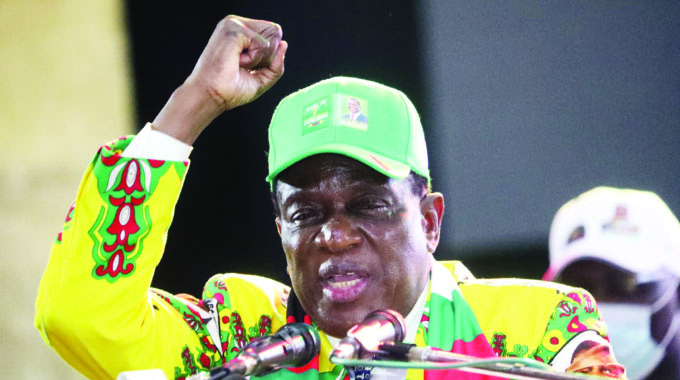
Lovemore Chikova
Development Dialogue
Rural development took centre stage in 2022 as the Second Republic moved forward with verve the pursuit of leaving no one and no place behind, as espoused by President Mnangagwa.
It was a year that saw an acceleration of rural development in areas that matter for progress to be registered in these once marginalised areas.
The Second Republic realised that closing the gap between rural areas and urban areas is the requisite for the country to realise Vision 2030 of becoming an upper middle income economy.
This vision could have been difficult to achieve without uplifting people in the rural areas who have been behind their urban counterparts in various aspects.
In fact, President Mnangagwa was extremely busy in 2022 when it comes to rural development, visiting various projects either to officially open them, to assess progress and or to ensure everything was in place for take-off.
This clearly showed that the Second Republic is in control of the situation, stirring the development agenda without any compromises. Many rural communities have been transformed because of this approach.
President Mnangagwa managed to instil the spirit of development in communities which had never thought they would be changed.
Development has become the buzzword, and the President does not lose any opportunity to rally the people towards development.
Historically, rural people had been disadvantaged in many ways, starting in the days of colonialism when there was racial segregation when it came to development.
The colonial government did not find it necessary to consider rural areas for development, mainly because the majority of whites lived in urban areas.
The racist government concentrated on urban areas and other service centres where their kith and kin resided, opening a huge gap between urban and rural areas when it came to development.
But all these gaps are now being addressed by the Second Republic, which is ensuring that areas that did not know development are now incorporated in the main agenda of uplifting the people’s lives.
That is why a lot of projects are being undertaken in the rural areas, all aimed at uplifting the people from poverty and making sure they meaningfully contribute to the development of the country.
The ongoing development momentum being spearheaded by the Second Republic was no doubt accelerated in 2022. The focus on rural areas will no doubt create more job opportunities and improve ordinary people’s livelihoods.
To relieve the burden of climate change on the rural folk, a number water projects are being instituted in various parts of the country.
And this done through the building of water sources across the country, with works on various dams at different stages, while other dams were completed and have started serving their communities.
Lake Gwayi-Shangani in Matabeleland North, whose construction is almost complete, remains the anchor of the Matabeleland Zambezi Water Project.
It is meant to benefit both urban and rural areas, with Bulawayo’s water problems set to be solved, while the water project boosts irrigation farming in the Matabeleland region.
After realising the importance of this dam to establish a greenbelt through irrigation in the region that receives low rainfall, the Second Republic is determined to ensure the project is complete for the rural people to start benefiting.
Considering that the Lake Gwayi-Shangani project had been in limbo through successive administrations from 1912, it demonstrates the Second Republic’s pursuit of ensuring rural areas are not left behind anymore.
The devolution agenda played a huge role in the development of rural areas in 2022, with projects in health, education, water, irrigation, roads and many other areas being undertaken using funds allocated for devolution.
Indeed, no place was left behind in 2022 as clinics, schools and irrigation schemes were established to provide services to people living in rural areas.
Speaking at an indaba for councillors in September, President Mnangagwa rallied local authorities to scale up their commitment to improving the quality of life by joining central Government in the implementation of the devolution and decentralisation agenda, empowering communities and ensuring equitable distribution of resources.
The indaba was held under the theme: “Strengthening local governance through devolution for the attainment of Vision 2030.”
President Mnangagwa said under devolution, local authorities would be further empowered to manage affairs efficiently and effectively within their jurisdiction, and with Government ministries, departments and agencies directed to provide them with the required support.
“This must see greater collaboration and synergies which promote the ongoing rural development and industrialisation agenda,” he said. “There is no us and them. Let us all work together, across the public service, for the good of our people.
“Additionally, local authorities should prioritise the creation of a conducive and an enabling business operating environment, right at the community level.”
This rallying call by President Mnangagwa for local authorities to take seriously rural development has seen a number of projects that benefit the people being implemented by the various councils.
Rural industrialisation also took centre stage in 2022, with President Mnangagwa in June commissioning a US$20 million edible oil refinery plant in Mahusekwa in Mashonaland East province.
He then implored farmers to take advantage of the National Enhanced Agricultural Productivity Scheme (NEAPS) and the Second Republic’s rural industrialisation drive.
This drive towards rural industrialisation by the Second Republic has seen industrial activity being launched in many rural areas based on factor endowments in each area.
These local authorities, especially those from the rural areas, should continue to identify poor areas and the causes of such poverty so that appropriate development projects are tailored for such areas.
The rebranded Agricultural and Rural Development Authority (ARDA) has been playing a major role in ensuing rural development takes root, reviving irrigation schemes and working closely with the people.
ARDA has been empowering rural farmers with skills and advice so that they can stand on their own when it comes to the production and processing of agricultural produce from their fields.
This empowerment can easily lead to value addition and beneficiation of agricultural products right in the rural areas, which means finished products can actually be churned out from the far-flung areas for the benefit of the local communities and even for export.
ARDA is already a centre of excellence, with its estates strewn across the country being turned into agricultural demonstration centres set to impart knowledge and technology to rural farmers.
In August, the Government launched the Presidential Rural Poultry Scheme meant to benefit at least three million rural households drawn from Zimbabwe’s rural communities.
The project presented the rural people an opportunity to boost their nutrition and incomes, and thus contribute to the attainment of Vision 2030.
The scheme raised hopes among rural communities that they will become hubs for organically-produced live chicken, eggs and chicken meat in the next two to three years, with the country set to earn thousands of dollars from exports of the products.
To cap it all, the Presidential Rural Development Programme was launched specially to target rural areas for development and create self-sufficient and sustainable communal areas.
This programme covers many areas concerning development in rural areas and helps focus on uplifting the livelihoods of rural dwellers.
The programme has been useful in transforming agriculture through irrigation schemes and it facilitated the drilling of boreholes that are supposed to be spread throughout the country’s districts.
The Presidential Rural Development Programme is actually an accelerator for the attainment of Vision 2030, anchored on the provision of water as a right and an economic enabler.
An enabled agriculture means quick rural industrialisation as raw materials produced in farming can be used for production in rural industries.
In higher education, the Zimbabwe Open University in November signed a partnership with Malaysia Binary University of Management and Entrepreneurship for a programme meant to empower rural communities with international quality education.
The objective being to ensure international quality education reaches every village in Zimbabwe.
Feedback: [email protected]


 Online Reporter