

 admin
admin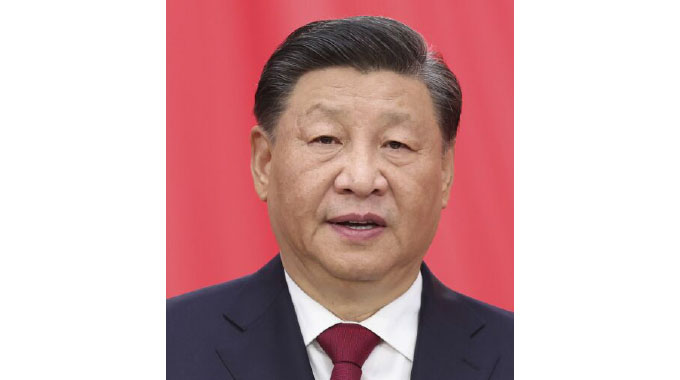
Ruth Butaumocho African Agenda
With less than two weeks to go before 2022 comes to an end, there are a lot of people who feel that January is both a blink of an eye and lifetime away.
Although the globe was reawakening from an economic slumber following a lull owing to the effects of Covid-19, 2022 has kept a lot of people on its toes, owing to a lot of rivalling events that took place around the globe, which has a bearing on the African continent.
In a global context marked by slow economic growth owing to the special military operation by Russia in Ukraine, global rising interests and the effects of climate change several African countries successfully plodded through these challenges to reclaim the development gains lost during the Covid-19 pandemic.
Yes, a number of challenges still prevail to this day and are likely to spill over into the New Year.
Despite the trials, Africa maintained peace, sustained its people through upholding the ethos of democracy and promote food security through robust people-centric policies.
Inward looking solutions for Africa
Following the conflict between Russia and Ukraine, Africa and other continents found themselves at the receiving end of fuel increases, disruption in food supplies and even shortages as the conflict escalated.
Although at one time, some African countries were caught flat footed and struggled to remain afloat, the majority have since seized opportunities from the crisis and have taken an inward approach to solve challenges owing to unprecedented disruption in the movements of goods.
Several countries are now drawing on Africa’s extensive natural and human capital to unlock opportunities in the midst of the uncertainty and solve complex development challenges.
The agriculture crisis precipitated by the Ukraine-Russia conflict, especially fertilizer, wheat and edible oil shortages in Africa, has seen several countries, Zimbabwe included, opening more factories to manufacture agro-products.
In September, Zimbabwe Phosphate Industries opened a new fertiliser blending plant which will increase local production of basal fertilisers.
The new plant is also expected to save the country over US$250 million per annum in fertiliser imports.
In Nigeria, Africa’s richest man Aliko Dangote opened the continent’s largest fertiliser plant early this year the conflict in Ukraine cut off supplies from Russia, threatening a global food crisis.
Morocco-based OCP Group, one of the world’s largest fertiliser manufacturers, has since rolled out a relief programme for fertilisers to ensure that most African countries will access fertiliser.
The ongoing implementation of the African Continental Free Trade Area (AfCFTA) will help to create a vibrant and thriving continent wide economy, where Made in Africa products and services are freely exchanged across borders in one African market.
The African COP 27
The continent hosted the COP27 climate change summit in Egypt in November, giving African delegates an opportunity to shape climate discussions and push their priority areas, such as loss and damage, climate finance, adaptation or desertification.
Having upped their net-zero commitments ahead of COP27, governments sought to diversify and decarbonise their energy sources, with transition plans already in progress at different paces and towards different destinations.
After days of intense negotiations that went for days in Sharm el-Sheikh, countries that attended the UN Climate Change Conference, COP27, resolved to establish a funding mechanism to compensate vulnerable nations for ‘loss and damage’ from climate-induced disasters.
Elections and Governance
Thirteen African countries held elections in what was undoubtedly a measure of the continent’s commitment to democratic governance.
Most of these were held in a peaceful manner as citizenry sought to balance governance issues within the continent.
In a show of democracy, several countries among them Angola, Tunisia, Angola, Mauritius, Kenya, Somalia and Senegal transited peacefully to new political dispensations, something that many had not expected.
It remains to be seen how 26 other African countries, including Zimbabwe, due to hold their elections in 2023 will conduct themselves, amid calls to maintain peace and tolerance throughout.
China-Africa Relations
Relations between China and Africa continued to be strengthened through various vehicles with economic ties deepening following President’s Xi Jinping’s third term.
Cde Xi’s term is expected to accentuate the enlistment of African support for reshaping global institutions and validating China’s governance norms.
China to date has carried a number of projects in Africa through the Asia Infrastructure Development Bank and the One Belt One Road initiative-advancing China’s efforts to create alternative international institutions while reshaping existing ones.
China is presently involved in several infrastructural projects in 35 African countries.
The country’s activities are divided fairly and evenly among two main sectors: power generation (especially hydro-power), and transport (especially railroads).
In Zimbabwe, under the strategic guidance of the leaders of the two countries, China has been supporting Zimbabwe to realise its national development trajectory by supporting several projects in the country.
China recently completed a new parliament building, which it constructed and fully funded as a gift to Zimbabweans.
The new parliament building was one of the most important projects in China-Africa cooperation, aimed at strengthening friendship and solidarity between the people of Zimbabwe and China while improving facilities in parliament for better service to the citizenry.
Completion of the new parliament building, which borrows heavily from the iconic Great Zimbabwe ruins, also heralds the start of a new capital city as the Government plans to put up off-site infrastructure such as residential areas, shopping centres and access roads to establish a self-contained new city to decongest the capital Harare.
Speaking at the new parliament situated in Mount Hampden, President Mnangagwa said the construction of the new parliament building was a “testimony of the strategic and comprehensive partnership and excellent fraternal relations between our great motherland, Zimbabwe and the People’s Republic of China.”
Extreme Weather Conditions
Despite the positive strides the continent made on the economic front, it was not all smooth, as Africa battled with effects of climate change throughout the year.
From deadly floods in Nigeria to devastating drought in Somalia, Africa faced severe — and sometimes unprecedented — extreme weather events since the start of 2022.
Drought and famine left several people on the brink of starvation in Uganda and affected eight million in Ethiopia this year.
In yet one of the tragic incidents, more than 600 people died in Nigeria’s worst floods in a decade.
This included 76 people who were killed when a boat carrying flood victims capsized.
Several Southern African countries, including Madagascar and Mozambique, were battered by six severe storms this year, killing at least 890 people.
The effects of climate change reared its ugly head in North Africa when temperatures reached 48 degrees Celsius in Tunisia in July, fanning the flames of extreme wildfires.
In Chad, nearly two million people were affected by floods in August and October.



 Online Reporter