Chronicle Editor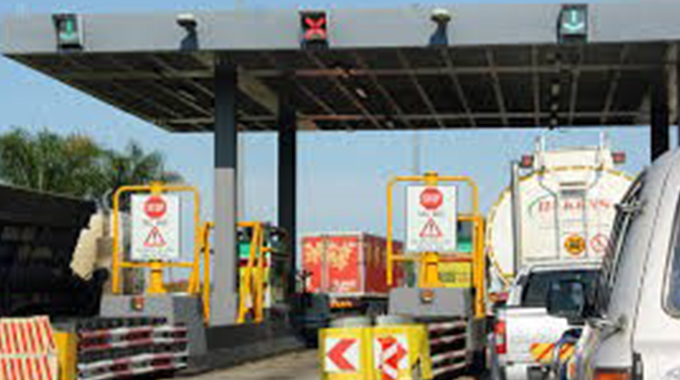
Nqobile Bhebhe, [email protected]
AN estimated $24 million in potential revenue is lost each year due to at least 200 000 vehicles failing to pay licences and tollgate fees, the Parliamentary Portfolio Committee on Transport and Infrastructural Development has said.
The committee suggests that this amount could be used to drill 7 000 boreholes annually, resulting in a total of 35 000 boreholes by the year 2030.
According to the committee’s recommendations submitted at the recently held pre-national budget seminar in Bulawayo, committee chairman Cde Knowledge Kaitano said there is a need to transfer the current toll gate infrastructure into toll plazas to minimise revenue leakages.

“Because there is no aggregated motor vehicle database and the absence of a database system, which links CVR, Zimra, Zinara, the Police, Insurance Council of Zimbabwe, it is estimated that a minimum of 200 000 vehicles are not paying vehicle licences nor toll gate fees thereby depriving the fiscus of $24 million annually, an amount that can drill 7 000 boreholes annually and 35 000 boreholes by 2030,” he said.

“The time is now to roll out these toll plazas, which were mooted as far back as in 2019.”
A toll plaza has more lanes compared to a toll-gate, and allows more vehicles to be cleared at the same time. This reduces traffic jams at these points.
Cde Kaitano said toll plazas can increase revenue collection as the current operating software by the two system vendors can be upgraded to provide VID certification, road permits, authenticating the number plates, offer third party insurance, ZBC insurance among others.
“This will also greatly reduce road accidents. We have been made to understand that Zinara has the funds to build the toll plazas. There is also a need to increase the number of toll plazas for certain roads such as Harare-Masvingo and Bulawayo Victoria Falls,” he said.
Zinara periodically de-registers vehicles that have remained unlicensed for more than two years.
To re-register, the owner of the vehicle has to pay outstanding arrears and penalties, including insurance, and get clearance from the Zimbabwe Revenue Authority that the vehicle was legally imported into the country.
In addition, the vehicle has to be cleared by the Vehicle Theft Squad and the Vehicle Inspection Department before it can be driven on the country’s roads.
Many of the unlicensed vehicles have long been scrapped or are non-runners rusting in backyards, but their registration has never been cancelled.

In its second-quarter report, the Zimbabwe National Statistics Agency (ZimStats) said the total number of vehicles registered for the first time decreased by 35,0 percent, from 24 428 recorded in the first quarter 2024 to 15 890.
The number of light motor vehicles registered for the first time decreased by 33,7 percent from 18 539 recorded during first quarter to 12 296.



 Online Reporter