Online Reporter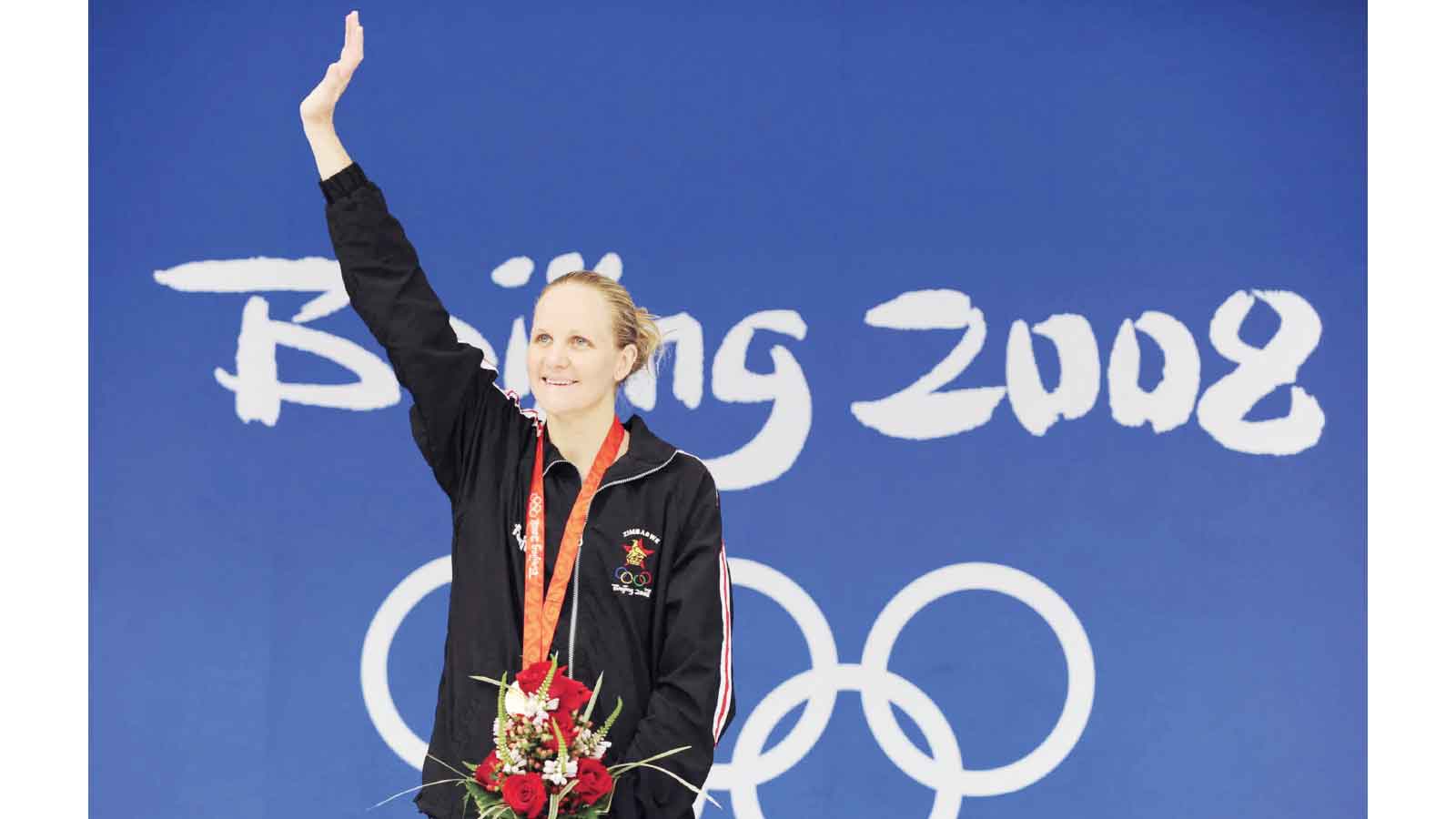
THE International Olympic Committee president Kirsty Coventry published an opinion piece entitled; “Beijing’s Olympic journey: the Games that keep giving” last week in China Daily to highlight the Asian giant’s “exceptional experience” since those Games were held.
Twenty-five years after Beijing won the right to host the 2008 Olympic Games, IOC president Coventry said the city’s successful bids for both the 2008 Games and the 2022 Winter Olympics marked the beginning of an extraordinary Olympic journey for China.
In a recently published article marking the anniversary, Coventry praised the lasting legacy of both Games, saying they created greater opportunities, increased participation and strengthened the role of sport in people’s lives.
Coventry described Beijing 2008 as one of the defining moments of her athletic career. She won one gold medal and three silvers in swimming at Beijing’s National Aquatics Centre, also known as the Water Cube.
Coventry reached the highest point of her sporting career at the Beijing 2008 Olympic Games.
That is not an interpretation; it is a plain fact: after those Games, she cemented her place as the most decorated African athlete in Olympic history.
In that Asian showdown, the Zimbabwean swimmer was 24-years-old and she produced something that will be spoken of as a historic moment, securing four medals: one gold and three silvers.
She was scarcely an unfamiliar name in those circles, though. She arrived in the capital of what was then the world’s most populous country as a genuine international star, since four years earlier, at Athens 2004, she had astonished the world by winning three medals, one gold, one silver and one bronze, the first Olympic medals for Zimbabwe since 1980.
It is no coincidence that, in her recent column for China Daily, the now president of the International Olympic Committee opened her heart, declaring that Beijing 2008 had become one of the defining moments of her athletic career.
“I will always remember the atmosphere of those Games: the energy of the city, the pride of the people, the colour and creativity of the opening ceremony, and the feeling that the whole world had gathered in one place,” the leader began in her piece.
The Harare native, who will be 43 in September, identifies as one of her key themes the transformation of the city’s Olympic infrastructure, evoking the shift from the Water Cube to the “Ice Cube” and the continued use of the Bird’s Nest as striking examples of architectural sustainability, a principle so warmly applauded within her Olympic policy of reusing infrastructure.
That conversion, she stressed, showed that the value of the Olympic Games “transcends competition,” ensuring that their true impact endures in the functionality of venues long after the Olympic flame has been extinguished.
Coventry likewise highlighted a vision oriented toward a heritage that would stand the test of time, as “the true legacy of an Olympic Games never lies solely in what remains after the flame goes out, but in what the Games make possible afterwards”. This approach transforms sporting architecture into a living organism, where, according to her, “the re-purposing of spaces becomes an ethical imperative and an act of responsible urban development, ensuring that venues continue to serve society in the long term”.
“Can more young people discover sport? Can more communities become more active? Can athletes train and compete in better conditions? Can a city be better prepared for the future?”
Through this succession of questions, the young IOC leader seeks to guide how every Olympic venue should behave and interrogate its own purpose from the outset: “to ensure that the Games deliver more for local communities while reducing their environmental impact”.
“Beijing is an example of what this can look like,” she concluded, with the pride of someone who touched stardom there.
The Olympic Games of 18 years ago did not merely leave behind Olympic venues; according to Coventry, they also helped accelerate the city’s transformation, with investment in transport, public spaces and other infrastructure that continues to benefit residents today.
She also underlines how they helped drive a significant increase in sports participation, fostering a broader sporting culture in China, where more people can move, play and practise sport. — insidethegames.biz.