admin
admin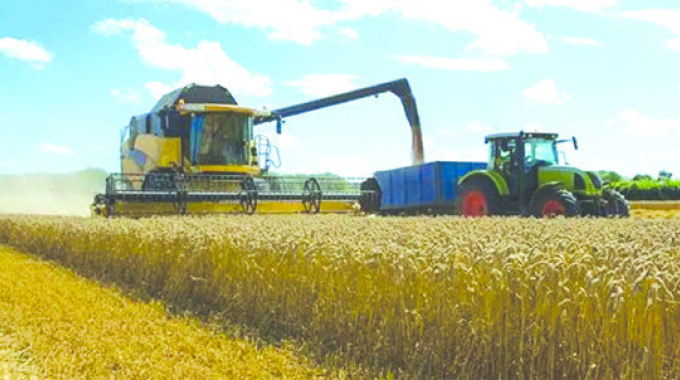
Oliver Kazunga Senior Business Reporter
THE Government has registered significant milestones across the domestic economy in the last five years, setting the country on a path to attaining its target of an upper-middle-income society by 2030.
To achieve the milestone, the Government has already come up with various targets enunciated in the National Development Strategy (NDS 1, 2020-2025). A successor five-year programme will guide the trajectory through 2030.
In separate interviews, economic commentators hailed the Government for initiating and implementing transformative policies to address the challenges militating against economic recovery and growth.
Despite the plethora of challenges following the decades of meltdown and battering from Western sanctions, Zimbabwe’s economy is expected to grow by a weighty 5,3 percent this year, anchored by the Government’s supportive and strong policies.
Already, massive investments in key sectors that include road and dam construction, agriculture, industry, and mining as well as doing business reforms and global reengagement have laid a firm foundation for rapid growth going forward.
Economist Joseph Mverecha said: “There are many things the Second Republic has achieved over the past five years despite all the challenges that we face in the economy.
“In agriculture for instance, the strategy for improving food security in the country over the past two-three years has witnessed enormous progress in terms of both productivity and also the area under hectarage.
“Last year, we produced in excess of 2,2 million tonnes of maize and about 2,1 million tonnes a year before last year and this year (the harvest) may be slightly between 1,5 million and 1,8 million but still we are able to achieve food self-sufficiency.”
In 2020, the Government launched the Agriculture Recovery and Growth Plan to ensure national food security, import substitution, diversified exports and value addition, among others.
Against this background the country last year was able to produce 375 000 tonnes of wheat against a national requirement of 360 000 tonnes.
“In agriculture, the thrust being pursued by the Government is to enable farmers to produce wheat locally, and last year we were able to produce 375 000 tonnes of wheat surpassing the national requirement.
“Of course, we import the wheat for blending, and over the years we have been importing it, and there will still be some importation for blending but we no longer outlay the critical foreign exchange required for the country’s development towards food.
“Prior to that we would spend anything between US$300 million and US$500 million per year in terms of foreign currency outlays buying food (maize and wheat) from Zambia, Malawi, and South Africa even from abroad,” said Mr Mverecha.
He applauded the Government for fostering growth and development in the agriculture sector through dam construction and irrigation rehabilitation and development. The Government has invested tremendously into the construction and completion of dams like Marovanyati, Gwayi-Shangani and Tugwi Mukosi.
In the past five years, he said, the Government has also been consistently pushing the Presidential Input Scheme for small-scale farmers and the programme has significantly assisted small-scale farmers across the country in terms of increasing their productivity.
In 2019, the Government launched the US$12 billion mining strategy to be achieved by the end of this year on the back of the ongoing massive investments and expansion projects in the sector.
Prior to the launch of the US$12 billion milestone, the mining industry was a US$2,7 billion economy in 2018 and the figure has since registered exponentially spiked to US$5,3 billion and an estimated US$8 billion in 2021 and last year respectively.
Gold which is Zimbabwe’s major foreign currency earner would lead the US$12 billion milestone contributing US$4 billion followed by platinum at US$3 billion, diamonds (US$1 billion) while chrome, ferrochrome and carbon steel will generate US$1 billion, and coal (US$1 billion).
Lithium is expected to contribute US$500 million while other minerals will generate US$1,5 billion.
“New mines are opening up. Previously we never knew that there is this amount of lithium in the economy and we will be the largest producer of lithium in Africa if not beyond the borders of Africa.
“We are also seeing coal mines opening up and (the President) was in Binga recently (officiating at) the opening up of a new coal mine,” said Mr Mverecha.
He said the country’s capacity to grow the economy was largely dependent on investment in health, education and technology and the Government has made significant strides in that regard in the last five years.
“As far as clinics and hospitals, we still need to do more as a country to ensure drug availability and that everybody has access to medicals services especially the lower end of the strata in terms of the incomes of households of the economy.
“We need to ensure drug availability and more work is required there but we have opened clinics all over the country and virtually from every province mothers giving birth no longer have to walk 10 to 15 kilometres to go and deliver as clinics have been opened.
“So, the Government has undertaken significant progress as far as clinics are concerned,” said Mr Mverecha.
“You can also see how greatly the Government managed the Covid situation,
even countries far afield like Canada and Australia have paid tribute to how Zimbabwe has managed its Covid situation because of the investment in health and the prioritisation of procurement of vaccines.
“Fatalities could have been significantly higher had it not been for the fact that the Government came up with these specific well-ordered initiatives to deal with the pandemic and ameliorate its effects on the economy and population.”
Through the education 5.0 system, Mr Mverecha said the economy was able to be resilient during the Covid-19 pandemic partly because all universities stepped forward and began to manufacture anti-Covid materials including offering support services except for the vaccines.
“This is a milestone as you can see how the education system is changing as well as the closer relationship between universities and industry, it’s no longer just academic theory but academic that is related to the national needs for the development of our country.
“Look at Harare Polytechnic for example, the kind of innovation that there are bringing forward in terms of new products for different sectors of the economy. We actually can see how the innovation hubs have helped in bringing in new fields and frontiers of business,” he said.
However, Mr Mverecha said all has not been rosy in terms of currency, inflation and exchange rate stability affecting the economy negatively in the past five years.
“But recently the Government introduced a raft of measures that hopefully will see entrenched stability in terms of the currency and exchange rate and once we have dealt with that inflation will come down.
“Our inflation in Zimbabwe over the past five years is essentially exchange rate-driven, where exchange rate depreciation is feeding into price formation.
“Once we deal with exchange rate or currency depreciation, we have currency stability as we currently have.”
Another economist Ms Wendy Mpofu said President Mnangagwa’s administration has been pragmatic in terms of rebuilding the economy that for close two decades has been collapsing.
“I am of the opinion that the Second Republic under President Mnangagwa has been very pragmatic as far as addressing key issues affecting the economy particularly looking at the economic enablers like infrastructure and electricity.
“Prior to the birth of the Second Republic, our road network was in a sorry state but now we can all see how the roads, particularly highways, are in the state they are in,” she said.
“Just ask any of the wheat farmers whether they have failed to get electricity throughout the day, it’s the first I think in over two decades, we have never been in a space like this one where electricity is available to our farmers throughout the season.
“We were perennial importers of electricity and we are still improving on the energy front. The Government recently commissioned Hwange Units 7 and 8 altogether producing an additional 600MW and now we can see the improvement in electricity availability.”
In a separate interview, economist Professor Gift Mugano echoed similar sentiments adding that since the coming into power of the Second Republic, Zimbabwe has been registering a surplus in the current account.
“Going backward from 2017, we used to have trade deficits of about US$3 billion and that was burning the economy; the overall Balance of Payments was in the deficit but we have narrowed that down to below US$1 billion from US$3 billion.
“In terms of the current account, we maintained a surplus of US$900 million or a billion dollars, in fact, we were getting a significant amount of foreign currency.
“Our foreign currency receipts hold from around US$6 billion and they doubled in the last five years and end of last year we got US$12 billion so that was very good because we were mobilizing capital which is liquidity that was brought into the country and one of the drivers of that was exports,” he said.
Prof Mugano said the country needed to tighten its foreign currency management systems to curb leakages that were happening through financial market distortions.
“It’s only now when the Government has tried to manage the exchange rate but not fully because you can’t go into the bank and get foreign currency,” he said.
Prof Mugano said before the Second Republic, for almost 20 years Zimbabwe was spending about US$500 million annually on cereals.
“But that has already been dealt with and we have seen impressive performance on the wheat and maize sub-sectors.
“I must say we are not yet food secure as we don’t have food reserves but we have reduced the import bill significantly.
“We have not achieved food security but we are close to achieving it and it’s something that was very far away over the years,” said Prof Mugano.
He said there has also been zeal around the development of new dams as well as rehabilitation and construction of roads using local resources.
“What I am advising the Government is to move away from cash funding of the infrastructure to long term financing using bonds because in as much as we were getting dams and roads, the cost has been on the back of excessive liquidity . . . so we don’t want to continue with infrastructure development funding directly through the budget because that destabilises the economy.
“We want to move to Public-Private Partnerships and Diaspora Bonds which we see being successful in other economies like Tunisia, and Ethiopia,” said Prof Mugano.
billion) while chrome, ferrochrome and carbon steel will generate US$1 billion, and coal (US$1 billion).
Lithium is expected to contribute US$500 million while other minerals will generate US$1,5 billion.
“New mines are opening up. Previously we never knew that there is this amount of lithium in the economy and we will be the largest producer of lithium in Africa if not beyond the borders of Africa.
“We are also seeing coal mines opening up and (the President) was in Binga recently (officiating at) the opening up of a new coal mine,” said Mr Mverecha.
He said the country’s capacity to grow the economy was largely dependent on investment in health, education and technology and the Government has made significant strides in that regard in the last five years.
“As far as clinics and hospitals, we still need to do more as a country to ensure drug availability and that everybody has access to medicals services especially the lower end of the strata in terms of the incomes of households of the economy.
“We need to ensure drug availability and more work is required there but we have opened clinics all over the country and virtually from every province mothers giving birth no longer have to walk 10 to 15 kilometres to go and deliver as clinics have been opened.
“So, the Government has undertaken significant progress as far as clinics are concerned,” said Mr Mverecha.
“You can also see how greatly the Government managed the Covid situation, even countries far afield like Canada and Australia have paid tribute to how Zimbabwe has managed its Covid situation because of the investment in health and the prioritisation of procurement of vaccines.
“Fatalities could have been significantly higher had it not been for the fact that the Government came up with these specific well-ordered initiatives to deal with the pandemic and ameliorate its effects on the economy and population.”
Through the Education 5.0 system, Mr Mverecha said the economy was able to be resilient during the Covid-19 pandemic partly because all universities stepped forward and began to manufacture anti-Covid materials including offering support services except for the vaccines.
“This is a milestone as you can see how the education system is changing as well as the closer relationship between universities and industry, it’s no longer just academic theory but academic that is related to the national needs for the development of our country.
“Look at Harare Polytechnic for example, the kind of innovation that there are bringing forward in terms of new products for different sectors of the economy. We actually can see how the innovation hubs have helped in bringing in new fields and frontiers of business,” he said.
However, Mr Mverecha said all has not been rosy in terms of currency, inflation and exchange rate stability affecting the economy negatively in the past five years.
“But recently the Government introduced a raft of measures that hopefully will see entrenched stability in terms of the currency and exchange rate and once we have dealt with that inflation will come down.
“Our inflation in Zimbabwe over the past five years is essentially exchange rate-driven, where exchange rate depreciation is feeding into price formation. Once we deal with exchange rate or currency depreciation, we have currency stability as we currently have.”
Another economist, Ms Wendy Mpofu, said President Mnangagwa’s administration has been pragmatic in terms of rebuilding the economy that for close two decades has been collapsing.
“I am of the opinion that the Second Republic under President Mnangagwa has been very pragmatic as far as addressing key issues affecting the economy particularly looking at the economic enablers like infrastructure and electricity. Prior to the birth of the Second Republic, our road network was in a sorry state but now we can all see how the roads, particularly highways, are in the state they are in,” she said.
“Just ask any of the wheat farmers whether they have failed to get electricity throughout the day, it’s the first I think in over two decades, we have never been in a space like this one where electricity is available to our farmers throughout the season.
“We were perennial importers of electricity and we are still improving on the energy front. The Government recently commissioned Hwange Units 7 and 8 altogether producing an additional 600MW and now we can see the improvement in electricity availability.”
In a separate interview, economist Professor Gift Mugano echoed similar sentiments adding that since the coming into power of the Second Republic, Zimbabwe has been registering a surplus in the current account.
“Going backward from 2017, we used to have trade deficits of about US$3 billion and that was burning the economy; the overall Balance of Payments was in the deficit but we have narrowed that down to below US$1 billion from US$3 billion.
“In terms of the current account, we maintained a surplus of US$900 million or a billion dollars, in fact, we were getting a significant amount of foreign currency.
“Our foreign currency receipts hold from around US$6 billion and they doubled in the last five years and end of last year we got US$12 billion so that was very good because we were mobilizing capital which is liquidity that was brought into the country and one of the drivers of that was exports,” he said.
Prof Mugano said the country needed to tighten its foreign currency management systems to curb leakages that were happening through financial market distortions.
“It’s only now when the Government has tried to manage the exchange rate but not fully because you can’t go into the bank and get foreign currency,” he said.
Prof Mugano said before the Second Republic, for almost 20 years Zimbabwe was spending about US$500 million annually on cereals.
“But that has already been dealt with and we have seen impressive performance on the wheat and maize sub-sectors.
“I must say we are not yet food secure as we don’t have food reserves but we have reduced the import bill significantly.
“We have not achieved food security but we are close to achieving it and it’s something that was very far away over the years,” said Prof Mugano.
He said there has also been zeal around the development of new dams as well as rehabilitation and construction of roads using local resources.
“What I am advising the Government is to move away from cash funding of the infrastructure to long term financing using bonds because in as much as we were getting dams and roads, the cost has been on the back of excessive liquidity . . . so we don’t want to continue with infrastructure development funding directly through the budget because that destabilises the economy.
“We want to move to Public-Private Partnerships and Diaspora Bonds which we see being successful in other economies like Tunisia, and Ethiopia,” said Prof Mugano.



 Online Reporter