onlinemedia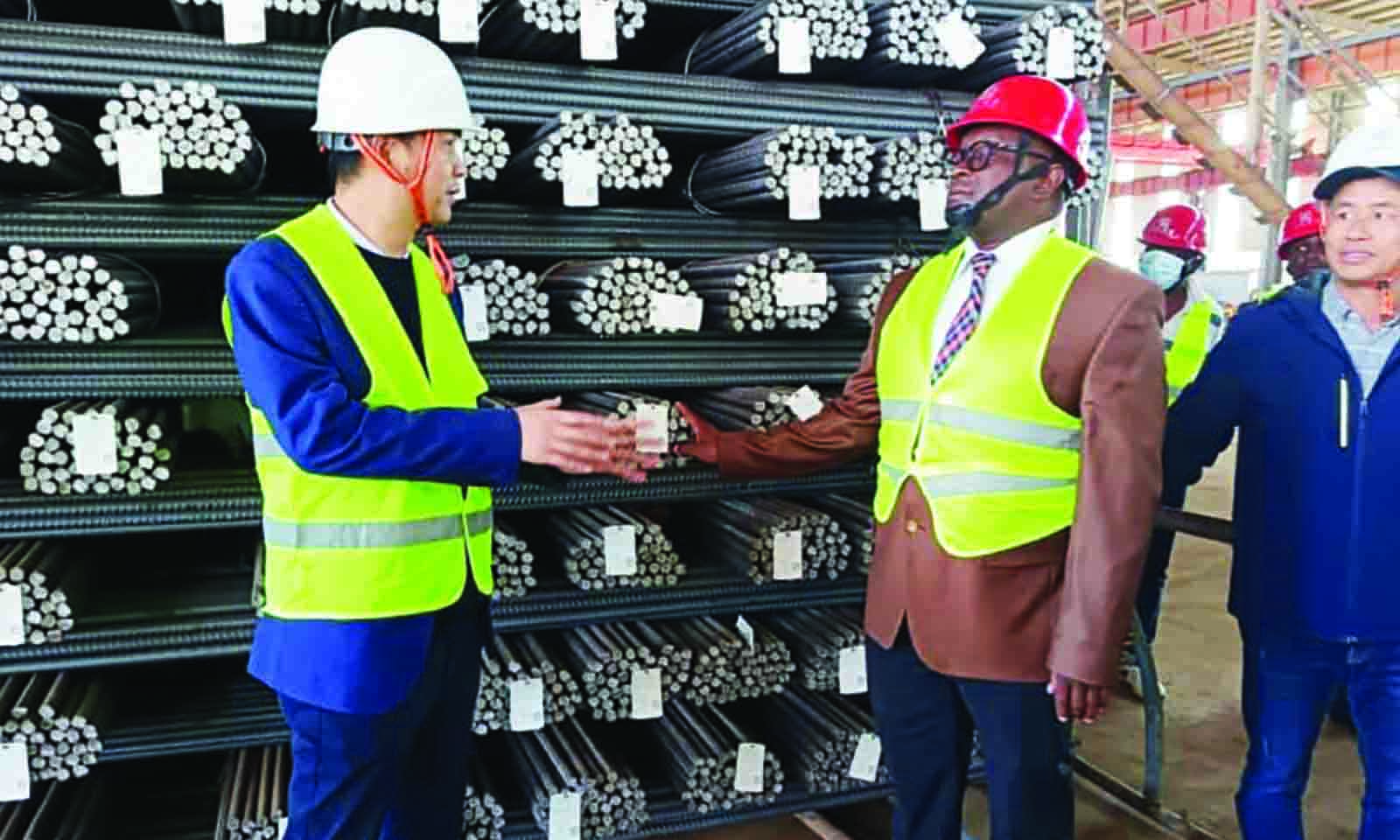
Gibson Mhaka
Zimpapers Politics Hub
THE Second Republic, under President Mnangagwa, continues to implement life-changing projects across all 10 of the country’s provinces.
This confirms the Government’s commitment to its philosophy of “leaving no one and no place behind.”
Since taking office, the Second Republic has prioritised these flagship projects as a key component of the country’s desire to achieve upper-middle-income status by 2030.
These initiatives reflect President Mnangagwa’s political will to stimulate socio-economic growth and enhance the quality of life for all Zimbabweans.
In a bold move to get first-hand insights into how the private sector, supported by sound Government policies, is driving the country’s economic transformation, the Minister of Information, Publicity and Broadcasting Services, Dr Jenfan Muswere, and his team recently led a media delegation on a series of tours of key development projects in Bulawayo, Matabeleland North and Midlands provinces.
Healthcare Transformation in Bulawayo
Among the key projects visited in Bulawayo were the United Bulawayo Hospitals (UBH) Medical Laboratory and Solar Project, Mpilo Central Hospital facilities, the Bulawayo Students Accommodation City complex, the National University of Science and Technology (NUST) Innovation Hub, Cowdray Park Health Centre, Vulindlela Primary School, Edgars Carousel and the Baker’s Inn Plant.
A closer look at the health projects revealed that Mpilo Central Hospital and United Bulawayo Hospitals (UBH) have directly benefited from Government projects that are both transformative and vital to the institutions and the communities they serve.
In 2021, a fire gutted the doctors’ quarters at Mpilo Central Hospital, causing extensive damage to the building that housed medical professionals and their families. In a swift response, the Government facilitated the construction of a new doctors’ complex, while the damaged building was renovated to accommodate those who had been displaced.
Doctors who have since moved into the new facility say they are very happy with the standard of accommodation, which meets their needs.
“I have been staying here at the doctors’ flats since March 2024 when I joined Mpilo. I must say I am impressed by the state of the accommodation.
“We have necessary amenities here — bathrooms with hot showers, tubs, continuous water and electricity supply,” said Dr Lee Nhetekwa.
Nurses’ accommodation at Mpilo Hospital has also been upgraded, providing a comfortable environment that facilitates living and studying under one roof – an unmatched convenience for trainee nurses.
Additionally, the hospital now features a state-of-the-art automated incinerator for medical waste disposal, a development hailed as a game-changer.
This facility will serve not only Mpilo, but other health institutions within Bulawayo and the Matabeleland region.
United Bulawayo Hospitals (UBH) is also set to benefit from a cutting-edge Government initiative – a new Reference Laboratory which is now in the installation phase. This facility, the first of its kind in Zimbabwe, will encompass nine departments, including Haematology, Biochemistry, Histopathology, Immunology/Serology, Blood Bank, Microbiology and Viral Load/Tuberculosis testing.
The laboratory will also offer liver, kidney and cardiac function assessments as well as immunochemistry, aiding in the diagnosis of various diseases.
A key service will be haematology, focusing on blood and blood-related disorders. The new laboratory aims to attract clients from SADC, with trained specialists already recruited.
Both Mpilo and UBH benefitted from solar farms installed by the Government and development partners, ensuring reliable power supply to their operations.
In Cowdray Park, the city’s most populous suburb, a large Government-funded health centre which was officially opened by President Mnangagwa on August 2, 2023. It has significantly impacted the community by bringing healthcare services closer to residents.
Dr Brian Matoro, the facility’s head, noted that since it started operating, the health centre has brought healthcare closer to the people of Cowdray Park, thereby decongesting referral hospitals in Bulawayo.
Bulawayo: A Hub of
Diversified Development
Beyond health, the delegation also witnessed the revitalisation of local textile manufacturing at Edgars Carousel.
The company’s manufacturing division is on a growth trajectory following a retooling exercise that saw an investment of more than US$1 million in modern machinery. The firm is now aiming to surpass the 100 000 units monthly production mark, a milestone last achieved in 1999.
The officials also toured Baker’s Inn, a division of the Victoria Falls Stock Exchange-listed Innscor Africa, which commissioned a US$27,8 million bakery in Bulawayo last year. The state-of-the-art facility now contributes more than a quarter of the company’s national bread supply.
Another key stop was the Bulawayo Students Accommodation City complex, which was lauded as a model of successful public-private sector collaboration.
Commissioned by President Mnangagwa last year, the multi-million-dollar facility offers 516 rooms for 1 032 students.
It houses learners from various tertiary institutions, with a majority coming from NUST and underscores the Government’s commitment to smart infrastructure and enhancing the learning environment for Zimbabwe’s future professionals.
Ultimately, the projects showcased in Bulawayo serve as a testament to the Second Republic’s philosophy of “leaving no one and no place behind.”
By focusing on a diverse range of sectors — from manufacturing and food production to infrastructure and education — the Government is demonstrating its commitment to implementing life-changing projects across the country. This broad-based development is a key part of President Mnangagwa’s vision to stimulate socio-economic growth and improve the quality of life for all Zimbabweans, not just those in the capital.
Matabeleland North: Powering the Nation
In Matabeleland North, Minister Muswere and his team visited the ZPC Hwange Units 7 and 8, Hwange Colliery, the Victoria Falls road, and the Hwange Titan electricity project.
The tour provided first-hand insights into how the private sector, supported by sound Government policies, is driving the country’s economic transformation.
These sites highlighted the progress in energy, infrastructure, and industrial development, underscoring the Government’s commitment to sustainable growth. The tour also aligns with the Government’s vision to promote transparency and celebrate progress as Zimbabwe advances toward its economic goals.
The two units, 7 and 8, which were constructed after deals signed between Zimbabwe and China, have become integral to the country’s energy security, contributing 53 percent of Zimbabwe’s total energy output last year.
They are currently powering growth in agriculture, mining and manufacturing. Engineer Ngonidzashe Dzumbira, Hwange Electricity Supply Company’s acting facility site manager, said the new units, each designed to generate 335 megawatts, were performing optimally.
“Currently, we have managed to meet our production targets for the year, and we anticipate that as we get into December, we should be able to meet them,” he said.
Minister Muswere stated that the investments at Hwange demonstrated the Government’s commitment to energy security and industrialisation.
“This particular provincial media tour is also testimony in terms of achievements to the Government’s commitment to ensure that we achieve energy security and also we contribute towards industrialisation of our country,” he said.
He commended the power station’s role in supporting downstream industries, creating jobs, and maximising coal’s value.
Commissioned in 2023 by President Mnangagwa under the US$1,4 billion Hwange Expansion Project, the two 335MW units have become the backbone of the country’s electricity supply, especially during drought periods that limit generation at Kariba Hydroelectric Power Station. Their combined 670MW capacity has been critical in stabilising the grid and reducing costly imports.
The Hwange projects serve as a powerful example of the Second Republic’s commitment to its philosophy of “leaving no one and no place behind.”
Midlands: A New Era of Industrialisation
In the Midlands Province, Dr Muswere toured the US$1,5 billion Dinson Iron and Steel Company (DISCO) Manhize Steel Plant in Chirumhanzu.
The tour was meant to showcase and report on high-impact projects implemented under the Second Republic, highlighting the Government’s strides in industrialisation and economic transformation. DISCO has been producing over 600 tonnes of steel per day, with output projected to double to 1 200 tonnes daily.
It currently produces 10mm, 16mm, 20mm, 25mm, and 32mm deformed bars, with round bar production lines under development. Once fully operational, the plant will produce up to 1.2 million tonnes of steel annually, reducing Zimbabwe’s reliance on imports and bolstering self-sufficiency in key industrial inputs.
Minister Muswere said the granting of Special Economic Zone (SEZ) status to the DISCO Integrated Industrial Park is a direct reflection of the “Zimbabwe is open for business” mantra.
He said the SEZ designation, granted through the Zimbabwe Investment and Development Agency (ZIDA), will accelerate investment inflows, drive industrialisation, and create jobs.
“The Special Economic Zone status granted by the Government through ZIDA is in line with the ‘Zimbabwe is open for business’ philosophy in order to generate as much foreign direct investment as possible in the country,” he said.
Dr Muswere added that DISCO is a product of the Second Republic’s engagement and re-engagement drive, which has opened the door for large-scale foreign direct investment in strategic sectors.
The SEZ designation allows DISCO to act as a zone owner, developer, and operator, attracting investors across the iron and steel value chain. The park is projected to create up to 25,000 direct jobs and generate 150,000 indirect jobs at full capacity.
The project – described by President Mnangagwa as a “paradigm-shifting milestone” in Zimbabwe’s industrialisation journey — is part of a broader smart city vision.
The development will include steel production facilities, housing, schools, clinics, roads, rail links to Mozambique and the DRC, and a hydroelectric dam.
DISCO project director Mr Wilfred Motsi said the SEZ status is already drawing other companies to Manhize, aided by incentives such as tax rebates and zero-rated taxes.
A Legacy of Nationwide Transformation
These tours of high-impact projects confirm that the Government’s commitment to its philosophy is not merely a slogan but a tangible reality being implemented on the ground.
By prioritising diverse sectors such as health, infrastructure, manufacturing, and energy across different provinces, the Second Republic is ensuring that development is broad-based and inclusive.
This concerted effort is laying the groundwork for a more prosperous and equitable future for all Zimbabweans, demonstrating a clear focus on national transformation beyond the traditional economic hubs.
Ultimately, the collective progress witnessed across these provinces serves as a testament to the country’s renewed commitment to industrialisation and self-sufficiency.
Each project, from the Trabablas Interchange in Harare and the revitalisation projects in Bulawayo to the Hwange Power Station in Matabeleland North and the DISCO steel plant in the Midlands, represents a key milestone in President Mnangagwa’s vision to achieve an upper-middle-income economy by 2030.



 Online Reporter