Online Reporter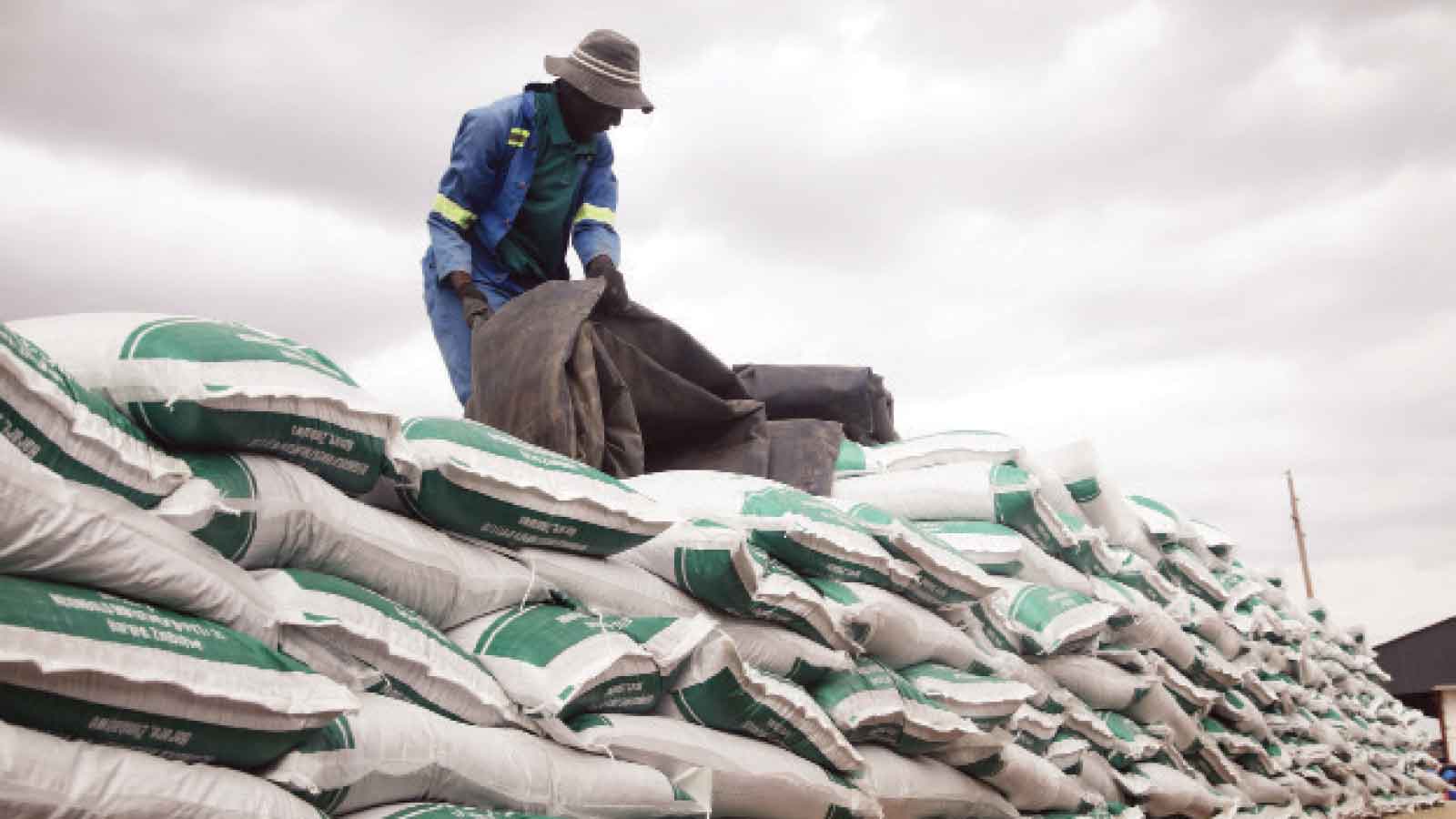
Richard Muponde-Zimpapers Politics Hub
THE timely arrival of heavy rains across Zimbabwe this week, accurately forecast by the Meteorological Services Department, has brought a wave of renewed hope to farmers anxiously awaiting the 2025/2026 summer cropping season.
After months of intensive land preparation, distribution of inputs, and climate-proofing campaigns spearheaded by President Mnangagwa’s administration, the onset of meaningful rainfall marks not only the beginning of planting activities but also another step in the Second Republic’s long-term pursuit of agricultural resilience and national food security.
Set against a weather warning that anticipates significant precipitation, the rains have brought a sense of relief to farming communities across the country.
The MSD’s Level 2 alert signals both opportunity and risk, but for most farmers, the precipitation is the long-awaited trigger for sowing.
According to the MSD, “A thick cloud system is expected to move in from Botswana towards the western borders of the country, at the same time receiving cool, moist air from the southeast.
“The combination of these two systems is expected to bring heavy rainfall exceeding 80mm along with strong winds, thunder and lightning.”
While the department warns of “flash floods in flood-prone zones and river basins, slippery roads with reduced visibility… as well as fallen trees and power lines,” the agricultural sector is primarily focused on the positive impact that the rains will bring to a season that has already been meticulously prepared for.
This year’s preparation has been characterised by one of the timeliest and comprehensive distributions of agricultural inputs since the inception of the Presidential Inputs Scheme.
By the time the rains arrived, deliveries had already been made to six of the country’s eight rural provinces, covering millions of farmers who rely on the scheme.
More than three million rural households are set to benefit from maize seed, fertiliser, herbicides and pesticides, an unprecedented scale that signals the continuity of President Mnangagwa’s commitment to food security under the Second Republic.
Since 2017, the Second Republic has repositioned agriculture as the backbone of national development.
This has been achieved not only through input support but through strategic reforms that seek to convert smallholder farming into a more productive and sustainable enterprise.
The Pfumvudza/Intwasa Programme, central to these reform efforts, continues to anchor national agricultural output.
As Mrs Medlinah Magwenzi explains, “We are very happy to say, in terms of summer preparedness, we have really gone strong, especially under the Presidential Inputs Scheme… The Pfumvudza/Intwasa programme is ongoing, and it is now not just a source of free inputs, it is a way of farming because we have seen its benefits.”
Her assertion captures the transformation that has taken place within communal agriculture, where training, conservation farming and crop diversification have replaced earlier cycles of vulnerability.
By the time the rains fell this week, farmers had already prepared over six million Pfumvudza/Intwasa plots, with some households preparing far more than the recommended minimum.
This unprecedented level of preparedness, motivated by confidence in government support, reflects a growing culture of accountability and productivity within rural communities.
The Government’s prioritisation of farmers who delivered grain to the Grain Marketing Board further incentivises production, strengthening national reserves and ensuring that grain self-sufficiency becomes not only an aspiration but an annual achievement.
The new rains are therefore entering a landscape already primed for success, thanks to multi-tiered support mechanisms.
In addition to the Presidential Inputs Scheme, the Government has rolled out financing facilities such as National Enhanced Agricultural Production Scheme (NEAPS) and the Food Crop Contractors Association to cater for medium and large-scale farmers.
As Professor Obert Jiri notes, “We have NEAPS . . . which supports our larger producers with working capital . . . We also have the Food Crop Contractors Association . . . This model has proved very effective in recent seasons.”
These layered interventions reflect a holistic approach to agricultural transformation under President Mnangagwa, one that recognises the importance of smallholder farmers while simultaneously commercialising select subsectors to stabilise national output.
Irrigation development is another critical pillar of the Second Republic’s agricultural strategy, especially in the face of climate variability.
With Zimbabwe experiencing erratic rainfall patterns and recurring droughts, irrigation has become indispensable.
Prof Jiri underscores this by stating, “A total of 223 000 hectares of land have been put under irrigation for summer crops, utilising our 10 700 dams… The Accelerated Irrigation Rehabilitation Plan aims to mitigate the risk of mid-season droughts and enhance agricultural production.”
These efforts signal a shift away from reliance on unpredictable rainfall towards a more secure and technologically anchored production system.
The Government’s recognition that Zimbabwe is “the most dammed country in Sub-Saharan Africa” with water resources capable of irrigating over two million hectares further reinforces this new direction.
The construction of major dams such as Lake Gwayi-Shangani, Semwa, Tuli Manyange and Kunzvi, each with irrigation components, marks a long-term investment in food sovereignty.
These infrastructure projects extend beyond immediate agricultural needs to include hydropower, potable water supply, and rural economic stimulation through new irrigation schemes.
The rains that arrived this week therefore symbolise more than just a meteorological event, they represent a convergence of environmental opportunity and meticulous national planning.
In previous years, the unpredictability of rainfall exposed the vulnerabilities of a system overly dependent on nature.
Today, however, the narrative is different. Farmers are better equipped, better trained and better supported.
The Government has pre-positioned inputs, strengthened advisory services, expanded irrigation, and reinforced financing structures.
However we must also acknowledge ongoing challenges. Climate change remains a disruptive force, with the MSD warning that “the onset will likely be delayed by up to a month in some areas, with rainfall distribution remaining erratic.”
Such variability underscores the necessity of expanding irrigation, strengthening early warning systems, and diversifying crops in line with agro-ecological zoning, a strategy already being implemented through tailored crop distribution to drier regions.
Still, the foundation laid by President Mnangagwa’s administration places the country in a stronger position than at any other point in the last two decades.
The recurrent bumper harvests experienced under the Second Republic, especially in maize and traditional grains, are not accidental, they are the direct result of consistent political will, targeted investment, and a deliberate focus on climate-proof agriculture.
The timely rains, therefore, enter into a system already set in motion and one where every season builds upon the last.
The heavy rains forecast for this week mark the beginning of a season rich with potential, thanks largely to the Government’s strategic foresight and farmer-focused approach under the Second Republic.