Online Reporter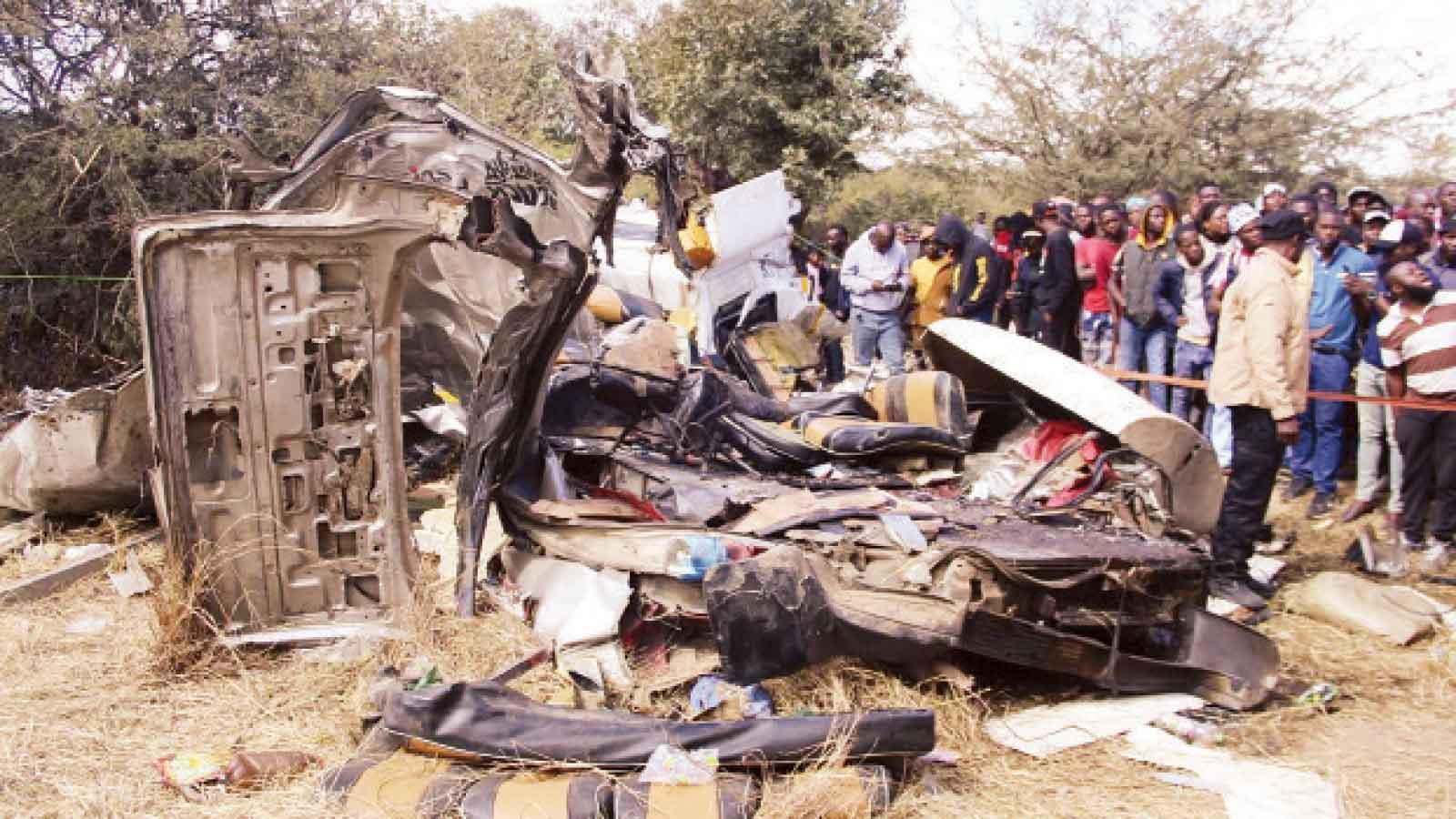
Gibson Mhaka-Zimpapers Politics Hub
ZIMBABWE faces a devastating and predictable public health disaster on its roads, especially during public holidays and the festive season, with a road crash occurring roughly every 15 minutes and approximately five people dying daily.
Official figures underscore a deepening crisis. According to the Zimbabwe National Statistics Agency (ZimStat), road traffic crashes in Zimbabwe surged sharply in the second quarter of 2025, showing a 19.8 percent increase compared to the first three months of the year.
ZimStat said 15 350 crashes were recorded between April and June, up from 12 817 in the first quarter. Of these, 492 were fatal, marking a 30.2 percent rise from the 378 deadly crashes reported earlier in the year.
The crashes claimed 624 lives and left 2,926 people injured, underlining what analysts describe as a deepening road safety crisis on Zimbabwe’s increasingly congested highways.
This alarming fatality rate was also recently revealed by the Minister of Transport and Infrastructural Development, Felix Mhona, while addressing the Senate.
He expressed profound concern over the figures, given the country’s population size.
“We are actually worried as a Ministry with the numbers that we are witnessing on our roads, especially fatalities and even injuries.
“On average, we are witnessing five deaths per day, and per year we are in excess of 2 000, and you wonder,” said Minister Mhona.
He said the Government is now holding the Zimbabwe Republic Police (ZRP) and the Vehicle Inspection Department (VID) directly accountable.
The minister disclosed that he has been in crucial talks with his Home Affairs counterpart to address glaring enforcement loopholes.
The Minister highlighted a common and troubling scenario where vehicles involved in fatal accidents are found to have improper documentation just after passing through a manned police roadblock.
He lamented that over 90 percent of road accidents are attributable to human error, urging drivers to value life and adhere to road rules.
While road rehabilitation is a positive step, it cannot solve the problem alone.
Several new road safety policies have been introduced, but the reality on the ground is that enforcement is strikingly inadequate.
The lack of consistent action from authorities has allowed dangerous driving habits to flourish, creating an environment where drivers and passengers feel empowered to flout safety rules without fear of consequence.
The financial toll of this crisis is crippling
It is estimated that the annual loss of lives and limbs due to road traffic crashes costs low-income nations up to three percent of their Gross Domestic Product (GDP), diverting crucial resources away from development.
The Traffic Safety Council of Zimbabwe (TSCZ), the principal agent for promoting traffic safety, estimates an annual loss of about US$406 million due to road traffic injuries.
Ultimately, the core issue remains the inadequate enforcement of traffic laws, coupled with a lack of sustained effort and a cultural failure among operators and passengers to prioritise safety.
As we approach the festive season the prevailing argument is that road traffic carnage is an equally urgent national security and public safety crisis, one that requires the same high-level, sustained, and funded political will currently demonstrated in the fight against drug and substance abuse.
The Government has explicitly elevated drug and substance abuse to a national security threat that jeopardises the country’s Vision 2030, which automatically mandates a whole-of-Government response.
This commitment is clearly evidenced by the high-level attention given to the issue by the executive. For instance, President Mnangagwa took the decisive step of launching the Multi-Sectoral Drug and Substance Abuse Plan (2024-2030) and establishing a dedicated Inter-Ministerial Committee to coordinate the national effort.
Complementing this high-level political will is a strategy of aggressive enforcement on the ground. This involves sustained, high-profile crackdowns conducted by the Zimbabwe Republic Police (ZRP), resulting in mass arrests and the destruction of known drug bases.
Such actions indicate a continuous deployment of personnel and resources, demonstrating a shift toward a zero-tolerance approach and an intent to dismantle the illicit drug trade networks.
Furthermore, the Government is solidifying this commitment through a robust legal and institutional Framework.
This is exemplified by the Cabinet’s approval of the overarching Multi-Sectoral Plan, as well as the principles for the enactment of the Zimbabwe Drug and Substance Agency Bill, 2024.
The passage of this legislation is designed to pave the way for the establishment of a specialised security service, the Drug and Substance Elimination Agency/National Drug Agency dedicated to the continuous and focused effort of eliminating drug and substance abuse.
This multi-sectoral, high-visibility approach demonstrates a powerful concentration of state resources and political will.
To break the cycle of road fatalities, the same model of commitment and resource intensity must be replicated in the road safety sector.
The shift required to address the road safety crisis moves away from short-term, post-crash solutions toward sustained, preventative action.
This comprehensive strategy is organised under two main pillars, specialised, integrated enforcement and targeting root causes.
The first pillar centres on establishing a high-visibility, zero-tolerance environment on the roads. This necessitates sustained, zero-tolerance deployment, where authorities maintain 24/7 high-visibility policing on all major highways and known blackspots.
Enforcement efforts must focus rigorously on two key areas-speed and unroadworthy vehicles, particularly intensifying patrols immediately before, during, and after core holiday periods when traffic volumes and risk increase sharply.
Complementing this is a targeted crackdown on illegal operators, which involves utilising the resources and specialised capabilities of the anti-drug enforcement muscle (ZRP/CID) to target illegal transport operators, locally known as mushikashika.
These unregulated operators often bypass safety checks and contribute significantly to accidents. This concern was recently voiced by traditional leaders, including Chief Seke (Stanley Chimanikire), when he spoke at the World Day of Remembrance for Road Traffic Victims at Manyame Bridge along Seke Road on Sunday.
Finally, effective enforcement must be backed by swift justice. This means ensuring special traffic courts are operational throughout the festive season to administer swift justice and impose significant penalties for serious violations, including speeding, dangerous driving, and driving while intoxicated.
The second crucial pillar focuses on addressing the primary cause of over 90 percent of accidents: human error.
This starts with mandatory testing, which requires the implementation of intensive, mandatory drug and alcohol testing for all drivers, with a specific focus on Public Service Vehicle (PSV) operators whose actions impact large numbers of passengers.
Beyond testing, a deep-seated cultural shift is necessary. Authorities must intensify public education campaigns, moving beyond simple awareness messages to drive a fundamental change in behaviour and mindset.
The goal is to instil a culture of personal responsibility among both operators and passengers, ultimately ensuring and demanding accountability for safety on the roads.
President Mnangagwa has consistently urged motorists to exercise caution and reminded the nation of its obligation, as a signatory to the SADC Protocol on Transport, to harmonise its traffic regulations.
His recent call for closer SADC collaboration to curb fatal cross-border accidents, following a horrific crash that claimed 42 lives, further underscores the gravity of the crisis and the need for immediate, high-level intervention.
The spiralling road traffic carnage is not just an enforcement problem; it is a profound failure of public safety that demands the same national security footing and unwavering political will currently deployed against drug and substance abuse.
The data clearly demonstrates that road traffic carnage is an equally urgent national security and public safety crisis, one that demands the same high-level, sustained, and funded political will currently being demonstrated in the fight against drug and substance abuse.
While the Government has correctly elevated drug and substance abuse to a national security threat and implemented a multi-sectoral, zero-tolerance approach complete with dedicated agencies and high-visibility enforcement, the annual spike in fatal road crashes is being met with inconsistent, short-term solutions.
To save the more than 2 000 lives lost yearly, the Government must replicate this enforcement model by launching a specialised, integrated, and sustained deployment on the roads.
This means maintaining 24/7 high-visibility policing, implementing mandatory drug and alcohol testing for drivers, and ensuring special traffic courts deliver swift, severe penalties for major violations.
It is important to note that breaking this deadly cycle requires more than just road rehabilitation and awareness campaigns, it requires a fundamental shift in state resource allocation and operational strategy.
The commitment shown in combating drug abuse provides a proven blueprint for success.
By applying the same intensity targeting human factors, cracking down on corruption, and rigorously enforcing traffic laws through dedicated police units, Zimbabwe can move from reacting to crashes to proactively preventing them.
This sustained, zero-tolerance approach is the essential next step to honouring the President’s call for caution and harmonisation, ensuring the country’s highways cease to be a predictable source of national tragedy.