admin
admin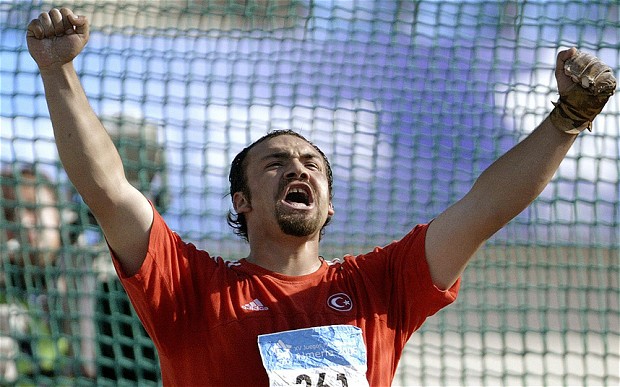

THE Turkish Athletics Federation (TAF) has given two-year suspensions to 31 athletes for drug offences, including Olympic medallist Esref Apak. Hammer thrower Apak, who won silver in Athens in 2004, was one of three athletes listed who competed at the 2012 London Olympics. Turkey’s doping problems threaten to affect Istanbul’s bid to host the 2020 Olympics.
International Olympic Committee members will choose a winner on 7 September.
Worse could follow for the sport in Turkey when TAF completes its investigations into alleged doping by Asli Cakir Alptekin, the women’s 1 500-metre gold medallist at the 2012 Olympics, and two other female team members in London last year.
The bans were expected after the International Association of Athletics Federations carried out tests before and during the Mediterranean Games in the Turkish city of Mersin in June.
Apak was one of eight athletes who tested positive following the European Team Championships in Gateshead the same month.
Last week, TAF chairman Mehmet Terzi resigned from the post he had held for nine years in the face of doping allegations directed at Turkish sportsmen and women.
“The athletes were found to be in violation of Turkey’s strict anti-doping laws following testing undertaken by the Turkish anti-doping authority (TADA),” Ugur Erderner, president of Turkey’s National Olympic Committee and a member of the World Anti-Doping Agency (Wada) executive board, said in a statement.
“This work is part of a concerted, and much more aggressive, anti-doping policy in Turkey that has been in place for over six months and will be further reinforced with the re-accreditation of the Wada-licensed anti-doping laboratory in Ankara later this year.”
The TAF listed the names of the suspended athletes on its website, without giving details of their offences.
Meanwhile, New York Yankees slugger Alex Rodriguez was banned until the end of the 2014 season on Monday, but vowed to fight the sanction in the latest doping scandal to blacken baseball’s image.
Hours before he was to make his season debut for the Yankees in Chicago on Monday night, Rodriguez confirmed he would appeal.
But he refused to answer a point-blank question as to whether Major League Baseball was accurate in charging that he used performance-enhancing drugs, including testosterone and human growth hormone.
“We’ll have a forum to discuss all of that and we’ll talk about it then,” Rodriguez said.
“I don’t know what the motivation is for any of this. But I’m going to respect the process. I feel good that we have an opportunity to do that in the right platform. And we’re going to state our case.”
A dozen other players accepted 50-game suspensions over their links to the Biogenesis anti-aging clinic in Florida.
MLB’s announcement of the bans ended weeks of speculation over the fate of Rodriguez, a three-time American League Most Valuable Player who baseball officials say not only used banned drugs “over the course of multiple years” but also acted to “obstruct and frustrate the Office of the Commissioner’s investigation” of Biogenesis and its link to baseball players.
Rodriguez’s suspension was to take effect tomorrow, but he can continue to play while his appeal before arbitrator Fredric Horowitz is pending.
He was scheduled to bat clean-up and play third base for the Yankees against the White Sox in Chicago on Monday, his first major league game after completing rehab from pre-season hip surgery and a quadriceps injury.
Rodriguez is slated to miss 211 regular-season games. The sanction might not be as devastating as the lifetime ban MLB was reportedly considering, but for a 38-year-old player it could prove a career-ender.-AP.


 Online Reporter