Vusumuzi Dube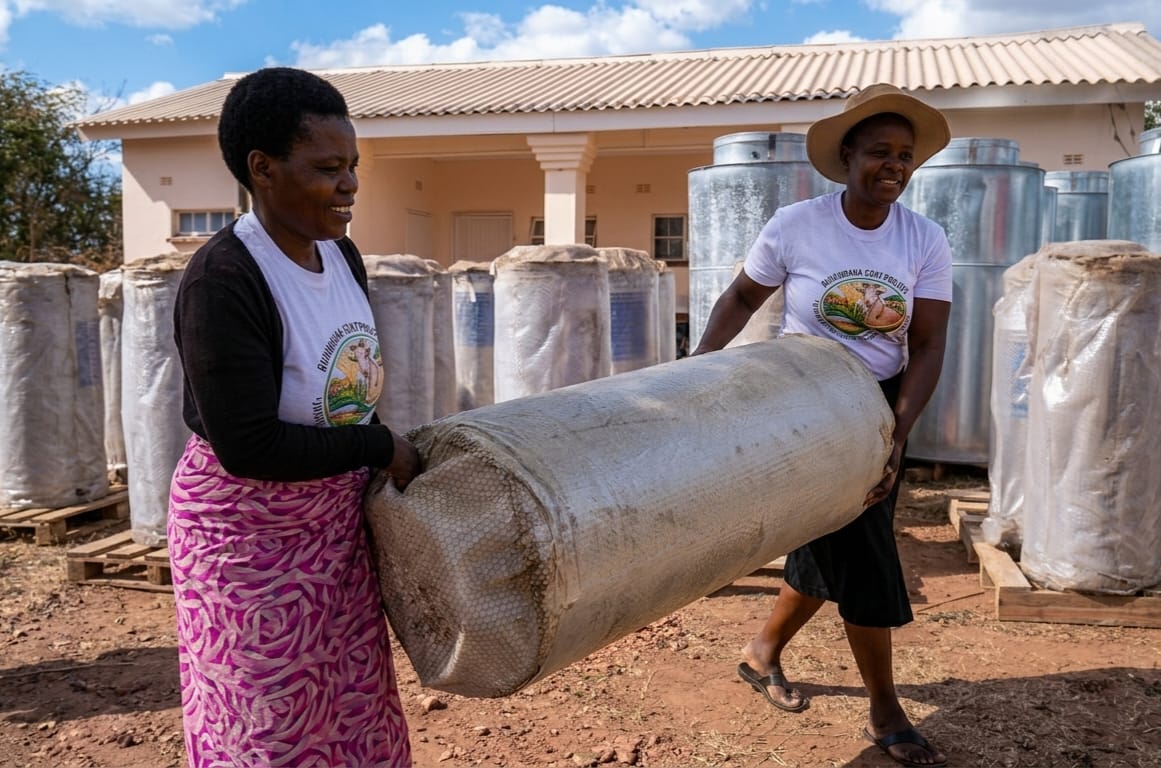
Theseus Mauruki Shambare
AT least 35 000 farmers have begun receiving post-harvest and mechanisation equipment valued at US$2.1 million under a national rollout aimed at reducing food losses and strengthening Zimbabwe’s shift from production-driven agriculture to a more resilient, preservation-focused food system ahead of the projected El Niño-induced 2026/27 summer cropping season.
The intervention comes as Zimbabwe continues to post successive bumper harvests, but faces significant post-harvest losses estimated at over 28 percent in cereals and as high as 45 percent in vegetables.
Experts say these losses continue to undermine farmer incomes, food availability and national resilience despite improved production trends.
Government and development partners say closing this gap has become central to safeguarding food security in a volatile global environment marked by climate variability, supply chain disruptions and rising production risks.
The equipment is being distributed under the Zimbabwe Emergency Food Production Project (ZEFPP), financed by the African Development Bank (AfDB) through the African Development Fund and implemented in partnership with the Food and Agriculture Organisation of the United Nations (FAO) and Government.
The package includes 2 100 metal silos, 70 multi-crop threshers and five combine harvesters designed to improve storage, speed up harvesting and reduce post-harvest losses that have long affected smallholder farmers.
In total, the programme targets more than 35 000 farmers across rural communities, with distribution reaching 61 wards during an intensive six-day rollout exercise. So far, 1 260 silos, 42 threshers and three combine harvesters have already been deployed.
The equipment is being rolled out under shared-use systems targeting farmer groups and community structures, while silos are allocated to households and local storage facilities to ensure broader access.
AfDB Country Manager for Zimbabwe Eyerusalem Fasika said the intervention reflects a strengthened partnership between Government, FAO, farmers and the private sector in addressing food insecurity.
“This was a programme supported through the African Development Fund.
“This milestone reflects the strong partnership between the Government of Zimbabwe, the African Development Bank, the Food and Agriculture Organisation of the United Nations, working together with farmers, extension workers and the private sector,” she said.
She said the programme, established in 2022 under the African Emergency Food Production Facility, was a response to global food system shocks driven by climate variability and disrupted input supply chains.
“Our objective was very clear: to support African countries to rapidly scale up food production while strengthening the resilience and inclusiveness of their agriculture systems,” she said.
Ms Fasika said post-harvest losses remain a critical constraint, particularly for smallholder farmers lacking access to storage and mechanisation services, adding that the new equipment would reduce losses and improve efficiency.
“These technologies are designed to ease labour burdens, particularly for women, and improve productivity and incomes for smallholder farming households,” she said.
FAO Subregional Coordinator for Southern Africa Dr Patrice Talla said the intervention is a key part of Component 1.3 of ZEFPP, which focuses on reducing post-harvest losses and improving grain management.
“Increasing production alone is not sufficient if a significant portion is lost after harvest,” he said.
He said the equipment aligns with FAO’s sustainable agricultural mechanisation flagship, which promotes climate-smart technologies that enhance productivity, create rural employment and strengthen agrifood systems.
Agriculture, Mechanisation and Water Resources Development Permanent Secretary Professor Obert Jiri said the programme directly supports Zimbabwe’s Agriculture Food Systems and Rural Transformation Strategy 2.
“Post-harvest losses have been a silent thief to our food systems,” he said, noting that maize losses can reach 28 percent while vegetables may rise to 45 percent.
He said Government is targeting a reduction in post-harvest losses from 16.5 percent to 6 percent by 2030, adding that the equipment will help transform agriculture into a business-oriented sector.
Chief Director for Agricultural Engineering, Mechanisation and Farm Infrastructure Development Engineer Edwin Zimunga said the US$25 million facility under the African Development Bank-funded Zimbabwe Emergency Food Production Project is already translating into tangible impact at multiple levels of the farming system.
“This Zimbabwe Emergency Food Production Project has been running since 2022. It is a US$25 million grant from the African Development Bank, administered through the Food and Agriculture Organisation in partnership with the Government of Zimbabwe,” he said.
He said the current US$2.1 million worth of equipment being rolled out represents a key component of the broader programme and is designed to deepen impact at grassroots level.
“Being a US$25 million facility, what we are witnessing here is equipment worth US$2.1 million that is directly supporting the programme and is going to benefit in excess of 2 100 family households,” Eng Zimunga said.
He added that the programme is structured to ensure cascading benefits from household to village and ward level, strengthening both productivity and shared access to mechanisation services.



 Online Reporter