

 admin
admin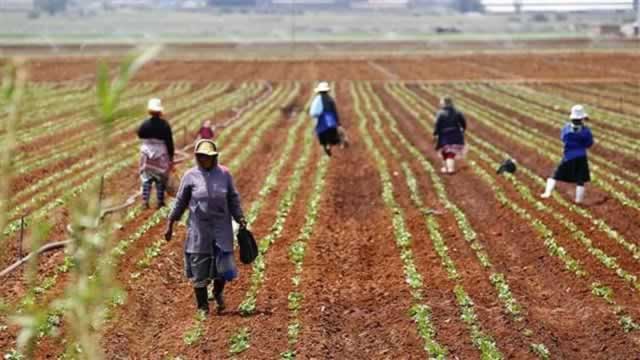
Martin Kadzere Senior Business Reporter
CLOSE to 400 small to large scale farmers with potential irrigable land have tendered their farms for potential partnerships with the Agriculture Rural Development Authority.
Under the arrangement, Government will facilitate mobilisation of funding from the market, with beneficiaries being responsible for the repayment of the lines of credit, Finance and Economic Development Minister Patrick Chinamasa said last week.
“Government has, through ARDA, organised A1, A2 and commercial farmers with potential irrigable land to overcome challenges related to financial resources and technical capacity to join hands with the Authority for purposes of utilising land that would, in the absence of irrigation, otherwise lie idle,” said minister Chinamasa.
“To date, 375 farmers with a potential irrigable hactarage of 41 000 hectares have tendered their farms for possible partnerships with ARDA, with potential to produce 300 000 tonnes of maize, 320 000 tonnes of wheat and 30 000 tonnes of soya beans.
“Challenges related to unpredictable rainfall patterns due to climate change demand that the country invest in irrigation schemes and maximise on the use of existing and new facilities.”
Minister Chinamasa said to build sustainability, the Government is considering introducing a levy on beneficiaries of irrigation schemes, which will be pooled into a fund to be used for maintenance of the facilities, in line with the Land Tenure Regulations.
The minister said given the devastating effects of climate change being faced by the country, priority should be accorded to enhancing climate resilience and mitigation programmes in all climate sensitive sectors of the economy.
This includes scaling up on irrigation development, construction of water reservoirs, adaptation of low carbon and climate resilient development pathways, breeding of drought tolerant crop varieties, strengthening of early warning systems, among others.
“Government views irrigation development as critical to raising productivity and output of the agriculture sector, thus improving standards of living, especially in drought prone farming areas,” he said.
Through the Drought Mitigation Programme, Government has identified interventions needed to rehabilitate existing irrigation schemes. The Government is also collaborating with development partners, to compliment the interventions.
With assistance from Japan, Government is undertaking development and irrigation works at Nyakomba Irrigation scheme at a total cost of $15 million. Commencement of works is expected before end of the year. The Government has also secured a grant of $25,5 million from IFAD under the Debt Sustainability Framework to fund rehabilitation of 4 000 hectares under the Smallholder Irrigation Revitalisation Programme in communal and old resettlement areas in Manicaland, Masvingo, Matebeleland South and Midlands Provinces at a cost of $53 million.
An additional co-financing request from the OPEC Fund for International Development amounting to $20 million has been made and Fund has expressed interest.
“The EU is supporting rehabilitation of irrigation schemes, training of extension staff and farmers, as well as facilitation of market linkages for 20 smallholder irrigation projects in Beitbridge, Chipinge, Chimanimani, Gwanda, Matobo, Mangwe and Makoni districts.
“To date, $1,6 million had been disbursed, against a projection of $4,5 million in 2016.
“The Swiss Development Cooperation is funding the rehabilitation of 14 irrigation schemes in Bikita, Gutu, Masvingo and Zaka districts, targeting 657 hectares,” said the minister
About $1 million was disbursed this year against a projection of $3,5 million for 2016.


 Online Reporter
 dyton mupawaenda