malvernmugadzikwa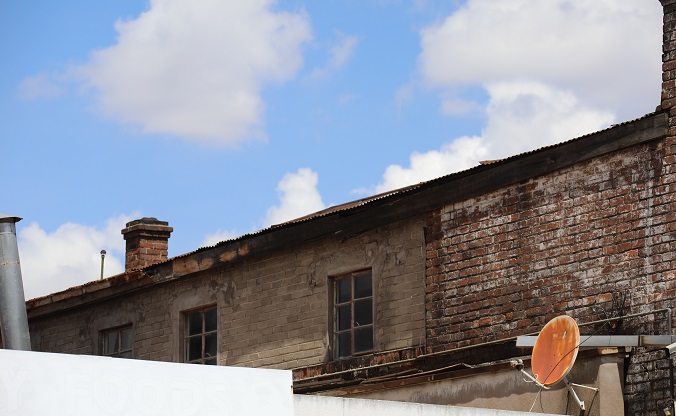
Nokuthula Dube
MORE than 500 buildings, including about 14 high-rise towers in and around Harare’s central business district (CBD), have been classified as unsafe for occupation after Harare City Council inspectors red-flagged the properties for poor ventilation, lack of emergency exits and general decay.
Over 500 abatement orders have since been issued to owners of the buildings, directing them to urgently repair their properties or risk their closure.
An abatement order is a legal document issued by a Government agency or authorised body to address a building nuisance or violation of regulations.
It requires the recipient to take specific actions to stop the nuisance or violation and comply with the regulations.

The documents are aimed at resolving issues that pose a threat to public health, safety or the environment.
Violations that trigger the issuing of abatement orders include unsanitary living conditions in a property; excessive noise pollution; untreated hazardous waste; non-compliance with building codes and air or water pollution exceeding permissible limits.
The authority to issue abatement orders typically lies with Local Government agencies like health departments, building departments or environmental
protection agencies.
Fourteen properties, including Mahachi Quantum Building, Vivandelphi Court, Stewarts and Lloyds, Dublin House, Msasa House, Bush House, Roslin House, Daventry House and Robin House, were recently deemed unfit for use altogether and face potential closure for failing to meet city building codes and health standards.
Some of these buildings, which are home to thousands of small enterprises that are crammed in small spaces, date back to the colonial era.
A woman was killed, while six others were injured last weekend after a balcony on a dilapidated building in central Harare collapsed at the intersection of Chinhoyi and Bank streets.
After its inspection in 2013, the council condemned 10 buildings in the CBD.
In an interview with The Sunday Mail, Harare town clerk Engineer Hosiah Chisango said: “Council has identified four (additional) buildings (that are no longer fit for use) so far and the identification process is ongoing.
“As of yesterday (Thursday last week), 500 abatement orders were issued, and the exercise is ongoing.
“The purpose is to pick those buildings requiring urgent repairs and those to be decommissioned as a matter of urgency.”
He added: “City of Harare conducts regular inspections through their health department, fire department, municipal police and building inspectorate to ensure building owners comply with the various city by-laws.
“The last inspection conducted by the fire department was done on January 13, 2013, and it condemned the following buildings as unfit: Mahachi Building, Vivandelphi Court, Stewarts and Lloyds, Dublin House, Msasa House, Bush House, Roslin House, Daventry House and Robin House.”
All those buildings are yet to be refurbished in line with city regulations.
In terms of Section 49 of the Model Building By-Laws (1977), property owners should not allow any building on their premises to become a danger to the health of its occupants, be a source of unpleasant fumes, smoke or odours, and an unsightly disfigurement to the neighbourhood.
The council recently approached the Government requesting the promulgation of regulations to empower the local authority to shut down dilapidated buildings in the CBD.
This was after the council issued a 14-day ultimatum requiring all property owners and occupants to improve the condition of their buildings through repairs, refurbishments or repainting.
Condemned
Council papers in possession of The Sunday Mail show that Robin House, located along George Silundika Street, was condemned for overcrowding, poor housekeeping, lack of firefighting equipment and poor layout of machinery by occupants, which was putting lives at risk.
Bush House, located along Cameroon Street, on the other hand, was red-flagged for overcrowding, blocking of the main exit, inadequate firefighting equipment and the installation of illegal partitions made from plywood boards, making the building susceptible to fire.
An inspection of Roslin House, along Nelson Mandela Avenue, showed that there were blocked gangways and exit doors, naked electricity cables lying on the ground, lack of fire exit signage and goods stacked above the required height.
Daventry House, along Angwa Street, was found to be overcrowded, lacking firefighting equipment and fire exit signs.
Exit routes inside the building were also blocked.
Mahachi Building, headquarters of the Zimbabwe Electoral Commission, was red-flagged for having no emergency exit doors, dysfunctional firehose reels and lack of fire extinguishers, among other infractions.
Vivandelphi Court in Eastlea has no running water and electricity, while uncollected rubbish has piled up inside the building.
Stewarts and Lloyds building is overcrowded and the exits are blocked, raising the risk of fire outbreaks.
Dublin House, along Mbuya Nehanda Street, was found to be congested, while there were portions of the building made from flammable materials.
In addition, the building had no firefighting equipment and the exit doors were locked.
At Msasa House, inspectors found the building overcrowded, while partitioning was done using cupboards and the exits were blocked.
Added Eng Chisango: “Council carries out building inspections for licensing purposes on a yearly basis.
“However, in line with the urban renewal thrust, more regular inspections will be carried out to ensure compliance.”
Permanent Secretary for Harare Provincial Affairs and Devolution Mr Cosmas Chiringa said the authorities were concerned about the state of some public buildings in the city.
“We are working on a programme to spruce up the CBD,” he said.
“As you can see, the roads are being maintained or resuscitated by the Ministry of Transport and Infrastructural Development and we expect the council to play its part.
“We were very much concerned as a province . . . when we heard about the incident that occurred (city building collapse).
“I got in touch with the town clerk whom I invited to my office to explain what happened.
“He told me that their director responsible for that area was carrying out an investigation and we are expecting a report from him any time next week (this week) to help us know exactly what caused that building to collapse.”
Ministry of Local Government and Public Works communication and advocacy director Mr Gabriel Masvora said the council has the tools to enforce its by-laws.
“There are already standing by-laws which councils need to effect to ensure that they address the issues of dilapidated buildings within their areas,” he said.
“Additionally, the Government is working on urban renewal instruments which address issues of dilapidated buildings and also making use of current legislation — the Regional Town and Country Planning Act — which has provisions for development control and development orders.”



 Online Reporter