

 Chronicle Editor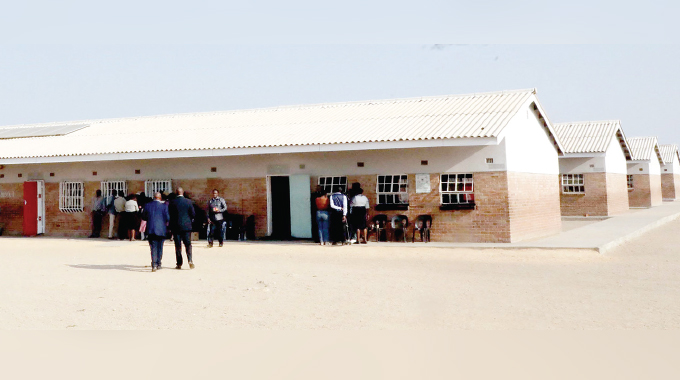
Nqobile Tshili, [email protected]
OVER 500 new schools and an additional 1 000 classroom blocks have been constructed across the country in the last five years as the Second Republic led by President Mnangagwa accelerates the transformation of the education sector to derive higher development impact for future generations.
Through close collaboration with the private sector and development partners, Zimbabwe, during the period under review, has witnessed the construction of about 1 509 science laboratories while over 600 boreholes have been drilled to improve water and sanitation in schools.
The massive construction projects in schools have been driven mainly by devolution funding, and partnerships with development agencies and religious organisations, creating more job opportunities in the process.
The milestone developments in the education sector are contained in Zimbabwe’s 2024 Voluntary National Review (VNR) report on Sustainable Development Goals (SDGs), which the country presented before the United Nations.
As a United Nations signatory, Zimbabwe has committed to the implementation of SDGs, which among other things demand equitable access to education, and that member countries implement development projects that leave no one and no place behind.
Through leveraging partnerships and using local resources, Zimbabwe has aimed to provide inclusive quality education in line with global standards.
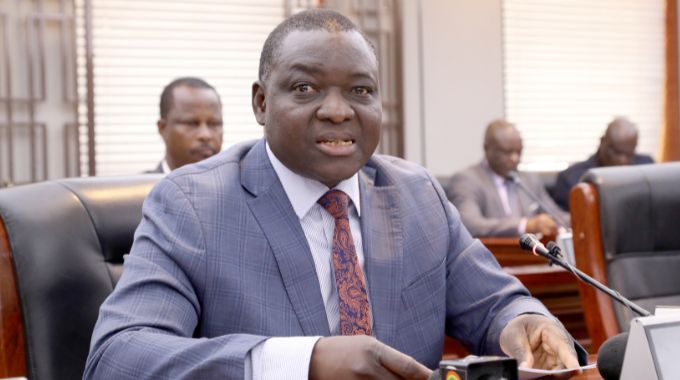
Primary and Secondary Education Minister, Torerai Moyo, yesterday said the Government had achieved commendable strides and continues to improve education infrastructure and teaching methods.
“We have done very well in terms of providing quality education in schools. We are walking the talk in terms of providing quality education.
“We are constructing new schools and I’m confident we have constructed more than 500 schools in the past five years,” said Minister Moyo.
“This year alone, we have commissioned more than 100 new schools. We have partners who have supported us in the construction of new schools and even the schools that have been constructed by private players have been initiated by the Government.”
Minister Moyo said the Second Republic has created a favourable environment for learners and teachers by reducing the distance travelled to and from schools.
“We are improving the pedagogical methodologies and conducting in-service training to our teachers so that we produce 21st-century learners with digital technology skills,” he said.
“We are focusing on artificial intelligence, robotics, and coding and we want to thank the President for being a listening leader who has supported educational programmes through funding including the Presidential Computers Programme.”
Minister Moyo announced that to help teachers adopt 21st-century teaching skills, the Government has collaborated with Russia. Through this partnership, teachers participate in month-long online courses led by Russian professors.
Minister Moyo stated that 25 teachers are recruited each month to participate in intensive online training focused on integrating machine learning into the education sector. This initiative aims to enhance the country’s global competitiveness in delivering high-quality education.
“We have the OPEC Fund for International Development (OFID), which has constructed 17 schools and the President commissioned these earlier this year. OFID has also committed to the construction of 50 new schools next year,” he said.
Minister Moyo said development partners including Unicef continue to pour funds into the education sector, which has seen existing schools being renovated.
“Unicef provides a school improvement grant of between US$3 000 and US$5 000, which schools are using for the renovations of classrooms. It also has a water and sanitation programme where it is drilling boreholes in school,” he said.
“This year 150 solarised boreholes were drilled in Manicaland and Matabeleland South and next year 100 solarised boreholes will be drilled in schools in Masvingo and Midlands. Also, in schools where the solar system is installed, Unicef donates computers to each school.
“It is also supporting the emergency school feeding programme. I know that it is funding the feeding programme in 90 schools in Binga Matabeleland North,” said Minister Moyo.
He said it was pleasing that some organisations doing philanthropic works have constructed new classroom blocks and science laboratories across the country.
In Bulawayo, the Church of Jesus Christ of Latter-Day Saints, as part of Public-Private Partnerships (PPPs), has constructed several classroom blocks and science laboratories to the tune of US$1,6 million to enhance quality education.
Minister Moyo said individual citizens have equally invested in the construction of new schools. He said to ensure the country delivers quality education that leaves no place and no one behind, the ministry was developing an ‘Inclusive Education Policy’ with its draft paper expected to be presented before Cabinet soon.
While Cabinet is working on the Inclusive Education Policy, the Ministry is already rolling out programmes that leave no child behind, he added.
“We have adopted an inclusive approach, which incorporates even children with disabilities so that they are not left behind in accessing quality education.
“We are procuring devices so that those with hearing impairments or visual impairments are also assisted.
“The Zimbabwe School Examinations Council (Zimsec) is already conducting special needs examinations where it provides aids to enable those with special needs to write public examinations,” said Minister Moyo.
“So, as a regulator, we are there to monitor the implementation of these projects so that a good learning environment is obtained in schools.”
He said the ministry is also aware of illegal schools, especially situated in high-density suburbs where pupils are being taught in squalid conditions not suitable for the delivery of education.
Public Service, Labour and Social Welfare SDGs and Agenda 2063 Deputy Director, Ms Sylocious Chaturika, said between 2022 and 2023, the Government constructed at least 200 schools.
“Funding models for the construction of schools by the Ministry of Primary and Secondary Education include the Government funding national budget through the fiscus and devolution funds.
“There is also funding from development loans from multilateral institutions, community contributions, private players and partner funding,” said Ms Chaturika.
A local investor and Active Group of Schools chairman, Mr Victor Moyo, said in the past three years they have constructed three schools within Bulawayo while a fourth one is under construction.
“We are simply trying to complement the Government’s efforts to bring education to the people. My departure point when we started these projects was about bringing quality education in high-density suburbs but we find ourselves moving back to eastern suburbs to construct schools with the availability of land being the push factor,” said Mr Moyo.
He said unlocking funding for the construction of schools remains a major challenge for those who are investing in the education sector. — @nqotshili


 Online Reporter