Thupeyo Muleya, [email protected]
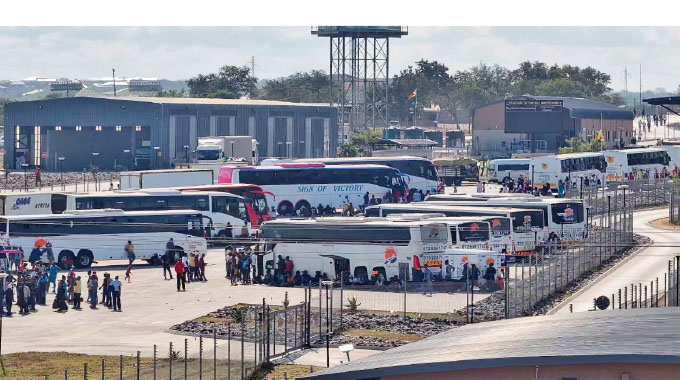
MORE than 56 000 Zimbabweans have returned home through Beitbridge Border Post since late May as anti-migrant protests continue in parts of South Africa.
Government figures show that 56 473 Zimbabweans crossed back into the country between May 28 and June 30.
Of these, 47 252 returned independently, while 9 221 were assisted through the Government’s evacuation programme.
Regional immigration officer for the Southern Region, Mr Joshua Chibundu, said authorities were managing the movement through close coordination involving the Zimbabwe Embassy in South Africa, the South African government and the Department of Civil Protection’s structures.
“The movement is coordinated. We are equal to the task and have enough manpower evenly deployed across shifts and counters,” said Mr Chibundu.
He said the border post was also facilitating Malawian nationals transiting through Zimbabwe on their way home from South Africa.
All returnees are being profiled at Beitbridge to enable Government to maintain accurate records, identify vulnerable cases and facilitate onward travel arrangements to their home districts.
Mr Chibundu added that the increased movement of returnees had not disrupted normal border operations.
“Tourists, truck drivers and other travellers are still being cleared without unnecessary delays, while we give priority attention to returnees,” he said.
South Africa’s Border Management Authority (BMA) said biometric profiling at Beitbridge remains central to ensuring that the repatriation process is conducted safely and in an orderly manner.
Speaking at Beitbridge yesterday, Acting BMA Commissioner Major General David Chilembe said the border post was now handling most of the repatriation operations following the closure of the Durban processing facility.
“Biometric profiling at the point of exit is to ensure we do not mis-repatriate other nationals, including South Africans,” he said.
“It is also being used to ensure that crime fugitives of all nationalities do not escape under the guise of repatriations.”
Major-General Chilembe said every person leaving through the border is screened using fingerprints and facial recognition technology to verify identities, confirm immigration status and identify individuals wanted by law enforcement authorities.
He said the BMA was working closely with South Africa’s National Joint Operational and Intelligence Structure (NATJOINTS), as well as officials from Zimbabwe and Malawi, given Beitbridge’s strategic role as a major regional transit point.
“We are co-ordinating with our counterparts to verify lists, share information, and ensure a smooth and orderly process.
“We are dealing with three processes that include deportation, repatriations and normal movement facilitation. So far, we have been able to carry out all these processes successfully,” he said.
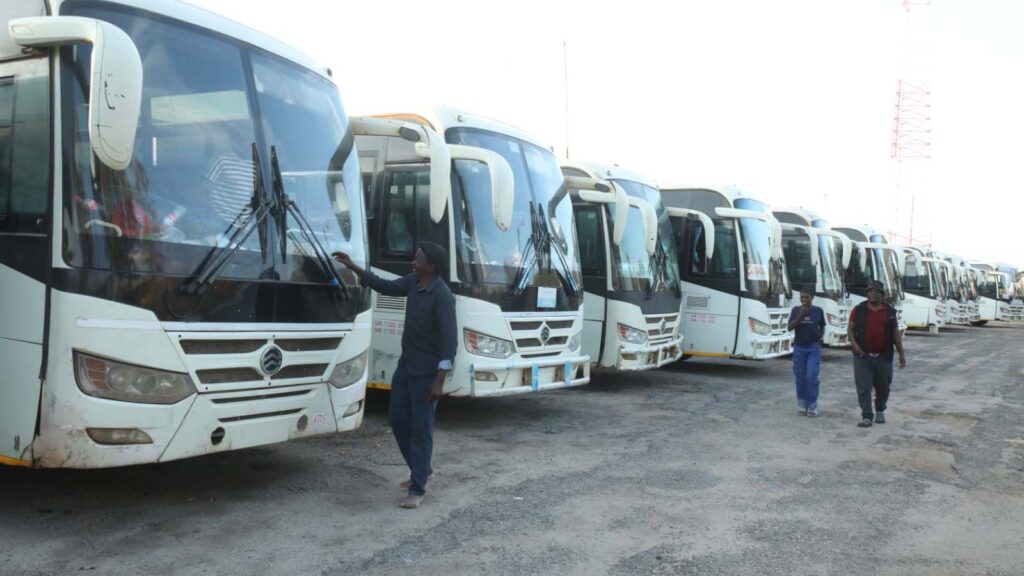
Major General Chilembe said additional buses carrying returnees from various parts of South Africa were expected at the border in the coming days, with authorities having strategically deployed personnel to prevent delays while maintaining security and operational efficiency.
He revealed that on Wednesday alone, the BMA processed 2 400 people departing through Beitbridge, composed of 1 700 Malawians and 700 Zimbabweans.
“In addition, since we started here on 7 June when the President (Cyril Ramaphosa) announced the measures on migration, we have dealt with more than 35 000 people in terms of repatriations and deportations at this border,” he said.
Major General Chilembe also confirmed that South Africa’s Inter-Ministerial Committee on Migration would visit various repatriation centres to assess operations on the ground and receive updates from officials.
“The goal is to ensure the process is humane, lawful, and secure for all involved,” he said.
Beitbridge Border Post remains the main gateway for the ongoing repatriation programme. As anti-African migrant protests continue in parts of South Africa, authorities on both sides of the border say systems have been strengthened to accommodate increasing numbers while ensuring that operations remain secure, efficient and orderly.