Online Reporter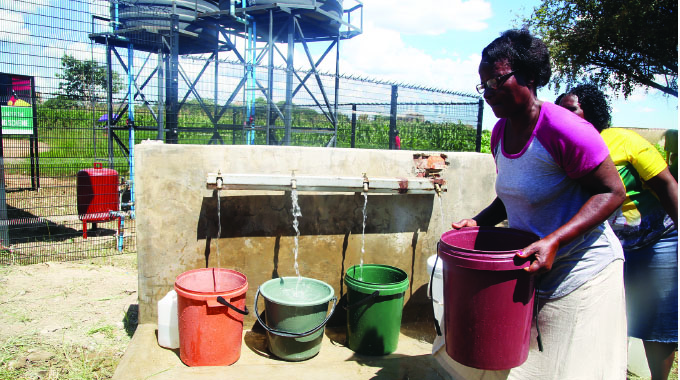
Precious Manomano-Herald Reporter
GOVERNMENT is stepping up efforts to improve rural water access and drive rural industrialisation, with 47 709 rural water points operational and 1 813 business units established countrywide.
The latest figures show that 8 942 rural water points are non-functional, highlighting the need for continued investment in rehabilitation and maintenance as the Government seeks to ensure communities have reliable water for domestic use, livestock production and income-generating projects.
A total of 5 278 solar-powered piped water schemes have also been established, while 6 043 Presidential Rural Development Programme (PRDP) boreholes had been drilled as of September 23, according to Government statistics.
The investments are supporting the transformation of rural communities into productive economic centres, with water infrastructure providing the foundation for agricultural production, livestock development and community enterprises.
Under the Presidential Borehole Scheme, the Government has drilled more than 6 000 boreholes countrywide, with 900 equipped with bush pumps and 363 solarised, according to statistics from the Agricultural Rural Development Advisory Services (ARDAS).
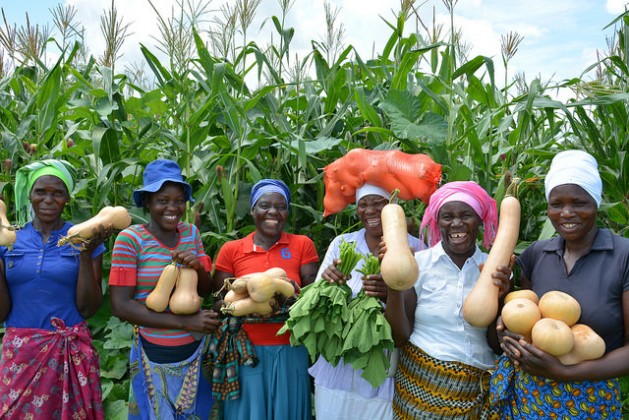
The borehole programme is being linked to the establishment of Village Business Units (VBUs), which provide communities with productive infrastructure for horticulture, livestock production, food processing and other income-generating activities.
A total of 1 435 VBUs have been completed, while 248 are under construction.
The programme forms part of the Second Republic’s broader rural transformation agenda, which seeks to move communities beyond subsistence production towards commercially viable enterprises that generate employment and income.
Agriculture, Mechanisation and Water Resources Development Permanent Secretary Professor Obert Jiri said community participation was critical to ensuring the sustainability of the projects.
“We anticipate that the entire village will rally behind the Village Business Unit to ensure its operational success.
“This initiative goes beyond farming; it is about creating a sustainable economic model that empowers families and fosters community spirit. By working together, villagers can ensure food security, which is critical,” he said.
The VBU model is being complemented by other community-based enterprises, with 274 School Business Units, 16 Youth Business Units, 54 Community Business Units and nine Vocational Training Centres completed.
Masvingo Province has recorded the highest number of Presidential boreholes drilled, at 1 086, of which 213 have been equipped with bush pumps and 49 solarised.
The province has also completed 297 VBUs, with 16 under construction, alongside 35 School Business Units, two Youth Business Units, 21 Community Business Units and two Vocational Training Centres.
Mashonaland Central has drilled 701 Presidential boreholes, including 87 equipped with bush pumps. The province has completed 269 VBUs, with seven under construction, while 39 School Business Units, one Youth Business Unit, four Community Business Units and one Vocational Training Centre have also been completed.
Manicaland has drilled 750 Presidential boreholes, including 84 equipped with bush pumps and 48 solarised.
The province has completed 150 VBUs, with 32 under construction.
Mashonaland East has drilled 769 Presidential boreholes, including 128 equipped with bush pumps and 53 solarised.
The infrastructure development dovetails with the Government’s Rural Development 8.0 initiative, which seeks to accelerate rural industrialisation by transforming communities into centres of production.
The programme encompasses interventions such as the Accelerator Model, Pfumvudza/Intwasa, the Presidential Poultry Scheme, the Presidential Fisheries Scheme, the Presidential Tick Grease Scheme and the Presidential Cotton Inputs Scheme.
The impact of the water and productive infrastructure is already being felt in communities.
In Lupane, the Masibambane and Zamani nutritional gardens have developed into thriving business units benefiting more than 100 people, providing both food and income for beneficiaries.
In Manicaland, Village Agro-Business Units established in Chisuma, Temaruru, Tamburikayi, Hakwata, Chichesa, Mutema Secondary School and at Chief Mutema’s homestead are similarly supporting increased production, employment creation and income generation.