Online Reporter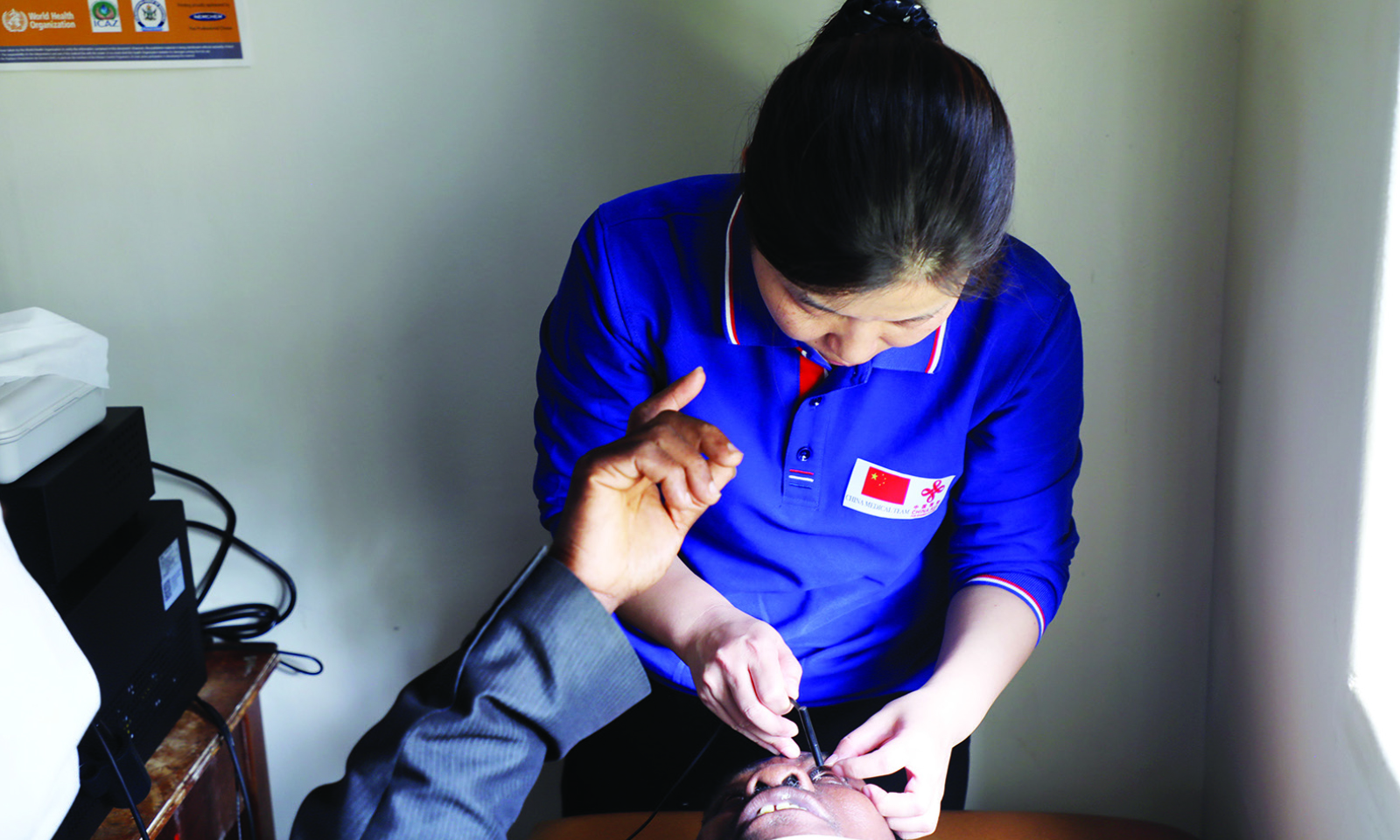
Rumbidzayi Zinyuke
Senior Health Reporter
A total of 600 people will receive free cataract surgery at Parirenyatwa Group of Hospitals’ Sekuru Kaguvi Eye Hospital next week as part of a Zimbabwe-China partnership.
Being rolled out under the ‘Bright Journey’ programme, the joint effort is the third such programme between the two governments.
A team of 11 Chinese ophthalmologists led by Dr Hong Xiuqin from Hunan Provincial People’s Hospital is screening patients in preparation for the surgical camp that starts on Monday, with nearly 300 patients already booked.
Speaking yesterday, Dr Hong hoped that the camp would provide local hospitals and doctors with the technology and skills to provide high-quality services to the people.
“This year marks the 45th anniversary of the establishment of diplomatic relations between China and Zimbabwe. It is also the 40th anniversary of the China and Zimbabwe medical cooperation.
“This year, we came here with the agreement for the Bright Journey between the two governments. The team here will provide free surgery for 600 people with cataracts.
“We provide the surgery medications, consumables and equipment and then provide the surgery to the local people. We hope that through this, we can bring the bright light to the patients with cataracts. We hope this project cooperation and technical exchanges can strengthen our friendship between the two countries,” she said.
Dr Hong said the team of ophthalmologists had brought advanced Chinese endocrine surgery technology and would also conduct academic exchanges with local experts being trained in the use of the technology, which would be donated to the hospital after the camp.
Government Chief Ophthalmologist, Dr Boniface Macheka, said the screening for people above the age of 18 would continue even after the surgeries begin to ensure those who would have missed the week-long programme are catered for.
“We still want more so that we reach the total target of 600 patients and I am sure the whole of next week the surgeries will be going on, there will also be concurrent screening for new patients.
“We want to operate on an average of about 120 patients per day so that our target of 600 can be met in the first five to six days,” he said.
Dr Macheka said cataracts are one of the leading causes of reversible blindness among people over 50 years.
Age-related cataracts are the most common followed by cataracts related to injuries and those associated with medical conditions such as diabetes mellitus.
Zimbabwe has between 60 000 and 100 000 people affected by cataracts and in need of surgery.
But due to limited resources, the Government has not been able to clear the backlog.
“The numbers continue to increase and we have to operate on 30 000 to 40 000 cataracts a year, which we are not reaching for us to be able to clear the backlog,” Dr Macheka said.
Patients who underwent screening expressed joy at the opportunity to access the services, which are not affordable to most.
Mrs Olivia Kadyamarunga said: “I started having problems with my eyes last year and my vision became hazy.
“When I went to the doctor I was told I had cataracts in both eyes but I could not afford the op. When I heard about this camp, it gave me hope that I would get treatment.”
Sekuru Reuben Mushure Kahari (82) said he gradually lost sight because of eye cataracts.
“I developed eye problems long back when I was still at work. I was given some medicines but my eyesight did not improve.
“Even with prescription glasses, my sight did not improve. I am now totally blind but I hope that this operation will help me to see once again,” he said.
The Government has conducted four rapid assessments of avoidable blindness between 2016 and 2020 in Manicaland, Masvingo, Matabeleland South, and Midlands.
Results of the assessments showed that cataracts were responsible for blindness in about 65 percent of all blind people in the country.