

 admin
admin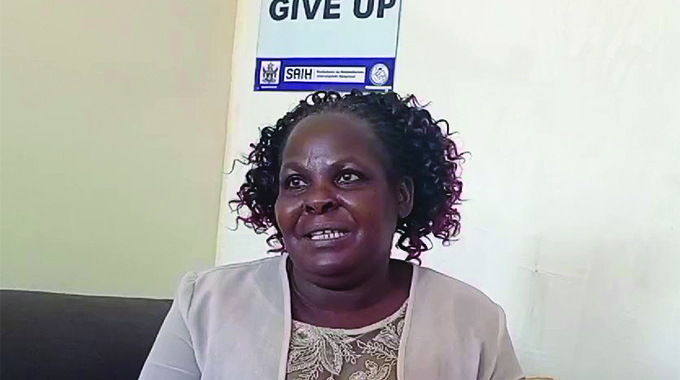
Sukulwenkosi Dube-Matutu Bulawayo Bureau
The Government has set aside $60 million for the procurement of industrial machinery at the Joshua Mqabuko Nkomo (JMN) Polytechnic’s home economics complex, which will be turned into an innovation hub.
The construction of the home economics complex, which is now in its final stages of completion, has brought excitement among students as it is going to be a game-changer in the industrialisation of the country.
The innovation hub is also expected to benefit graduates who intend to start their own enterprises in line with the Education 5.0 model, which is a five-mission model of teaching, research, community service, innovation and industrialisation — established to move the nation forward towards an innovation-led and knowledge-driven economy.
It speaks to the utilisation of local resources for social and economic development. The new model, which was adopted five years ago, seeks to produce graduates who solve national problems instead of just being job seekers.
The home economics complex will also help ease challenges of the shortage of learning space at JMN Nkomo Polytechnic.
Once complete, it will house a clothing factory and accommodate students pursuing practical courses such as tourism and hospitality, professional cookery, textile and clothing design.
It is envisaged to become a major Food Science and Technology Centre and an incubation ground for more industries that will birth a vibrant food technology industry.
The country designed Education 5.0 with the goal to industrialise and modernise the country after realising that Education 3.0 could not develop the country.
JMN Polytechnic principal Dr Ngoni Moyo said students will form consortiums where they will come together as groups and use the practical skills that they would have acquired from the institution to start income-generating projects.
She said the Government has allocated $60 million towards purchasing state-of-the-art equipment for the innovation hub.
“As a college, we now see the home economics complex as an innovation and industrial hub. This is an important structure which will help us as an institution to implement Education 5.0 model,” she said.
“As an institution, we are pursuing the industrialisation agenda and this building will come in handy as it will bring in a lot of production and industrialisation.”
Dr Ngoni said upon its completion, there will be a lot of industrial activities revolving around clothing, bakery, art and design business start-ups.
“Education 5.0 is a movement from the theory based form of learning to a practical approach. Government has not only assisted us in the construction of the block, but it has given us $60 million, which we will use to buy state-of-the-art equipment and furniture,” she said.
Dr Ngoni said the completion of the home economics complex will change the face of the institution and help it gain international recognition.
Marvelous Shumbayimwe, a student in the Division of Technical Education and majoring in textile clothing, technology and design, said the home economics complex will benefit both JMN Polytechnic students and graduates.
“I see this innovation hub having a huge impact in the lives of many. It will benefit both on students and graduates,” he said.
“Students will have an opportunity to undergo high skilled training using state-of-the-art equipment, and it will also create employment for graduates.
“The home economics block will be the site of a proper workshop where we can conduct our practicals. We have been using makeshift workshops that have limited space and also moving the equipment from the workshop to the storeroom,” she said
The new block can house heavy machinery equipment for sewing, cooking and laundry.
Ms Shumbayimwe said students will now be able to acquire modern technical skills that will make them competitive in the industry.
Walson Ndlovu, a student in the Division of Teacher Education majoring in secondary science, said the Education 5.0 model gives young people opportunities to venture into entrepreneurship.
He said with the skills that they will acquire will enable them to put their ideas to reality.
“Infrastructure development of this nature will help promote growth of the economy, not only at local level, but at a national level as well. This is the kind of development that the country needs,” said Ndlovu.
Takudzwa Ncube, a student majoring in Mathematics, said the state-of-the-art equipment which will be introduced at the innovation hub will help the institution churns out students that are ready for the industry.
Construction of the Joshua Mqabuko Nkomo Polytechnic home economics block stalled since 2003. Heritage-Based Education 5.0 spurred progress in technological developments and infrastructural expansions.
This is a shift from the past when the country’s education sought to regurgitate Eurocentric views without coming up with tailor-made solutions to Zimbabwe and Africa.
Universities and colleges have been mandated to innovate and respond to community challenges.
The Government has increased funding towards infrastructure development at universities so as to synchronise the transformation led by higher and tertiary institutions.
The Government has been channeling funds towards improving infrastructure at higher and tertiary institutions with the National University of Science and Technology students’ accommodation complex complete, while the Gwanda State University mining laboratory block is almost complete.
In the 2023 National Budget, the Treasury allocated $9,8 billion towards infrastructure development at universities which is a precursor towards aligning universities with their national mandate in the development discourse.



 Online Reporter