Online Reporter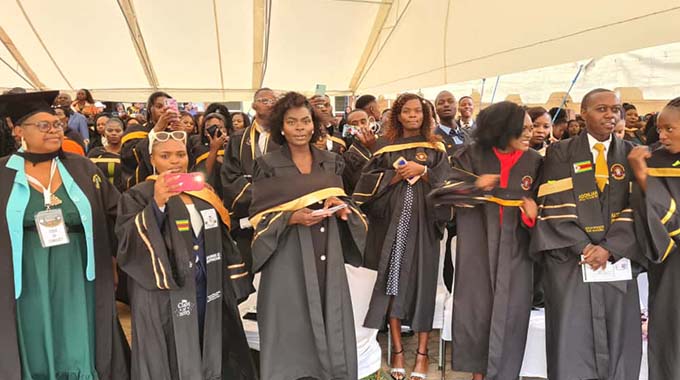
Sukulwenkosi Dube-Matutu, [email protected]
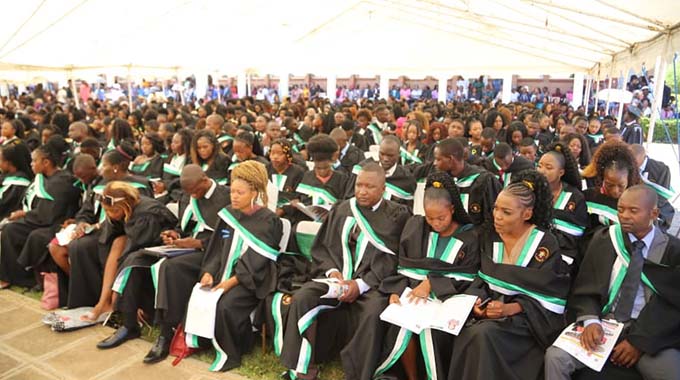
SIX hundred and forty-two students graduated yesterday from Joshua Mqabuko Nkomo Polytechnic in Gwanda, with the Government urging the new crop of educators and technicians to embrace Artificial Intelligence (AI), innovation and entrepreneurship as critical tools in driving the country’s industrialisation agenda towards Vision 2030.
The graduates included 392 from the Teacher Education Division and 250 from the Technical Division, marking the 43rd graduation ceremony for teacher education and the 19th for technical education.
Since its establishment in 1981 as Gwanda Zintec, and later the launch of the technical division in 2004, the institution has produced 21 558 graduates — 17 168 teachers and 4 390 technicians and artisans — cementing its role as a hub of human capital development in the region.
Deputy Minister of Higher and Tertiary Education, Innovation, Science and Technology Development, Simelisizwe Sibanda, who represented Minister Dr Frederick Shava, said the country must re-imagine education as a driver of enterprise, innovation and national transformation.
“We have intricately interwoven our education and heritage to redefine and reshape the future of our country. Education is not an abstract ideal; it is a tool of nation-building, governance and spiritual stewardship,” he said.
Highlighting the role of technology, Dr Shava said Artificial Intelligence will be strategically incorporated into the curriculum to make teaching and learning more adaptive and inclusive.
“AI enables smarter lesson planning, adaptive content delivery, inclusive learning models and efficient resource management. This is not a departure from our values; it is a reinforcement of them through innovation,” said Dr Shava.
He added that the Government had declared 2025 the year of commercialisation, with Joshua Mqabuko Nkomo Polytechnic already recording milestones such as the establishment of Big Josh Polytechnic Pvt Ltd and ventures in mining, publishing and clothing manufacturing.
Dr Shava reaffirmed the Government’s commitment to equity in education, saying prospective learners with disabilities are given first preference in accommodation and supported with assistive devices.
“Furthermore, the ministry is complementing institutional efforts by providing assistive devices to learners with special needs. These technologies are not luxuries; they are enablers of equal participation, academic success and lifelong empowerment. This is how we foster a truly empowered society,” he said.
Dr Shava also challenged graduates to take up their roles as educators, artisans, innovators and entrepreneurs, positioning themselves as builders of Zimbabwe’s future.
The minister also warned graduates against drug and substance abuse, urging them to protect their potential through discipline and integrity.
The college principal, Dr Ngoni Moyo, said the institution continues to align with the Heritage-Based 5.0 philosophy, which integrates teaching, research, community service, innovation and industrialisation.
She said this year’s 392 teacher education graduates came from intakes in General Education, Early Childhood Development and Secondary Sciences, while the 250 technical graduates specialised in Commerce, Applied Sciences and Engineering, achieving an overall pass rate of 76 percent, the same as last year.
Matabeleland South Provincial Affairs and Devolution Minister Albert Nguluvhe commended Joshua Mqabuko
Nkomo Polytechnic for contributing to rural industrialisation through outreach initiatives.
He highlighted the Integrated Skills Expansion Outreach Programme (ISEOP) and short courses extended to Matobo, Insiza, Bulilima and Beitbridge districts, saying these efforts reflected the Second Republic’s philosophy of
“leaving no one and no place behind.”
“Joshua Mqabuko Nkomo Polytechnic is making a direct contribution to the province’s development agenda and the transformation of lives in Matabeleland South. Its programmes go beyond the classroom, creating opportunities across communities,” he said.
This year’s graduation ran under the theme: “Transforming education: fostering research, innovation and industrialisation for a prosperous and empowered upper-middle-income society by 2030.” — @DubeMatutu