Online Reporter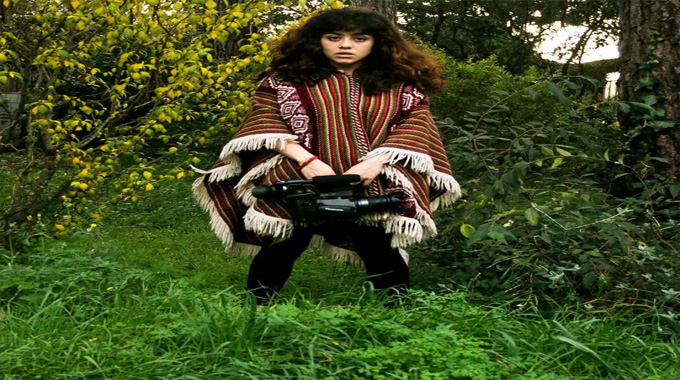
Mbulelo Mpofu, Zimpapers Arts and Entertainment Hub
VIOLETA KOKOPELLI — Costa Rican-Catalan filmmaker, anthropologist, and activist – traces lines of connection on a world map and her finger lands on Zimbabwe, where her collaborative platform ATAEC is fostering trailblazing work with Bulawayo visual artist Fisani Nkomo and indigenous entrepreneur Makhosi “Godinga” Mahlangu. This glocal network is proving that art might just hold the key to climate resilience and decolonial action.
Born from Kokopelli’s multidisciplinary vision in 2018, ATAEC (Glocal Associative Network of Artists, Cultures & Climates) began as a digital meeting space for artists addressing ecological crises. Today, it has evolved into an action-oriented collaborative platform guided by principles of cultural preservation, indigenous rights, and non-capitalist relationships.
“Our structure holds ecosocialism — ecological and social thoughts focused on common benefit in a sustainable, non-colonised way,” said Kokopelli, whose journey spans film direction, audio-visual anthropology, and now evolutionary anthropology studies alongside saxophone practice and new motherhood since 2022.
ATAEC’s most resonant collaborations unfold over 7 000 kilometres away in Zimbabwe. At the forefront is Bulawayo-based multidisciplinary artist and curator Fisani Nkomo, whose project Black the New Green: Art and Climate Change exemplifies ATAEC’s mission.
“My heart is with him. Fisani has a clear statement in his work – full of great value for indigenous communities, African food revolution, and decolonisation. I’ve followed his performances and proposals; they align profoundly with ATAEC’s values established around 2017,” Kokopelli shared passionately.
Nkomo’s work intersects powerfully with that of Makhosi “Godinga” Mahlangu, founder of Lupane-based Lupane Veggie Guys and collaborator with the collective African Food Revolution – both ATAEC partners. Their focus on reviving indigenous food systems through enterprises like baobab juice production represents the tangible, community-level climate action ATAEC champions.
Kokopelli sees these Zimbabwean initiatives as vital counterpoints to neo-colonial environmental exploitation: “We’ve denounced how big companies expropriate land for mono-plantations like Amazonian soy for European livestock — projects that displace indigenous communities and accelerate climate injustice.”
ATAEC functions as a conduit rather than a director. When asked how it practically supports artists like Nkomo, Kokopelli emphasises resource facilitation and philosophical alignment. “Our role is to connect values-driven creators to opportunities, visibility, and crucially — paid work.” This financial commitment is central to ATAEC’s ethics. “In a capitalistic world where art’s intrinsic value struggles, we ensure every project we initiate pays participants. Volunteering has its place, but professional sustainability is justice.”
While physical presence remains a future aspiration (“I’ve never been to Zimbabwe — only Burkina Faso in Africa, which deeply moved me”), Kokopelli leverages digital tools and anthropological insight to foster meaningful exchange. Her studies inform ATAEC’s approach: “Africa maintains cultural continuities disrupted in Latin America.
Zimbabwe’s preservation of languages and indigenous knowledge through people like Fisani and Godinga is invaluable to global resilience.”
Kokopelli acknowledges current constraints. Motherhood and academic pursuits have necessitated scaling back ATAEC’s once “bigger dreams” of systemic change.
“It’s very hard to build sustainable structures for artists in this economy. Art is like a tree or water — it shouldn’t need commodification, yet we’re forced to navigate money constantly,” she reflected.
Her vision for ATAEC’s future remains intentionally open-ended.

“I can’t dictate its path now. It’s nourished by many — Frank Trobok exploring decolonial art in Chile/Sabadell, Carlo Sela discussing political ecology in Italy, Manu Siqueira in Brazil. Something beautiful will emerge organically.”
When not mapping climate-art synergies or studying, Kokopelli finds solace in music and nature.
“I repose playing saxophone — lately with a big band — or through bike rides in nature and yoga.” This balance fuels her enduring belief in art’s transformative power. “Projects like Black the New Green and African Food Revolution demonstrate how creativity can reclaim narratives from extractive systems. Fisani’s performances aren’t just art; they’re acts of cultural sovereignty and climate testimony.”
Kokopelli’s reverence for African resilience permeates her work.
“I was amazed by the rhythm of society, the music, the food, the relational ways of being. I have a big admiration for Africa’s cultures, languages, and landscapes.”
This fuels her determination to amplify Zimbabwean voices despite geographical distance.
“Zimbabwe is absolutely my desired next destination in Africa. Until then, ATAEC remains committed to ensuring artists like Fisani and visionaries like Godinga aren’t just seen, but resourced as essential guides in our collective struggle for a just, climatically stable future.”
As Kokopelli lifts her saxophone, the sound resonates as a metaphor for her work — a single instrument weaving into a larger harmony, much like ATAEC’s network: distinct artistic voices across Barcelona, Bulawayo, and Lupane, creating a unified score for planetary healing and decolonial hope. —@MbuleloMpofu