dyton mupawaenda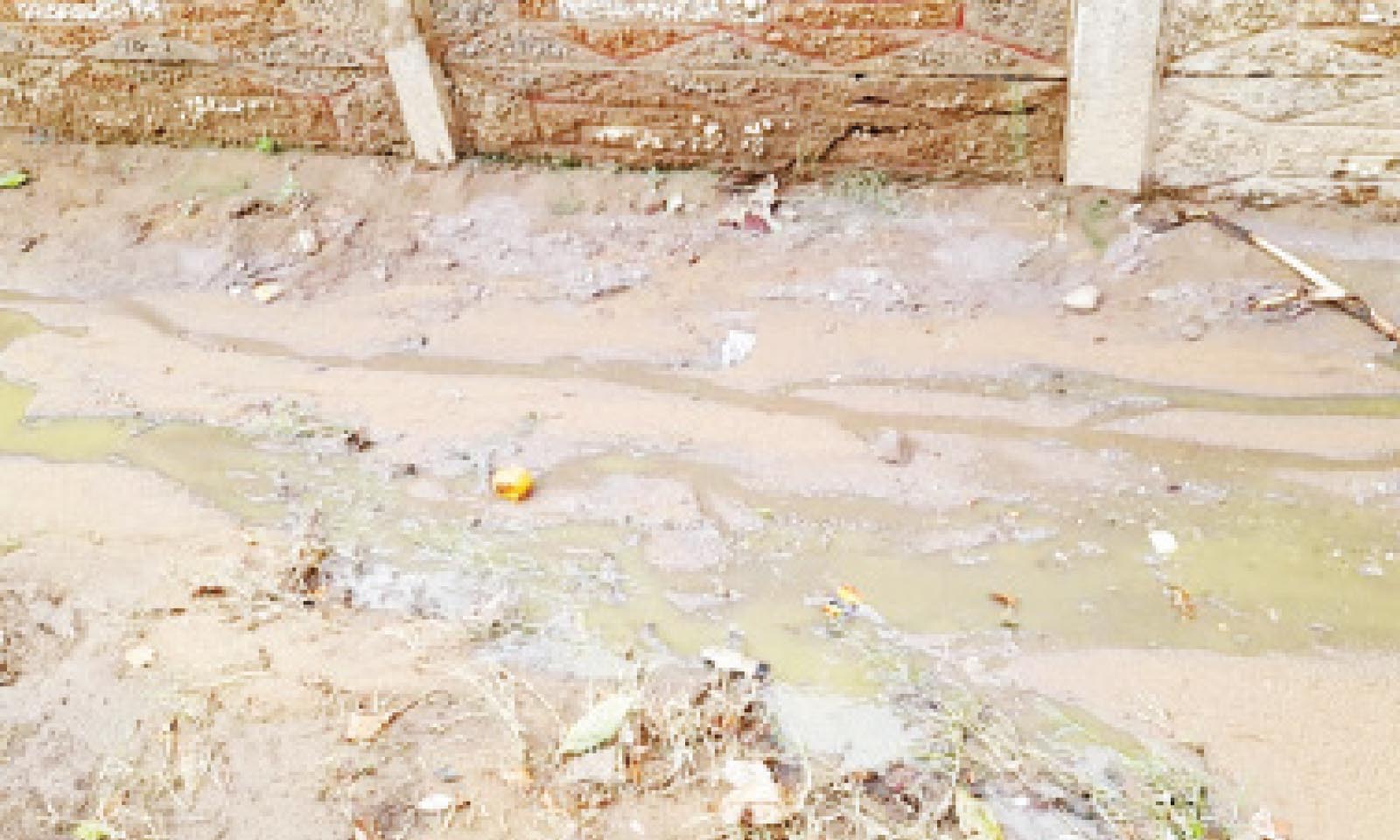
Rumbidzayi Zinyuke-Senior Health Reporter
MORE than three quarters of the raw sewage being generated in Harare is finding its way into the streets or the soils of the involved communities or directly into Lake Chivero before it can be treated owing to the breakdown of the city’s sewerage infrastructure.
Out of an estimated 330 megalitres of sewage collected from communities every day, only 38 megalitres head to the treatment plants.
A tour of cholera-hit Kuwadzana suburb and the Crowborough sewage treatment plant by the Minister of Health and Child Care, Dr Douglas Mombeshora and council officials this week showed that there was more sewage flowing within the living environment.
Speaking during the tour, Harare City waste water manager Engineer Simon Muserere said council had a sewage collection efficiency of 71 percent meaning the rest was spilling into the living environment before it could be taken for treatment.
After collection, the sewage goes through the conveyancing pipes to the treatment plants.
“We are losing about 60 percent during conveyancing which means out of the estimated 330 megalitres that we are collecting every day from the communities, 60 percent is lost before it gets to the treatment plant. At the treatment plant, we then look at around 117 to 130 megalitres arriving at the treatment plant. All our treatment plants have a design capacity of 219,5 megalitres per day, but we only have functional 38 megalitres per day. This is from our Unit 4 at Firle which treats 18 megalitres, Unit 5C at Firle which treats 18Ml, Hatcliffe treats 2,5 megalitres and Marlborough treats 7 megalitres,” said Eng Muserere.
He said council was targeting to increase collection capacity to 80 percent as the bulk of the uncollected sewage was within the southern incorporated areas which could not be connected to the sewer system at the moment.
Besides the broken sewer lines within the suburbs, Eng Muserere said the trunk sewer from Kuwadzana to Crowborough was also broken and discharging straight into Little Marimba River as well as the stream crossings at Glen Norah.
With Units 1, 2, 5A, 5B and 5D at Firl treatment plant and the three units at Crowborough all dysfunctional, this means close to 200 megalitres of sewage is going directly to Lake Chivero and will be treated at Morton Jaffray Water Works when drawn from the lake.
“We checked the hydraulic retention time of our Lake Chivero, and it is 100 to 200 days which comes up to 3 to 6 months. What this means is that if we have rains today, after 6 months, all the rains would have been flushed out of Lake Chivero and this raw sewage would have filled it.”
“It also means treatment of water becomes complex. We have high cost of water treatment chemicals, frequent back washes and we will lose another 30 percent of water through backwashing and other losses at the treatment plant. So what we then pump into the distribution system is also reduced,” he added.
“This whole vicious cycle has to be broken somewhere, somehow. We need to respect the entire cycle of water. We should not only respect the clear water, but also the polluted water from the sewage treatment plants, the trunk sewers and also the bioreactor system in the treatment works that protects the city from all these contaminants.”
Harare is currently faced with a cholera outbreak that has to date claimed nine lives and affected more than 2 000 people.
The main challenges fuelling the outbreak have been cited as the constant sewer bursts and lack of clean water, since most of the water sources are contaminated with E. coli or other coliforms that cause diarrhoeal diseases.
On Tuesday, Cabinet activated the Civil Protection Unit Act to deal with the current outbreak in the city.
Health and Child Care Minister Dr Mombeshora said it was important for Government to come in when council was struggling to address these challenges.
“In the long term we want to make sure that the sewer treatment plants in Crowborough are repaired.
“There are three sites not working and as a result that sewage is being discharged into Lake Chivero raw. So we are seeing failure on the part of City of Harare to manage what they are supposed to manage and Government is coming in to assist,” he said.



 Online Reporter