Online Reporter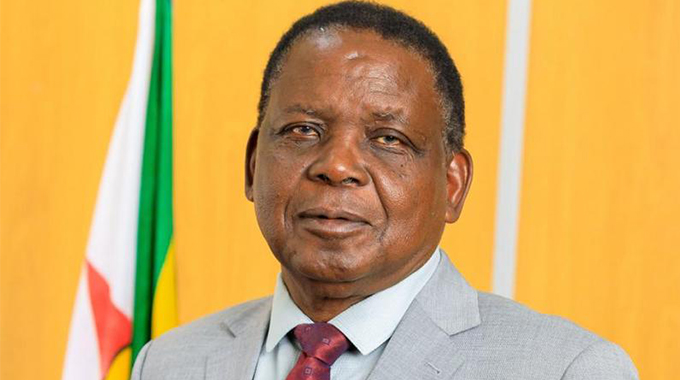
Online Reporter
The newly constituted Mining Affairs Board has assumed a strategic role in Zimbabwe’s mining governance architecture, with Deputy Minister of Mines and Mining Development Hon Fred Moyo urging the Board to safeguard the country’s mineral wealth, uphold the rule of law and ensure that mining contributes to sustainable development and national prosperity. Constituted in terms of Part II of the Mines and Minerals Act [Chapter 21:05], the MiningAffairs Board is a statutory institution established to exercise the powers, functions and duties provided for under the mining law and any other functions assigned to it by the Minister.
The Act places the Board within Zimbabwe’s mineral-rights administration framework, giving it an important role in matters relating to mining rights and other statutory responsibilities.
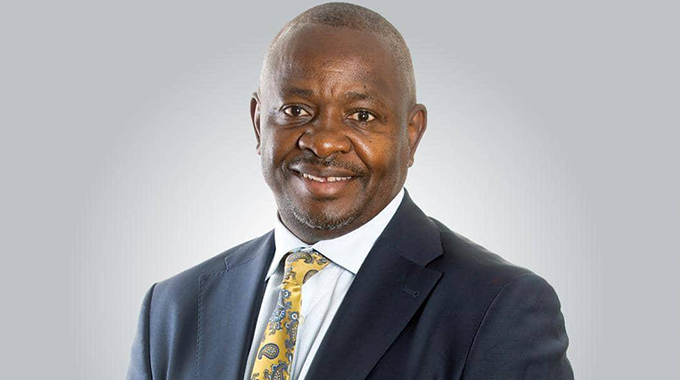
The newly appointed Board is chaired by the Permanent Secretary for Mines and Mining Development, Dr T. U. Wushe, with Eng C.S. Tahwa, Eng M.J. Munodawafa, Mr Nhukaruma, Mr F. Magumbate, Mr Allen Mashingaidze,Mr Harry Greaves, Mr Sylvester Dhlamini, Mrs Manyara Chigunduru, Ms Blessing Hungwe and Mrs NanganidzaiMakoho serving as members, while Ms E. M. Muguti is the Secretary to the Board.
The appointment of Dr Wushe as Chairperson places the Permanent Secretary at the centre of the Board’s leadership at a critical stage in Zimbabwe’s mining sector, as Government continues to strengthen mineral governance while pursuing increased investment, value addition and beneficiation.
The Board therefore occupies an important position within Zimbabwe’s mineral-rights administration, where its statutory responsibilities intersect with mining investment, technical assessment, mineral development and the broader national interest.
Under the Mines and Minerals Act, the Board performs functions relating to mining rights and other matters provided for under the legislation, while its statutory powers include the consideration and investigation of matters brought before it.
The Act gives the Board powers to require information and documentation and to summon persons in proceedings before it, providing a formal mechanism for scrutiny of matters falling within its jurisdiction.
The significance of the Board was underscored by Hon Moyo during the official opening of its governance training, where he congratulated the newly appointed members and described their appointment as the beginning of a national responsibility directly connected to the governance, integrity and sustainable development of Zimbabwe’s mining sector.
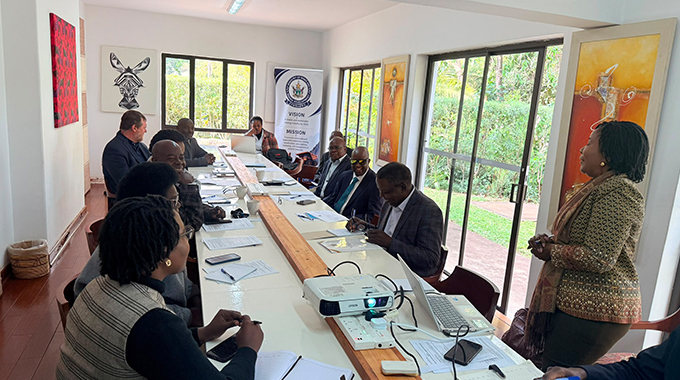
The Deputy Minister highlighted the Board’s advisory role to the Ministry and its responsibilities in processing mining licences, leases and special grants for energy and strategic minerals, approving non-standard tribute agreements and resolving disputes between farmers and miners. His remarks placed the work of the Board within the wider public-interest responsibility attached to Zimbabwe’s mineral resources.
Hon Moyo urged the members to execute their mandate with diligence and impartiality, while ensuring that the rule of law is upheld, national interests are protected and responsible investment and sustainable mining are promoted.
He also stressed the far-reaching implications of decisions made by the Board for investment and national revenue, placing a strong emphasis on integrity and accountability in the execution of its mandate.
The Mining Affairs Board’s responsibilities are particularly significant in a sector that remains central to Zimbabwe’s
economic transformation. Mineral development provides the foundation for investment, employment, exports, industrial activity and revenue generation, making effective governance an important component of the country’s economic development strategy.
The Board’s role also extends to the consideration of tribute agreements. Under the Mines and Minerals Act, tribute agreements are subject to examination and approval within the statutory framework, with the Board required to consider whether the interests of the parties are adequately protected and whether the arrangements support the proper development and working of the mine.
This reflects the broader principle that mineral rights carry responsibilities attached to the development and productive utilisation of Zimbabwe’s finite mineral resources.
The composition of the newly constituted Board further strengthens the governance framework by bringing together different areas of expertise and experience.
The statutory architecture of the Board provides for senior government and technical expertise, while its current composition incorporates perspectives relevant to mining, industry, agriculture and finance.
This diversity is important because mineral development intersects with several areas of the economy, including land use, investment, mining engineering, geology, metallurgy, agriculture, finance and industrial development.
At the centre of this institutional framework is Dr Wushe, whose position as Chairperson places him in a key leadership role in guiding the Board’s deliberations and ensuring that its statutory responsibilities are carried out within the broader mandate of the Ministry of Mines and Mining Development.
His chairmanship comes at a time when Zimbabwe is placing increasing emphasis on strengthening the governance of its mineral resources and maximising the economic value derived from mining.
That national direction is closely aligned with the National Development Strategy 2, which places structural transformation, value addition and beneficiation among the key components of Zimbabwe’s economic development agenda as the country moves towards Vision 2030. NDS2 seeks to accelerate economic transformation and strengthen domestic value chains, while Vision 2030 provides the overarching objective of building an empowered and prosperous upper-middle-income society.
The mining sector has a central role in this transformation, with Government pursuing policies aimed at ensuring that the country derives greater value from its mineral resources.
The Ministry of Mines and Mining Development’s mandate encompasses sustainable investment, exploration, mining, value addition, beneficiation, marketing and the management of mineral resources for the benefit of Zimbabwe.
The Ministry’s Research, Value Addition and Beneficiation function is also responsible for promoting investment in mineral value addition, developing beneficiation policies, monitoring value-addition establishments and conducting research aimed at improving efficiencies in the mining industry.
The Mining Affairs Board operates within this wider institutional environment, making the governance of mineral rights an important component of the value-addition and beneficiation agenda. Secure, transparent and properly administered mineral rights provide the foundation upon which exploration, mining, processing and downstream industrial activities can be developed.
Zimbabwe’s drive towards value addition means that mineral development is increasingly being considered in terms of the economic value that can be retained within the country, including through processing, refining, manufacturing and the development of downstream industries.
The Board’s work therefore intersects with the wider national objective of ensuring that mining supports industrialisation and contributes to sustainable economic growth.
The governance responsibilities of the Board are further supported by statutory safeguards designed to promote integrity in its proceedings. The Mines and Minerals Act provides for circumstances in which a Board member with a direct or indirect pecuniary interest in a matter may not participate in its consideration, reinforcing the importance of impartiality in the exercise of the Board’s functions.
The Board also has statutory investigative powers that enable it to obtain information and documentation and require relevant persons to appear before it in appropriate proceedings. These provisions provide the institutional framework for informed consideration of matters falling within the Board’s mandate. The new Board also begins its tenure as Zimbabwe continues to modernise its mining legislative framework.
The Mines and Minerals Bill, 2025 proposes reforms to the existing mining law, including changes to the administration of mining titles and the establishment of a Mining Cadastre Register and Registry.
These reforms form part of broader efforts to modernise mineral-rights administration and strengthen the regulatory framework governing the sector.
Against this background, the induction of the newly constituted Mining Affairs Board represents an important stage in the continued strengthening of Zimbabwe’s mining governance system.
The message delivered by Hon Moyo placed the responsibility squarely on the Board to protect the integrity of the mining sector while supporting responsible investment and sustainable development.
For Dr Wushe and the newly appointed members, the mandate encompasses a range of statutory responsibilities that have implications for mining rights, investment, mineral development and the national economy.
The Board’s work will take place within a national development framework that increasingly links mineral governance with value addition, beneficiation and industrial transformation. As Zimbabwe advances the objectives of
NDS2 and Vision 2030, the effective governance of its mineral resources remains fundamental to converting the country’s substantial mineral endowment into greater economic value.
The newly constituted Mining Affairs Board, under the chairmanship of Dr T. U. Wushe, is therefore positioned within a critical part of that governance architecture, with its statutory mandate placing it at the intersection of mineral rights, investment, responsible mining and the national interest.