Herald Reporter
For two years, Gaza has existed in a landscape where the ordinary markers of civilian life have steadily disappeared, homes reduced to rubble, schools emptied, hospitals overwhelmed and families repeatedly uprooted in search of somewhere, anywhere, to survive.
Behind the grim statistics is a human catastrophe that has continued to deepen since October 7, 2023, when the Hamas-led attack on Israel triggered a devastating military campaign in the Gaza Strip.
By the second anniversary of the conflict, Palestinian authorities were reporting more than 76 000 people killed or missing, while the territory’s entire population of about 2.3 million people faced varying degrees of hunger, displacement, disease and insecurity.
The Palestinian Government Media Office describes the destruction as genocide and ethnic cleansing allegations Israel rejects.
Independent United Nations reporting paints a picture of devastation on an extraordinary scale.
According to Gaza’s Ministry of Health, cited by the United Nations Office for the Coordination of Humanitarian Affairs (OCHA), 67 173 Palestinians had been killed and 169 780 injured by October 7, 2025. The ministry reported that 20 179 of those killed were children and 10 427 were women. OCHA also recorded 461 malnutrition-related deaths, including 157 children, since the beginning of the conflict.
But numbers, however staggering, struggle to convey what two years of war have done to a society.
They cannot describe the mother who has lost her child.
They cannot measure the fear of a family sleeping beneath a tent while bombs fall nearby.
They cannot calculate the value of a classroom that has become a shelter, or a hospital that can no longer provide the care for which it was built.
And they cannot capture what it means for a journalist to pick up a camera or notebook each morning knowing that the act of documenting the war may itself become a death sentence.
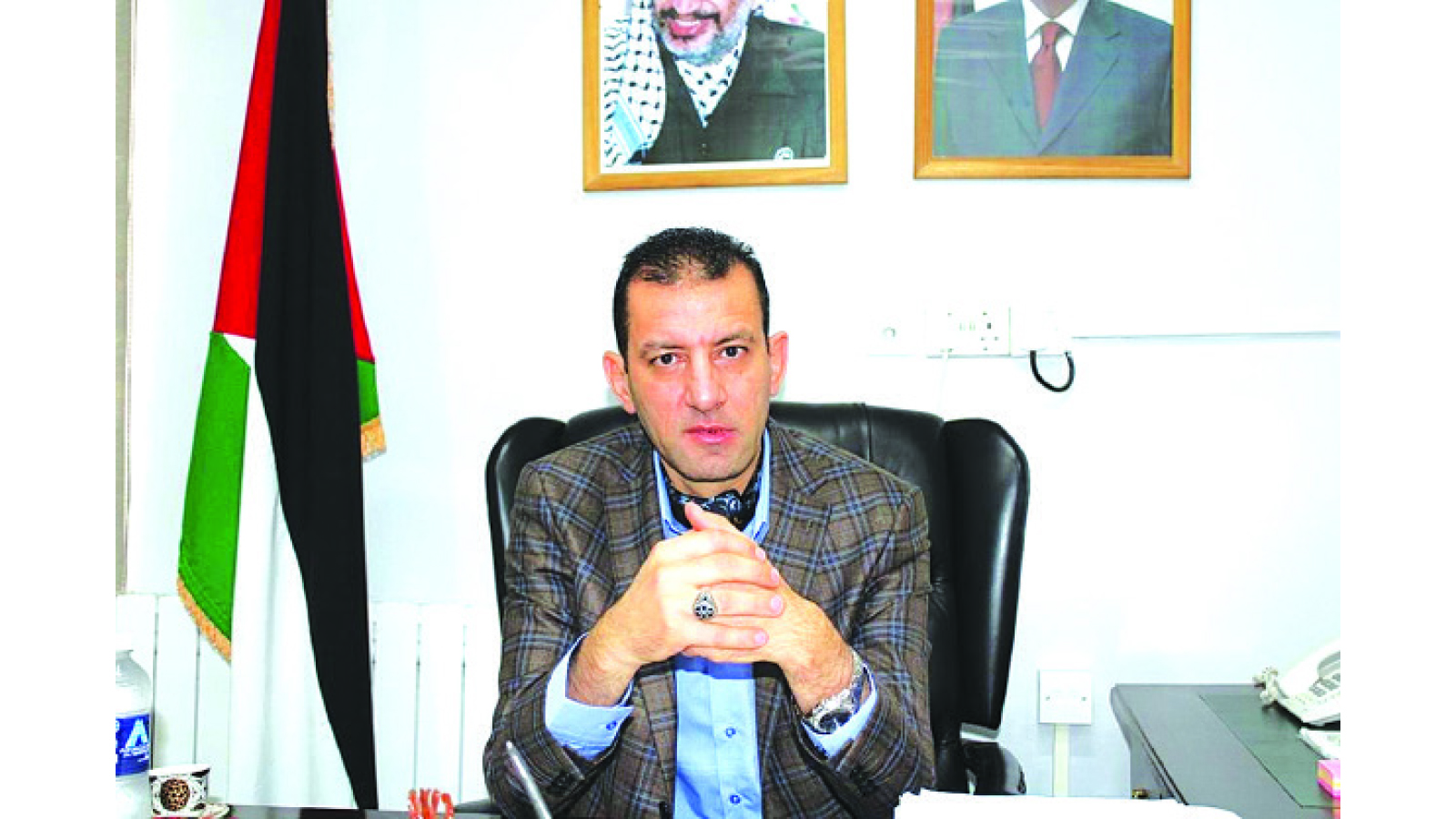
Palestinian Ambassador to Zimbabwe Dr Tamer Almassri says Zimbabwean journalists have helped to keep the Palestinian story alive.
For Dr Almassri, the role of journalists is particularly important because Gaza has increasingly become a war reported by people living inside it.
International journalists have faced severe restrictions on entering the territory independently. The Committee to Protect Journalists reported in October 2025 that Israel had maintained a ban on independent foreign media access to Gaza since the beginning of the conflict, leaving local Palestinian journalists as the principal witnesses documenting events on the ground.
The consequence has been devastating.
The Palestinian Government Media Office said hundreds of journalists had been killed since the beginning of the war, while CPJ’s independently verified figures also placed the toll at an unprecedented level.
By October 16, 2025, CPJ had documented at least 237 journalists and media workers killed in the wider conflict, including 197 Palestinians killed in Gaza, while stressing that its figures are continually updated as investigations progress.
The deaths have robbed Gaza not only of lives but of witnesses.
Every journalist killed represents a lost account of a destroyed home, a bombed school, a crowded hospital, a grieving family or a community forced to flee.
Dr Almassri has previously described the killing of Palestinian journalists as an attempt to prevent the world from seeing what was happening inside Gaza.
“They fear the truth,” he said in an earlier statement following the killing of Palestinian journalist Hassan Islayeh.
“And when the world fails to hold them accountable, they believe they can do anything, anywhere, anytime.”
He added: “The Palestinian people are not just numbers, they are human beings with stories, dreams and lives. And brave journalists like Hassan were their voices.”
Those words perhaps explain why the battle for information has become almost as consequential as the battlefields themselves.
A population pushed to the edge
The humanitarian crisis has moved beyond the immediate consequences of bombardment.
In August 2025, an Integrated Food Security Phase Classification analysis confirmed famine in Gaza Governorate, with more than half a million people trapped in famine conditions and warnings that famine could spread to Deir al-Balah and Khan Younis.
The crisis was particularly severe among children.
UNICEF reported that, by October 2025, an estimated 64 000 children had been killed or maimed during the two-year conflict, including at least 1 000 babies.
“For more than 700 days, children in Gaza have been killed, maimed, and displaced in a devastating war that is an affront to our shared humanity,” UNICEF Executive Director Catherine Russell said.
“The world cannot, and must not, allow this to go on.”
The agency warned that it was impossible to know how many additional children had died from preventable illnesses or remained buried beneath rubble.
That uncertainty is one of the most disturbing dimensions of the conflict.
The dead who are identified become statistics.
Those buried beneath collapsed buildings become estimates.
Those who die from hunger or untreated illness become part of a secondary toll that can be harder to establish.
The result is a humanitarian crisis whose true cost may never be fully known.
Famine in a territory without enough lifelines
In Gaza, hunger has become inseparable from displacement.
Families forced from their homes have often found themselves living in tents or makeshift shelters without reliable access to clean water, sanitation, electricity or adequate food.
UNICEF reported in September 2025 that child malnutrition had reached alarming levels, with one in five children screened in Gaza City identified as acutely malnourished in August.
Earlier, UNICEF Regional Director for the Middle East and North Africa Edouard Beigbeder issued a stark warning:
“Children in the Gaza Strip are starving to death.”
He said severe malnutrition was spreading among children faster than humanitarian assistance could reach them.
The words are stark because the underlying reality is stark.
A child does not need to understand geopolitics to understand hunger.
A mother does not need a military briefing to know when there is no food in the house.
A patient does not need to understand international law to know that the hospital no longer has the medicine needed to save a life.
Hospitals without the means to heal
Gaza’s health system has been one of the most visible casualties of the war.
OCHA reported that the health system had been severely degraded, with hospitals operating under extraordinary pressure and shortages of medicines, fuel, electricity and medical equipment.
The destruction of healthcare infrastructure has consequences far beyond those injured by bombs.
Patients with chronic illnesses require treatment.
Pregnant women require maternity services.
Children suffering from malnutrition need specialised care.
And wounded people require surgery and rehabilitation.
When hospitals collapse, all of these needs compete for the same dwindling resources.
UNICEF has described the destruction of hospitals, water systems, schools and homes as part of the broader devastation experienced by children.
The damage also creates a vicious cycle.
War destroys infrastructure.
Destroyed infrastructure makes disease more likely.
Disease places additional pressure on hospitals.
Hospitals already struggling with shortages become overwhelmed.
And the resulting loss of healthcare increases the vulnerability of civilians who have already survived bombardment.
A generation growing up without school
Education has suffered a similar fate.
By November 2025, UNICEF reported that more than 97 percent of schools in Gaza had been damaged or destroyed, while most of the territory’s 658 000 school-age children had experienced limited access to face-to-face learning for more than two academic years.
For a child, two years is not simply two years.
It is the difference between beginning school and progressing to the next grade.
It is friendships lost.
It is examinations missed.
It is teachers killed or displaced.
It is childhood interrupted.
And perhaps most significantly, it is a generation being forced to imagine its future while living among the ruins of its present.
UNICEF has warned that the conflict has left children “killed, maimed, and displaced”, with many facing trauma alongside hunger and the destruction of their homes and communities.
Zimbabwe and Palestine: a historical connection
For Zimbabwe, the Gaza crisis has a resonance that goes beyond contemporary diplomacy.
Zimbabwe’s own liberation history has shaped its long-standing support for Palestinian self-determination.
That shared history is frequently invoked by Palestinian officials who draw parallels between Zimbabwe’s liberation struggle and the Palestinian quest for statehood.
Dr Almassri has repeatedly expressed appreciation for Zimbabwe’s solidarity.
“Zimbabwe assures us every day that it’s a country with principles that doesn’t forget the oppressed people everywhere,” he said at a solidarity event in Harare.
He said Palestinians had lost more than 76 000 people and accused Israel of destroying the Gaza Strip.
The ambassador has also linked the Palestinian struggle directly to Zimbabwe’s liberation experience.
“Just as Zimbabwe defeated Rhodesian apartheid, we too will defeat Israeli apartheid. No occupation lasts forever,” he said.
For Zimbabwean journalists, that historical connection provides context but it also places an obligation on the media to report the conflict with care.
The strongest journalism does not simply repeat the language of governments.
It tests claims.
It identifies sources.
It distinguishes established facts from allegations.
And it gives human beings a voice without reducing them to political symbols.
The battle over the word ‘genocide’
The term “genocide” has become one of the most contested descriptions of the Gaza war.
Palestinian officials and organisations have repeatedly used it to describe Israel’s military campaign.
Israel rejects the accusation and maintains that its military operations are directed at Hamas and other armed groups following the October 7 attacks.
The legal question remains before international institutions.
The International Court of Justice has issued provisional measures in the genocide case brought by South Africa against Israel, but it had not delivered a final judgment determining whether genocide had occurred by the two-year anniversary.
That distinction matters.
For journalists, describing an allegation as an established legal fact before a court has reached a final determination risks blurring reporting and advocacy.
At the same time, the existence of an ongoing international legal process is itself significant.
It demonstrates that the allegations have moved beyond political rhetoric into formal international judicial proceedings.
Remembering October 7
The story of Gaza cannot be separated from the events of October 7, 2023.
Hamas and other Palestinian armed groups attacked communities in southern Israel, killing civilians and members of the security forces and taking more than 250 hostages.
The United Nations has repeatedly called for the unconditional release of the hostages and stressed the obligation to protect civilians under international humanitarian law.
For Israeli families, the war is inseparable from the trauma of October 7 and the continuing pain of those taken hostage.
For Palestinians, the two years since then have brought mass death, displacement and destruction on a scale that has transformed Gaza.
Both realities exist simultaneously.
And acknowledging one does not require erasing the other.
The cost of silence
Yet for Dr Almassri, the greatest danger is not simply that Gaza will be forgotten.
It is that the world will become accustomed to its suffering.
“After two years, the world has done nothing to stop this genocide,” he said.
“If any other country committed such crimes, it would have been stopped immediately. But because it is Israel, they act as if it is above international law.”
Those are the words of a diplomat representing one side of a conflict and should be understood in that context.
But they also pose a question that extends beyond Palestine:
What happens when the international community becomes accustomed to the images of dead children, destroyed hospitals and displaced families?
What happens when extraordinary suffering becomes routine?
And what happens to journalism when the people reporting the story are themselves among its victims?
The journalists who refused to look away
For Zimbabwean journalists, the Palestinian ambassador’s gratitude carries a particular significance.
Zimbabwe’s liberation history is filled with stories that depended on witnesses journalists, photographers, broadcasters and ordinary citizens who documented events that might otherwise have disappeared from history.
Gaza presents the same fundamental challenge.
The journalist is not merely recording history.
The journalist is often living inside it.
CPJ’s warning about the lack of independent foreign media access to Gaza makes the role of local journalists even more critical.
Their cameras have become evidence.
Their notebooks have become archives.
Their broadcasts have become lifelines to a world outside the territory.
And their deaths have become part of the story they were trying to tell.
Beyond the statistics
Two years of war have left Gaza with numbers that are almost impossible to comprehend.
Tens of thousands dead.
Hundreds of thousands injured.
Millions displaced.
Children killed or maimed.
Hospitals crippled.
Schools destroyed.
Families separated.
Journalists killed.
And an entire population facing hunger and disease.
But the true measure of the catastrophe lies somewhere beyond those figures.
It lies in the empty chair at a family meal.
In the school uniform that will never again be worn.
In the photograph of a child carried through a hospital corridor.
In the journalist’s camera that fell silent.
In the parent who still searches for a missing son or daughter.
In the patient waiting for medicine that is no longer available.
In the teacher who cannot return to a classroom because there is no classroom left.
This is the Gaza story after two years: not simply a story of death, but of a society struggling to preserve the most basic elements of human existence.
And perhaps that is why Dr Almassri’s appeal to journalists matters.
“On behalf of the Embassy of the State of Palestine, I want to thank Zimbabwean journalists for their interest in the Palestinian question and their efforts to tell the Palestinian story to the Zimbabwean public,” he said.
The responsibility now is to keep telling it, carefully, independently and with humanity.
Because when the bombs stop, journalism will still have another task.
It will have to remember the dead.
It will have to document the destruction.
It will have to listen to the survivors.
And, ultimately, it will have to record how a people rebuilds its life from the ruins.