admin
admin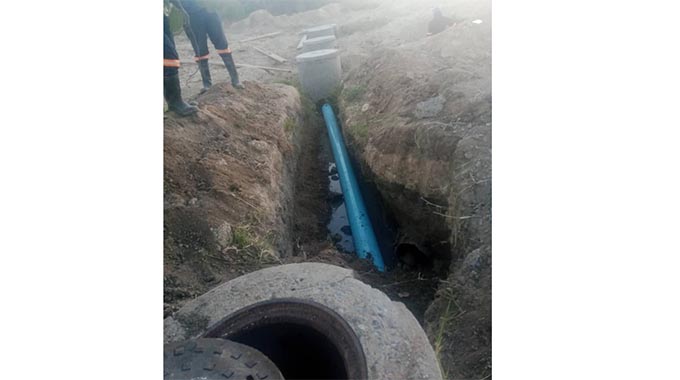
Conrad Mupesa Mash West Bureau
Eight boarding schools in Mashonaland West have taken advantage of a scheme by the Rural Electrification Agency to commission biogas digesters to supply gas for cooking and heating water.
Solar panels can be used cost-effectively for lighting, but the power demands of heating and cooking would require a huge solar array, so where there are sources of organic waste that can fuel a biogas plant, this is the cost effective option.
Such plants are also environmentally-friendly and biogas is counted as a green fuel.
Zimbabwe is party to the United Nations Framework Convention on Climate Change (UNFCCC) since 1992 which aims to stabilise greenhouse gas (GHG) concentrations in the atmosphere at a level that would prevent dangerous man-made interference with the climate system.
In a bid to have secure energy and cut their energy bill, the schools engaged the Rural Electrification Agency (REA) to set up the plants.
Biogas is an environmentally-friendly and cheap renewable energy source produced by the breakdown of organic matter such as food scraps and animal waste.
REA’s Mashonaland West manager Engineer Last Taguma Sauramba recently said eight boarding schools had their plants installed and commissioned.
The digester make use of waste from piggeries and human waste.
“We have eight boarding schools that had their biogas digesters commissioned so far. These include, Sandringham, Moleli, Presbyterian and Msengezi High Schools in Chegutu district. In Hurungwe, we have Chikangwe High School and Sanyati Baptist in Sanyati district. The plants are used for cooking and heating chicken runs,” he said.
The other school that embraced the initiative is the century-old Kutama Boys High School in Zvimba district.
“Most of the plants are 50 cubic metres in size except Sandringham’s which is the largest at 120 cubic metres. And apart from Msengezi, Moleli and Presbyterian High Schools that use human waste, the rest make use of piggery waste,” he added.
The schools relied on firewood for energy as the national grid electricity proved unreliable. The use of firewood for energy throughout the country, has exacerbated deforestation although in theory, so long as woodlots are continually planted, firewood can be a green energy source. But Zimbabwe as a whole is chopping down more trees than it plants. According to Forestry Commission of Zimbabwe, the nation is recording an average annual deforestation rate of 1,41 percent which amounts to 330 000 hectares.
Provincial education director, Mr Gabriel Mhuma pressed schools in Mashonaland West to reduce their utility bills, while at the same time saving their environment.
“Our schools should be alive to the fact that we are leaving under a period of environmental crisis and, it is our duty to practice what we teach for a sustainable future and environment.
“We are also encouraging our schools to embrace clean energy that is cheap which, in turn, lessens the burden on the parents,” he said. He challenged schools to also invest in solar energy as well as biogas.
Engineer Sauramba said at least three projects in Makonde and Hurungwe districts are lined up this year.
Individuals mostly farmers across the province have also registered their interests to set up biogas digesters.



 Online Reporter