Chronicle Editor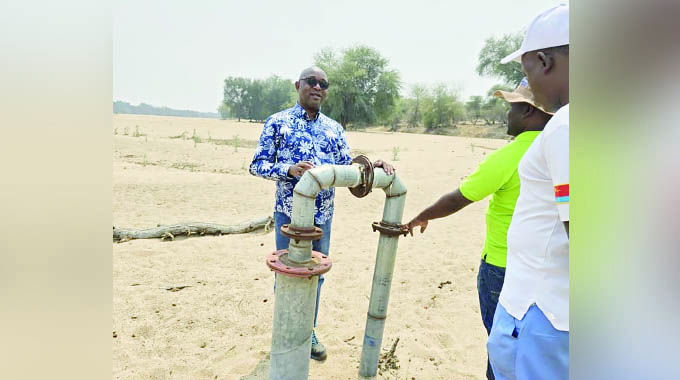
Sukulwenkosi Dube-Matutu, [email protected]
PLANS are underway for the development of an 800-kilometre pastures greenbelt at the confluence of Tuli and Shashe rivers in Gwanda, Matabeleland South province, with a water reservoir established along the river situated at the Zimbabwe-Botswana borderline.
Once complete, the project is expected to help address water and pasture scarcity problems in the area as well as illegal movement of cattle between Botswana and Zimbabwe.
Two pumps have been installed at the confluence of Tuli and Shashe rivers, which will pump water further inland. More pumps will be installed along the river, which stretches for 800km. The water will be pumped inland for pasture development, irrigation, domestic use and for livestock.
As part of efforts to develop the agricultural sector and ensure food and nutrition security, Government is working on fully utilising water bodies in the country to support animals and people, as well as harnessing and harvesting underground water.
In an interview during a visit to the project site recently, Deputy Minister of Lands, Agriculture, Fisheries, Water and Rural Development, Cde Davis Marapira said the river has great potential to address pasture and water shortages in the province and beyond.
“I have seen good potential for harnessing and harvesting water along this river. The pump, which has been installed is a 10-metre horse power. We can drill about 10 of these in a day along this belt of 800km. My focus is to drive water up to 100km inland. We can install a number of solar panels along the river inland to draw water to irrigate pastures.

“This area is seriously affected by drought year in, year out. We can create a greenbelt for pastures for our animals. In addition, we can use flat land to grow other crops besides pastures and fodder. We have to utilise these God-made rivers. My ministry through Zinwa and the Department of Irrigation will work on establishing these pastures. We can use this water to irrigate large tracts of land,” he said.
The establishment of the greenbelt is expected to be transformative, reducing the need for cattle to cross into Botswana in search of pastures.
Cde Marapira said the water harvested at the river will not only benefit Gwanda but the entire Matabeleland South province and some parts of Masvingo and Midlands province.
The Government last year established a water reservoir in Patana area in Ward 24 in Gwanda along the Shashe River, in a bid to control cattle movement between Botswana and Zimbabwe.
The project will now see an 800km pastures greenbelt being established while 14 other reservoirs will be set up along the Shashe River from Beitbridge to Plumtree. Under the project, water will be pumped from the river further inland so that farmers can have water for their animals. Water troughs will be connected to water tanks for animals to drink.
Farmers along the border line have been driving their animals to Botswana in search of pastures and drinking water. This illegal movement of animals has been identified as one of the major causes of the spread of transboundary diseases and cattle rustling.
“We have mounted solar panels at the Shashe-Tuli confluence to pump water further inland so that we reduce the number of animals that cross into Botswana in search of water.
“We have mounted two 18 000-litre water tanks. These will be drawing water from the river. We will put water troughs down the mountain and allow gravity to push water down to the troughs for animals to drink,” said Matabeleland South provincial veterinary officer, Dr Enat Mdlongwa.
The intervention is part of strategies by the Government to develop the livestock sector and grow the national herd. Official data from the Ministry of Lands, Agriculture, Fisheries, Water and Rural Development indicate that Zimbabwe’s national herd in 2021 stood at 5,5 million.
Following the launch of the Livestock Growth Plan in 2020, the Government targets a national herd of six million by 2025. In a recent development, the Government launched the livestock drought mitigation programme as part of efforts to mitigate the impact of drought on the country’s livestock sector.
The programme will see drought mitigation centres being established in all 1 620 rural wards in the country. The centres will house solar-powered boreholes, nutrition gardens, livestock feeding troughs, livestock water troughs, supplementary feeding troughs and livestock sales centres.
The Government, working with its partners, has intensified the hay baling programme. The hay will be moved from provinces, which have grass to provinces that need hay. Government through Agritex has also intensified silage-making training in communities to ensure access to affordable and nutritious feed. — @DubeMatutu



 Online Reporter