daniel chigunwe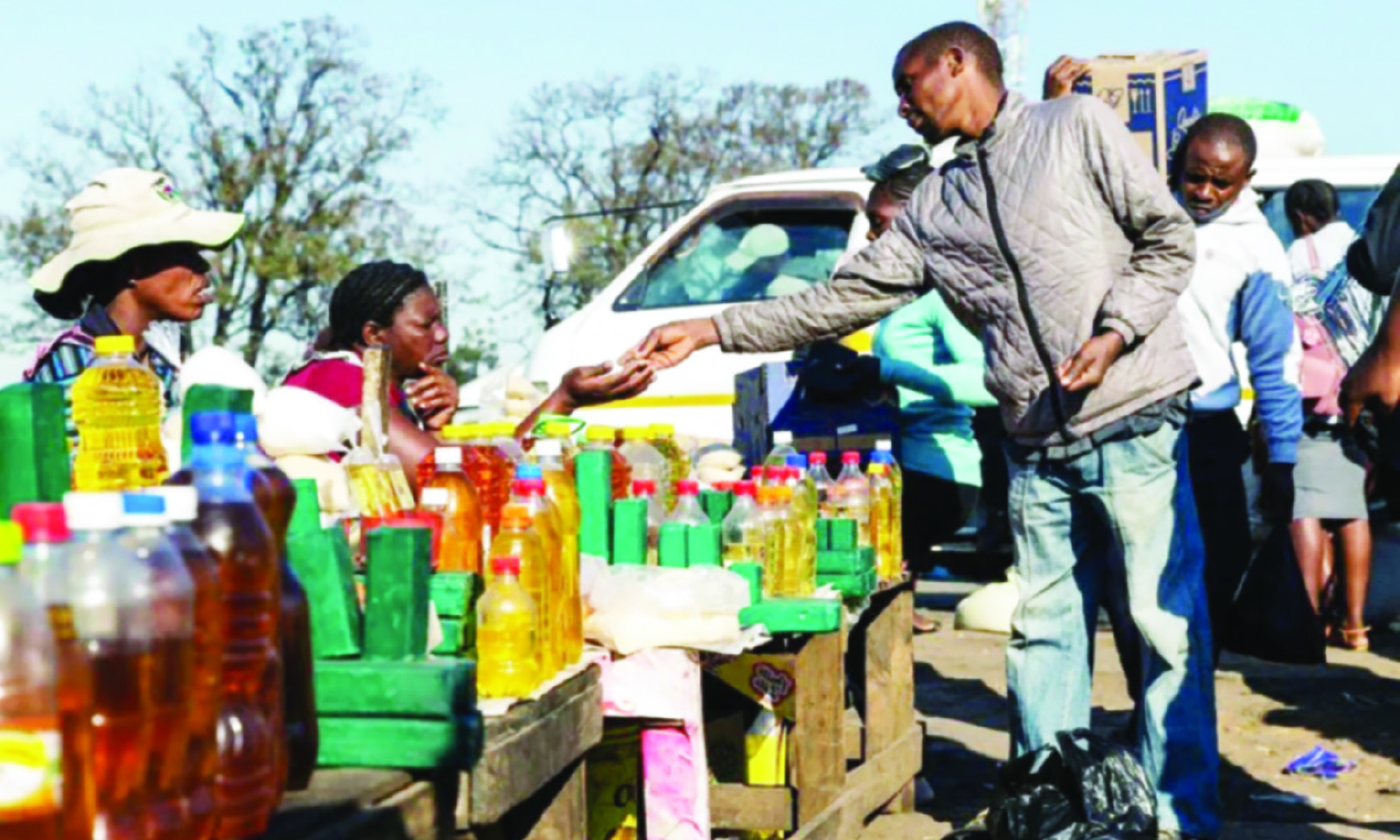
Nick Mangwana
Government Up Close
Zimbabwe is facing a pressing issue that requires attention and collective action.
There has been a proliferation of informal vendors selling their wares everywhere, from street corners to outside supermarkets.
In some cases, they interfere with the traffic flow at junctions or partially close streets.
This has become a ubiquitous sight. While it is understandable that people need to earn a living, the current state of affairs is unsustainable and detrimental to the country’s economy.
On one hand, it is essential to acknowledge the resilience and resourcefulness of these vendors.
Many are trying to make ends meet in a challenging sanctions-affected economic environment. However, the informal nature of their operations poses significant problems.
Firstly, lack of taxation means that Government is missing out on much-needed revenue.
This revenue could be used to fund essential public services, such as healthcare, education, and infrastructure development.
By not contributing to the tax base, informal vendors are inadvertently not playing their role in the development of this country.
Someone has to fund our development, and ideally it is the taxpayer, not NGOs, and certainly not foreign governments. Nyika inovakwa nevene vayo.
A formalised sector has the potential to make a substantial contribution to Zimbabwe’s tax base, thereby funding essential public services that benefit the broader population. When informal vendors and businesses are brought into the formal sector, they become obligated to pay taxes, licenses, and other statutory fees.
By expanding the tax base, Government can reduce its reliance on a narrow range of taxpayers, promote economic inclusivity, and allocate resources more effectively to address the country’s socio-economic challenges.
This was the reasoning behind the introduction of the Intermediate Money Transfer Tax (IMTT) in 2018. It appears most of the informal traders have moved to the use of the US dollar as a mono-currency therefore circumventing the system.
Secondly, most of the goods being sold at these informal, if not illegal outlets, are smuggled.
The sale of smuggled goods undermines Zimbabwe’s efforts to promote local industry and protect its citizens from substandard products.
The influx of cheap, imported goods can stifle domestic production, leading to job losses and economic stagnation.
Thirdly, there is the problem of the sale of counterfeit goods which poses a significant risk to public health and safety.
Fake products, such as medicines, cosmetics, and electrical goods, can be hazardous and even life-threatening.
Lack of quality control and regulation in the informal sector means that consumers are often unaware of the dangers they face.
Lastly, the presence of informal vendors outside supermarkets and hardware stores creates an uneven playing field.
Formal businesses, which invest in infrastructure, pay taxes, create employment and adhere to regulations, are placed at a disadvantage.
This can lead to a decline in formal sector activity, further exacerbating the country’s economic challenges.
So, what is the solution? It is not about eliminating vendors altogether, but rather about formalising their operations, providing them with designated spaces to sell their wares and supporting their businesses to grow.
The recent fire that damaged Mbare Musika market presented Government with a serendipitous opportunity to revamp the infrastructure and establish a more organised and regulated market system.
As Government embarks on rebuilding and upgrading the market facilities, it has made it a core intention of its plan to prioritise enforcing compliance with the laws of the land among vendors. This includes adhering to health and safety regulations, paying taxes, and utilising Point of Sale machines (POS) that enable the fiscalisation and tracking of sales.
By implementing these measures, Government intends to create a more formalised and efficient market system that benefits both vendors and consumers.
A formalised market can play a significant role in reducing income inequality and promoting economic inclusivity in Zimbabwe.
Informal vendors, who are often marginalised and excluded from formal economic opportunities, can benefit from access to formal markets, training, and financial services.
This can enable them to increase their earnings, improve their livelihoods, and break the cycle of poverty. Moreover, formalisation can also help to reduce the informal sector’s vulnerability to exploitation, corruption, and instability.
By creating a more level playing field, a formalised market can empower informal vendors, particularly women and youth, to participate more meaningfully in the economy, thereby reducing income inequality and promoting economic inclusivity.
Government’s efforts to revamp Mbare market and establish a more organised and regulated market system are not isolated to this one location.
Rather, it is envisioned as a project that will be replicated across different parts of Harare city and the whole country. The ultimate goal is to create a network of thriving and sustainable markets that provide easy access to goods and services for citizens, regardless of their location.
In Harare, for instance, this means that residents of Hatcliffe or other suburbs will no longer have to travel long distances to access goods in Mbare, but will instead be able to find similar products and services closer home, in a devolved and more convenient manner.
By decentralising market access and promoting local economic development, Government aims to foster a more inclusive and equitable economy that benefits all citizens.
The establishment of designated market spaces and regulations can play a crucial role in safeguarding consumer welfare by ensuring that products are safe and meet minimum quality standards.
When vendors operate in a formalised environment, they are more likely to be held accountable for the quality of their goods.
Regulations can be put in place to enforce standards for product labelling, packaging, and safety, thereby reducing the risk of counterfeit or substandard products being sold to unsuspecting consumers.
Moreover, designated market spaces can provide a platform for regular inspections and monitoring, enabling authorities to swiftly identify and address any quality control issues.
By protecting consumers from unscrupulous vendors and subpar products, designated market spaces and regulations can help to build trust and confidence in the market, ultimately promoting a more vibrant and sustainable economy.
The proliferation of informal vendors in undesignated areas of the city detracts from the aesthetic appeal of Zimbabwe’s urban landscapes.
The current situation, where vendors set up shop on sidewalks, traffic lights, roadways, and other public spaces, contributes to a sense of disorder and chaos.
In contrast, designated formal markets offer a tidy and organised environment that enhances the visual appeal of a city. By consolidating vendors into designated areas, the city can reclaim its public spaces, reduce clutter, and project a more positive image to residents and visitors alike.
This, in turn, can help to boost civic pride, foster a sense of community, and create a more welcoming atmosphere for businesses, tourists, and investors.
In line with Government’s thrust to improve the ease of doing business, a concerted effort is being made by Government, local authorities, and relevant agencies to simplify the registration processes for informal vendors to formalise.
This initiative aims to streamline the procedures, reducing the complexity and bureaucratic hurdles that have long hindered the formalisation of informal businesses.
By making it easier for informal vendors to register their businesses and obtain necessary licenses, Government seeks to create a more enabling environment for entrepreneurship to flourish, thereby promoting economic growth, job creation, and poverty reduction.
As Government works to formalise the informal sector, a valuable opportunity arises for trainers and capacity-building experts to step in and provide essential skills training to informal vendors.
This support can encompass critical areas such as business management, marketing, and quality control, empowering vendors to enhance their products and services, and better compete in the formal market.
By equipping informal vendors with these skills, trainers can play a pivotal role in helping them to transition smoothly into the formal sector, increase their earnings, and contribute more meaningfully to the country’s economic development.
Learning from others is a valuable strategy for achieving success, as it allows us to tap into the experiences, insights, and best practices of those who have navigated similar challenges.
In the context of formalising informal markets, there are several countries that offer valuable lessons and inspiration. One notable example is Ethiopia, which has made significant strides in formalising its informal sector.
Ethiopia’s efforts to formalise its informal markets have been highly successful, with that country’s informal sector contributing significantly to its economic growth.
The government there has implemented a range of initiatives, including the establishment of dedicated markets, training programmes, and access to finance schemes.
As a result, Ethiopia’s economy has experienced rapid growth, with the country becoming one of the fastest-growing economies in Africa. By learning from Ethiopia and other countries’ experiences, Zimbabwe can similarly reap the benefits of formalising its informal sector.
There is a prevailing paradox in Zimbabwe, where individuals often demand modern infrastructure, efficient services, and a high standard of living, yet simultaneously express aversion towards taxation.
This mindset neglects the fundamental reality that taxation is the lifeblood of any functioning economy, providing the necessary revenue for governments to fund essential public services and infrastructure development.
Therefore, there is a pressing need to raise awareness among Zimbabweans that taxation is not a punitive measure, but rather a civic responsibility and a vital component of nation-building.
By fostering a culture of tax compliance and appreciation, citizens can better understand the direct correlation between their tax contributions and the quality of services they receive.
While the informal vendor sector is a symptom of Zimbabwe’s economic challenges, it is essential to address the underlying issues.
By formalising the sector and providing designated spaces for vendors to sell their wares, Zimbabwe can promote economic growth and reduce inequality. It is time for Zimbabwe to revitalise its economy and create a more inclusive, formalised, and prosperous future for all its citizens.
Nick Mangwana is the Permanent Secretary for Information, Publicity and Broadcasting Services



 Online Reporter