Online Reporter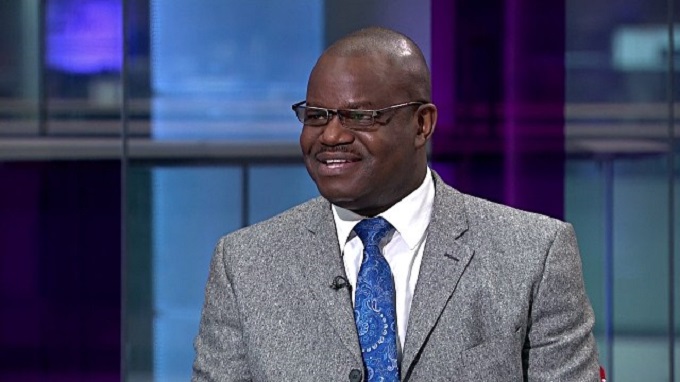
Ndavaningi Nick Mangwana
Dear Cde Reason,
I read your piece with the attention it deserves. You are a serious thinker and your rebuttal is not the work of a polemicist but of a comrade who cares deeply about the meaning of our liberation. For that, I thank you.
Let me say upfront: we agree on far more than we disagree on. We both reject the qualified franchise. We both honour the sacrifice of those who fought so that every adult, regardless of education or wealth, could vote. And we both believe that the people must have ultimate say over who governs them.
Where we differ is on a narrower but important question: Does the specific slogan “One Man, One Vote” carry within it a fixed constitutional blueprint for how a head of state must be elected?
I argue that it does not. You argue that, by 2026, it effectively does. Let me explain why I think the historical record supports my reading—without for a moment dismissing the legitimate concerns you raise.
On the Executive Presidency and 1987-1990: You are not wrong but you are projecting
You correctly note that in 1987, when Zimbabwe created an Executive Presidency, the change was deferred until 1990, and Robert Mugabe had to go to the people for a direct mandate. You then ask: Why did he have to go to the people? Your answer: because power had become concentrated in one office, so the vote followed the power.
That is a fair description of what happened. But here is where we part ways: description is not prescription. Just because something was done in 1990 does not mean it is the only possible democratic expression of “One Man, One Vote.”
The liberation generation did not fight for a specific constitutional mechanism. They fought for consent of the governed—free from racial or property qualifications. Whether that consent is expressed through a direct presidential election or through a parliamentary system where MPs elect the executive is a matter of constitutional design, not liberation theology.
You accuse me of “reverse engineering.” But with respect, Cde Reason, is it not also reverse engineering to take a 1990 constitutional amendment and read it backwards into the 1970s as if the comrades in the bush were chanting for a directly elected executive president? They were not.
They were chanting for a vote. Full stop.
On the distinction of Head of State and Head of Government: We actually agree
You spend time reminding me that Smith and Muzorewa were Heads of Government, not Heads of State. I accept that. I made that distinction in my original piece. You also note that Canaan Banana was Head of State while Mugabe was Prime Minister. Again, correct.
But here is the point you do not address: if the liberation struggle was so fundamentally about directly electing the chief executive, why did the Lancaster House Constitution not provide for that?
Think about it, Cde. In 1980, we had a Prime Minister (Mugabe) and a ceremonial President (Banana). Neither was directly elected by the national popular vote as a single executive candidate. Cde Mugabe became Prime Minister because his party won a parliamentary majority. That was the system the liberation movements agreed to.
Are you saying that the generation that fought and bled—including the very high-ranking women we both admire—somehow forgot to demand direct presidential elections? Or are you saying that they understood, as I argue, that “One Man, One Vote” meant universal adult suffrage for parliamentary representation, not a fixed model for selecting every office?
On the claim that I want to preserve the logic of an unjust system
This is where I must gently push back, Cde. You write that my argument effectively says: “Because white Rhodesians did not directly elect Ian Smith, Zimbabweans do not need to directly elect their President.” That, is not my argument. That is a caricature of my argument.
My argument is simpler: The slogan “One Man, One Vote” emerged in response to a specific evil—the qualified franchise. That evil has been defeated. The slogan did not come with a constitutional annexure mandating direct presidential elections for all time.
We can debate whether an Executive Presidency should be directly elected. That is a legitimate debate. But we should not pretend that the liberation armies died so that we could have a 1990-style presidential election. They died so that no one could tell a black person “you cannot vote because you lack property or a certificate.”
The real question for 2026
You end your piece with a powerful question: Who chooses the person with ultimate executive power? The people? Or a political class?
I answer: the people, always. But “the people” can express their will through different democratic mechanisms. A parliamentary system where MPs elect a President who then governs with Cabinet accountability is not a betrayal of democracy. It is a different model of democracy—one used successfully in Germany, India and many other stable democracies.
The question we should be debating, Cde, is not whether the people rule. They must. The question is which institutional arrangements best serve stability, accountability and representation in Zimbabwe in 2026 and beyond.
That is a debate about constitutional design. It is not a debate about who really understands the liberation struggle.
In closing: A comradely hand
You are a respected voice, Cde Reason. Your passion for direct accountability is genuine and I do not dismiss it. But I would ask you to consider this: when we treat a particular model of presidential election as the only legitimate heir to “One Man, One Vote,” we do two things.
First, we freeze the liberation struggle in time, refusing to allow new generations to adapt its principles to new circumstances. Second, we risk turning a slogan into a straitjacket—forcing every constitutional conversation through a 1990 lens that the comrades in the 1970s never anticipated.
We fought for the right to govern ourselves. That includes the right to design our own institutions, debate them openly, and change them when they no longer serve the people. That is not betrayal. That is fidelity to the spirit of liberation.
With respect and comradely regards,
Ndavaningi Nick Mangwana.
Mr Mangwana is the Permanent Secretary for Information, Publicity and Broadcasting Services.