Online Reporter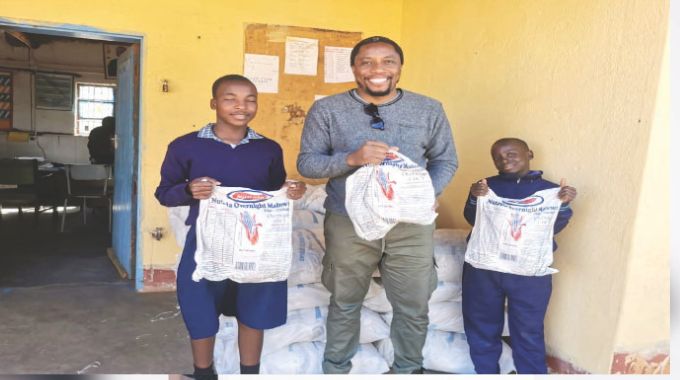
Chronicle Writer
THE midday sun hangs high over the dusty grounds of Domboshava Primary School as pupils stream onto the playground for their lunch break.
In their hands are small plastic cups filled with creamy mahewu. They drink it slowly, savouring every sip of the sweet, nourishing beverage that has become an important part of their school day.
For many of these children, it is not simply a midday refreshment — it is the meal that carries them through the rest of the afternoon.
For nearly 10 000 learners across Bikita District, that humble cup of mahewu means far more than nutrition. It is a lifeline, a source of comfort and a reminder that someone cares about their wellbeing and future.
What started in 2022 as a modest supplementary feeding initiative for about 5 000 learners has grown into a far-reaching programme that is changing lives across the district.
Bikita Minerals, the mining company that has been part of the community for decades, recently reaffirmed its commitment to local development by distributing 14 000 kilogrammes of mahewu to 17 primary schools during the second term of 2026.
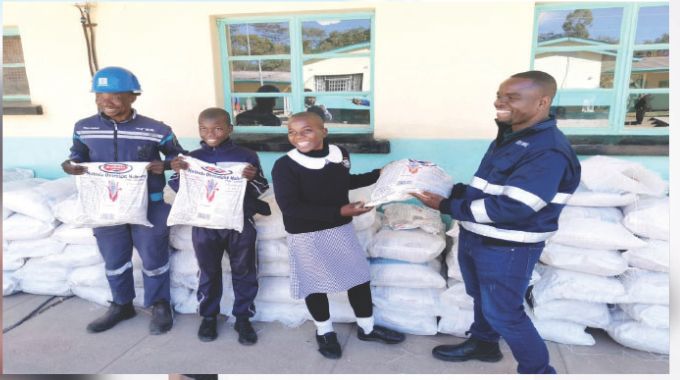
This year, the programme expanded further with the inclusion of Hozvi Primary School, bringing support to even more vulnerable children.
For many learners, the programme has become a dependable source of nourishment in a world where daily meals cannot always be taken for granted.
Few people have witnessed the impact more closely than Bikita Minerals Primary School headmaster, Tsikirai Mudekunye.
Watching learners finish their lunchtime cups before running off to play, he reflects on how much has changed since the programme began.
“Before this initiative, many of our children would come to school on empty stomachs,” he says, his gaze sweeping across the cheerful faces.
“They would sit in class, but their minds were elsewhere, thinking about food, about hunger. Now, I see them smile. I see them engage. I see them hope. That hope is priceless.”
Bikita Minerals public relations officer, Tinomuda Chakanyuka, described the programme as a reflection of the company’s commitment to sustainable community development.
“The mahewu distribution initiative stands as a testament to Bikita Minerals’ philosophy of sustainable community investment, focusing on the foundational pillars of health and education to foster long-term development,” Chakanyuka said.
According to Chakanyuka, feedback from schools has consistently pointed to the programme’s positive impact, including better attendance, improved nutrition and increased energy levels among learners. It has also provided much-needed support to children from disadvantaged backgrounds.
The benefits, however, extend well beyond the lunch break.
Teachers have reported noticeable improvements in classroom participation and concentration, with learners showing greater enthusiasm for their studies. Children who once struggled to stay focused are now taking a more active role in lessons, while absenteeism has also declined.
“When you feed a child’s stomach at lunchtime, you feed their mind for the rest of the day. I’ve seen learners who were previously withdrawn and lethargic become active contributors in class. The change is nothing short of miraculous,” Mudekunye said.
For parents and guardians, the programme has eased some of the daily pressures of providing for their families, particularly during difficult economic times.
Ward 12 Councillor Brighton Mushekwa, who has followed the initiative since it was introduced, believes its impact can be felt across entire communities.
“This initiative is making a tangible difference in our communities,” he says, his voice firm with conviction.
“We are grateful for the company’s consistency and willingness to partner with communities in addressing real needs that affect learners every day. This isn’t just about mahewu. It’s about dignity. It’s about showing our children that they matter,” Mushekwa added.
For Bikita Minerals, the initiative forms part of a wider vision that places people at the centre of development.
“At Bikita Minerals, we believe that our responsibility extends beyond mining,” Chakanyuka said.
“We are part of this community, and the well-being of this community is inextricably linked to our success.”
Beyond the mahewu programme, the company has invested in a range of corporate social responsibility initiatives covering education, health, infrastructure development and environmental stewardship. It has also indicated that it intends to continue supporting and strengthening the programme in the years ahead.
As Zimbabwe continues to pursue inclusive and sustainable development, partnerships between the private sector, Government and local communities are increasingly proving their value. In Bikita, a simple cup of mahewu served during lunchtime demonstrates how a relatively small intervention can make a lasting difference when delivered consistently and with purpose.
Across the district’s schools, laughter and play continue to echo through the grounds as pupils finish their drinks and return to their games. The cups may soon be empty, but the impact remains.
For thousands of learners, Bikita Minerals’ support represents far more than corporate social responsibility. It is an investment in healthier children, stronger communities and better educational outcomes. It is a reminder that no child should be left behind.
And perhaps most importantly, it shows that lasting change does not always begin with grand gestures. Sometimes, it starts with something as simple as a cup of mahewu shared at the right time.