

 admin
admin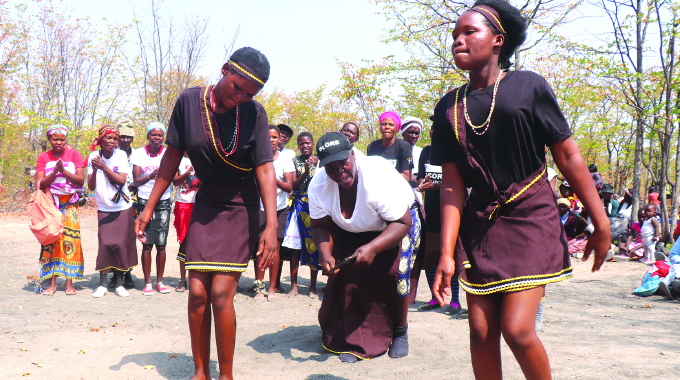
Nqobile Tshili, Bulawayo Bureau
THE San community, a group of indigenous people in Zimbabwe, is facing a critical threat to their identity and culture with the looming extinction of their language, Tjwao.
With a population of over 2 500, only 15 individuals can still speak Tjwao, raising fears that the language may disappear forever.
One of those fluent speakers is Sphekiwe Sibanda, an elderly woman whose age is unknown due to the community’s lack of documentation. At last Friday’s Ibhoro Festival in Tsholotsho, held to revitalise their culture, Ms Sibanda addressed the attendees in Tjwao. However, the crowd was unable to understand her, and Ndlovu, the director of the Tsoro-o-otso San Development Trust, had to translate.
The Tsoro-o-otso San Development Trust plays a crucial role in safeguarding the San community’s heritage and ensuring that Tjwao continues to be spoken for generations to come.
The community’s inability to comprehend Tjwao amplifies the urgent need for preservation efforts. As Ms Sibanda’s generation ages, the knowledge of the language risks being lost.
“Let me tell you what I was saying. I’m not an Ndebele, neither am I a Kalanga. I’m speaking my mother language, the language of our ancestors, and no one can claim that I don’t understand it,” said Ms Sibanda.
As the discussion continued, Ms Sibanda responded to questions from community members about traditional San practices. She described the cultural dances they performed and the tools they used, providing valuable insights into their rich heritage.
In the crowd, some individuals could be heard reminiscing about these past customs, their voices filled with a sense of nostalgia and longing. Their murmured conversations highlighted the importance of preserving these traditions for future generations.
“You know our parents used to speak the language; now I can only pick one or two things they are saying.”
Mr Ndlovu said that despite collecting data from some of the elderly to ensure the language was preserved, there was lack of interest in it from the general community.
“At the moment, we have up to 2 500 San community members. But only 15 can still speak the language fluently. It’s a population that is dying, and the unfortunate thing is that the younger generation does not seem interested in learning the language.
“I have worked with some of the elderly who have since passed on in preserving the language through documentation. But at the moment, even those elderly who know the language want incentives to ensure we can tap into their knowledge, and sometimes, we don’t have the resources to do so,” said Mr Ndlovu.
He said that as the language faced extinction, efforts have been made to mainstream it in the education sector, but the learners were uninterested in learning it. Mr Ndlovu said the community had also lost part of their identity as they now use Ndebele surnames.
“Their original surnames were lost when they were moved from Hwange National Park. Now they are using Ndebele surnames,” said Ndlovu.
Not all cultural ties were lost, as San still practice some of their traditional ceremonies, including the Ibhoro festival. While most communities conduct festivals in homesteads or closed buildings, the Ibhoro festival was held in a bushy area close to Gariya Dam. The dam is situated within the borders of Hwange National Park, and elephant waste was seen all over the place. To ensure the community fully enjoyed the festival, an elephant was killed for feasting.
Irene Maphosa (67) was called to demonstrate what happened during the Ibhoro festival. As she was explaining, Ms Maphosa became spirit-possessed and invited anyone who was not feeling well to come forward, with three individuals going to her.
She picked one of the individuals before asking her to sit down, and from there, she was supposed to perform the “ukulumela” initiation, a healing process that involves being bitten by the healer. Ibhoro is performed by traditional healers, but the process is said to be dangerous and can be fatal if not performed well.
Ms Maphosa would constantly make eye contact with Chief Goledema, who would shake his head in disapproval of her performing the Ibhoro. She had to abandon the healing session, and when interviewed about the process, Ms Maphosa had no knowledge of what had happened during the demonstration period.
“Ibhoro is done at night, not during the day. Today it was just for us to demonstrate a part of our culture to the outside world. Ibhoro was done when someone had fallen ill. We dance it in a respectful and cultural way. It’s not only men who would dance during this festival; even women would participate in it. We would be guided by itora (an ancestor) in healing others,” she said.
Ms Maphosa said it was important to preserve traditional cultures while claiming that western medicines did not seem to work for her.
“Even if you want to extract blood from me, you won’t get my blood. You can try and cut me. I have never been immunised, but we have our traditional methods that are efficient and effective. Only if we can be allowed to help others without being discriminated against. Also, in the past, the only disease that was there was gonorrhoea, and we were able to treat it using traditional ways. Some of these diseases that are there were not there,” said Maphosa.
Chief Goledema, appointed last year as part of the Second Republic’s affirmative action to promote inclusive development among the San, explained that conducting a healing session could even kill the healer.
“That is why I was discouraging her from going on with the actual performance of the exercise. But what we are doing is that we want to revive our culture. Due to modernity and the movement of people, our children seem to be losing our culture and traditions. So we started this programme, and we want to continue doing it on a yearly basis.”
He commended the Second Republic for reaching out to the San community, saying the Government’s efforts promote inclusive development.
“We now have a chief; we are able to conduct this festival working with Government agencies and the powers that it has given us. As a chief, I’m able to speak to Government officials to advance the community agenda, and our voices can easily reach the President. There are also efforts to revive our language,” said Chief Goledema.


 Peter Tanyanyiwa
 Online Reporter