Online Reporter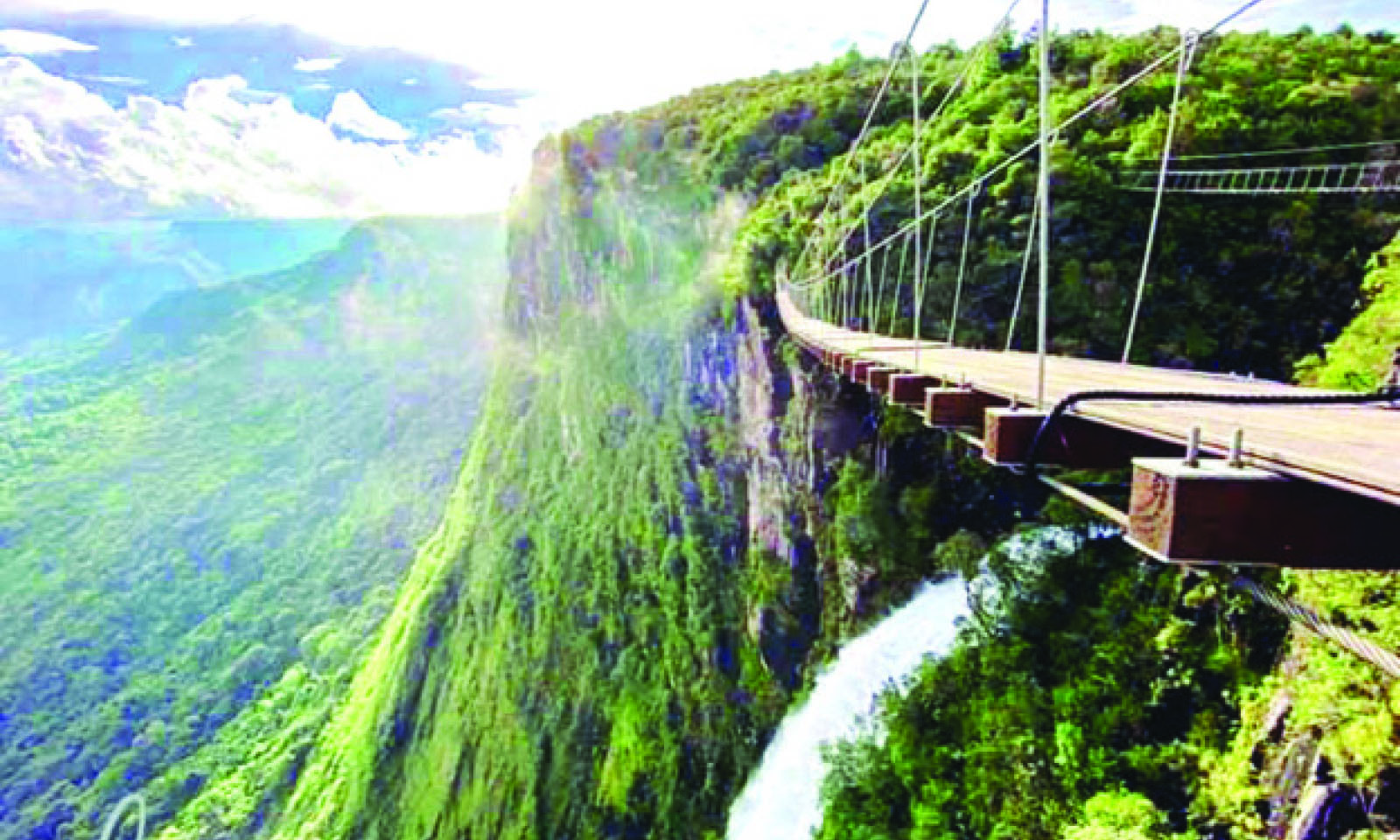
Emmanuel Kafe
Check Point Desk
As the sun stretches over the skyline of Mutare, the country’s third largest city, the Eastern Highlands yawn into life.
From its cloud-kissed mountain peaks to the echoing silence of ancient stone monuments, Manicaland is a province that breathes beauty, and it is now stepping proudly into the national spotlight.
With the Sanganai/Hlanganani World Tourism Expo set to launch in a matter of days, this eastern jewel of Zimbabwe is more than ready.
New luxury trains and freshly inaugurated domestic flights are now linking Harare and Mutare with ease, placing this once-distant paradise within arm’s reach.
But what awaits visitors is not just convenient travel, it is a journey into the extraordinary.
The beauty of the Eastern Highlands
It begins with the ascent, leaving the dusty plains and climbing into a landscape that seems borrowed from folklore.
Rolling hills dissolve into blue-green folds. Mist hangs like silk scarves over pine-covered ridges. Stillness settles over the earth as one enters the Eastern Highlands. The land feels enchanted. And perhaps it is.
This is not the Zimbabwe many people picture. Here, time slackens. The air is cooler and cleaner.
On a quiet morning, the call of the turaco might be the only sound carried across the Vumba Mountains. Nature is not background here; it is the main act.
Skywalks and majestic falls
In the heart of Nyanga, Mutarazi Falls unfolds in one uninterrupted plunge, the highest waterfall in Zimbabwe and the second tallest in Africa.
But the real thrill is not just the view—it is walking above it.
A pair of narrow, steel-cable suspension bridges, known simply as the Skywalk, dangle daringly above the gorge. Beneath your feet, a 772-metre chasm swallows your breath. Around you, clouds brush the cliff face like whispered prayers. It is not for the faint-hearted.
But for those who dare, the reward is more than adrenaline. It is the overwhelming perspective, the reminder of how small we are, and how grand this world can be.
Nyanga also boasts the Nyangombe and Nyakupinga Falls, while Honde Valley offers the dramatic spectacle of Pungwe Falls.
In Chimanimani, visitors can marvel at the Bridal Veil Falls and the serene Tessa’s Pool.
The Vumba region is also home to majestic waterfalls, including Chinamata, Marindi, and Nyachowa Falls.
Manicaland’s little England
To the southeast of Mutare, the Vumba Mountains rise like silent sentinels.
The locals call them “Mountains of the Mist,” or “Little England” and for good reason.
On many mornings, the hills vanish into vapour, their secrets protected by a veil of fog.
Nestled among them is the serene Vumba Botanical Garden, a place of quiet reflection where exotic orchids and indigenous trees cohabitate like old friends.
Not far lies Leopard Rock Hotel, a structure of colonial grace, famed for its panoramic golf course and a fireplace that crackles through cold nights.
Here, life slows to the rhythm of birdsong and rustling leaves. The coffee tastes stronger. The silences stretch longer. And the sunsets? They are not seen. They are felt.
Inside Utopia House
In the bustling heart of Mutare sits a strange contradiction: Utopia House, a time shell surrounded by a modern city.
Once home to engineer and explorer Guy Somerset, the house was one of Mature’s first “modern” homes. Its rooms, carefully restored, still carry the scent of timber and old leather.
The garden is tended with the same care one might give to memory.
Step inside, and you are stepping into an era long gone, chandeliers, faded photographs and rusting gramophones whispering colonial-era jazz. It is a quiet place.
But beneath its stillness lies a loud reminder: history does not just live in books. Sometimes, it wears walls and walks in shadows.
The Ziwa National Monument
Far from the beaten path, where the wild creeps close and the trees whisper stories, lies the Ziwa National Monument.
Ancient terraced hillsides — built stone by stone without mortar — tell of an early civilisation that once called this land home. This is Manicaland’s Great Zimbabwe. Remnants of iron smelting furnaces and pottery shards speak of ingenuity. Rock paintings whisper of ritual. And scattered copper objects hint at trade routes that reached far beyond the hills.
It is a sacred place, a monument not just to people but to perseverance. Here, the soil holds memory.
The green valleys of Honde Valley
Winding down from the highlands, the land softens into the Honde Valley, a place so fertile and lush it feels like the earth is smiling.
Tea estates roll into one another like emerald waves. Waterfalls spill like secrets down rock faces. Birds — hundreds of species — dart like living brushstrokes. This is not a valley. It is a canvas. And if you listen closely, you will hear more than birdsong. You will hear the rhythm of life lived in harmony with nature — farmers calling across rows of banana trees and children laughing by riverbanks.
Mutare Museum
Back in the city, the Mutare Museum stands as one of Zimbabwe’s oldest museums.
Within its echoing halls lie vintage vehicles that once chugged across dusty paths, ox-drawn carts, rusted locomotives, and collections of prehistoric tools. But this is more than a collection of things. It is a collection of journeys — each artifact a thread in the province’s story.
Beside it, the National Gallery’s Mutare branch gives voice to Zimbabwean art, showcasing everything from contemporary sculpture to traditional crafts. It is here the past meets the present.
Heal at Troutbeck, World’s View
There are places we go to be impressed — and places we go to be healed. Troutbeck is the latter.
This sleepy village, nestled in the hills of Nyanga, offers trout fishing, bracing air and still waters that reflect more than the sky.
And then there is World’s View, where one can stand on the edge of the escarpment and watch the horizon roll away into forever. It’s not just the view that changes you. It’s the silence.
The stillness. The feeling of standing on the roof of a continent, breathing sky.
Trains and flights reimagine the journey
As Zimbabwe pushes to rejuvenate domestic tourism, accessibility has become part of the experience.
A luxurious new passenger train now links Harare and Mutare, offering velvet-lined compartments, spacious carriages, and panoramic views of the countryside.
More than travel, it is a return to the golden age of the railway.
For those with less time to spare, Air Zimbabwe’s new domestic flight route lands in Mutare in under 40 minutes, making weekend getaways not just possible, but irresistible.
Fares have been deliberately kept affordable as the government leans into tourism as a pillar of the national economy.
And as the tourism expo prepares to unveil its exhibitions, Manicaland is no longer waiting in the wings.
It is stepping onto the main stage not with neon lights or fanfare, but with its natural wonders, cultural treasures and gentle sense of welcome.
This is not a place you simply visit. It is a place that lingers with you long after you have left.
Mutare gears up for historic Sanganai/Hlanganani Expo
Permanent Secretary for Manicaland Provincial Affairs and Devolution, Mr Abiot Maronge, said the province is ready to deliver a world-class event.
Mutare is set to host the global showcase for the first time starting next Wednesday.
“We are very much prepared for the Expo. We are as good as ready, and we are happy with the progress made so far.
“Flights will start on September 6, just before the Expo kicks off. The airport is ready to take planes, which means visitors can land closer to the event and spend more time enjoying what the Eastern Highlands has to offer,” he said.
A major boost for the Expo is the upgrading and activation of Grand Reef Airport, which will ease access into Mutare.
Air Zimbabwe has announced daily return flights between Harare and Mutare from September 6 to 14 to support the event.
Mr Maronge added that infrastructure works were underway to ensure smooth traffic flow.
He also confirmed refurbishment works at key tourism sites, including Hot Springs Resort, which will have its first phase completed before the Expo.