


 tawandamusarurwa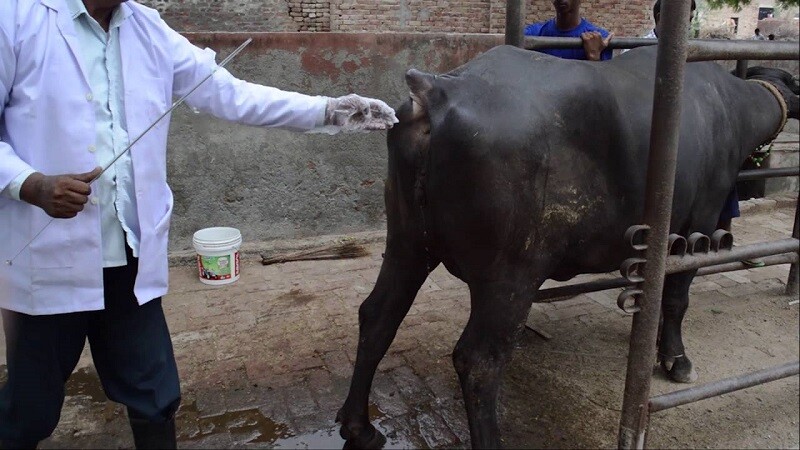
Word From The Market
Tinotenda Mudhebha
IN a bid to improve the national herd and genetic quality of livestock, especially cattle, the Government is leveraging on technology and innovation.
Artificial insemination is one of the various interventions that has been adopted to ramp up production in the livestock sub-sector as enshrined in the Livestock Recovery and Growth Plan.
In essence — the plan, which seeks to address challenges constraining livestock production, productivity and profitability — is aimed at attaining a US$2 billion livestock economy by 2025.
Last year, the Government launched an artificial insemination programme targeting smallholder farmers to improve their herd quality.
Currently, the country has two bull semen centres — in Mazowe and at Chinhoyi University of Technology.
Preparations to establish another one at the Matopo Research Institute are at an advanced stage.
Artificial insemination is the process of collecting sperm cells from a male animal and manually depositing them into the reproductive tract of a female.
In Zimbabwe, this process is usually used in dairy cattle.
Benefits
There are several advantages of artificial insemination over natural mating or servicing. There is no need of maintaining a breeding bull for a herd. As such, you save on the cost of maintaining a breeding bull.
Artificial insemination prevents the spread of diseases and sterility due to genital diseases, among them contagious abortion and vibriosis.
During natural breeding, a male will deposit much more semen than is theoretically needed to produce a pregnancy.
In addition, natural breeding is physically stressful. Obviously, these factors limit the number of natural mating a male can have.
However, collected semen can be diluted and extended to create hundreds of doses from a single ejaculation.
Also, semen can be easily transported, allowing multiple females in different locations to be inseminated simultaneously.
It can also be stored for long periods, which means males can produce offspring long after their natural reproductive lives end.
Because artificial insemination allows males to produce more offspring, fewer males are needed. Therefore, one can choose only the few best males for use as parents, increasing the selection intensity.
However, artificial insemination has some potential drawbacks that must be considered.
First, it can be more laborious.
Male animals instinctively detect the females that are in the right status for conception. With artificial insemination, the detection work is the responsibility of the farmer. Poor detection results in decreased rates of fertility.
Also, increasing the number of offspring per male has selective advantages only if the best males can be accurately determined. Otherwise, this process only decreases the genetic variability in a population.
Increasing the number of offspring per male always reduces the gene pool.
The benefits of more intense selection must be balanced against the negative effects of decreased variation.
Artificial insemination allows genetic banking as semen collected can be taken to other areas for insemination.
The procedure makes it possible to mate two animals with great differences in size without injury to either of the animals.
If it is done properly, it helps in maintaining accurate breeding records.
It also increases the rate of conception.
However, artificial insemination requires well-trained people and special equipment. This means it requires knowledge of the structure and function of reproduction on the part of the operator.
Improper cleaning of instruments and sanitary conditions may lead to lower fertility. The procedure requires more time than natural services.
If the bull is not properly tested, chances of spreading genital diseases are increased.
During the preparation stage, the farmer should make sure all animals that are to be inseminated are not pregnant.
This is done to avoid abortions if the artificial insemination technician is to use heat-inducing drugs.
The animals should be on heat. Heat detection should, therefore, be carried out.
The farm should have a proper cattle race for good handling of animals and safety to the technician during the whole process.
Heat detection techniques
The following are some of the signs that an animal is on heat.
· It will be in an excited state
· It will be restless and nervous
· It reduces the intake of feed
· It will lick and smell others
· It will try to mount other animals
· It usually stands still when another animal tries to mount it. This period is known as standing heat. It is six to 14 hours long.
· Frequent urination will be observed
· Clear mucous discharge from the vulva will be seen
· Swelling of the vulva
· The tail will be in a raised position
Success in insemination timing is dependent on a good heat detection programme. However, this might be difficult in large herds. A successful heat detection programme and subsequent good timing of insemination can pay dividends in increasing reproductive efficiency.
For the whole artificial insemination process to be successful, it depends on pregnancy diagnosis, semen collection, handling, storage and insemination.
There is no doubt that that this initiative is a step in the right direction to achieve some of the goals of the National Development Strategy 1, which include increasing the national herd and subsequently achieving national food and nutrition security.
*Tinotenda Mudhebha is an animal scientist. Word from the Market is a column produced by the Agricultural Marketing Authority to promote market-driven production. Feedback: [email protected] or WhatsApp/Call +263781706212



 Bongani Ndlovu
 Online Reporter