Chronicle Editor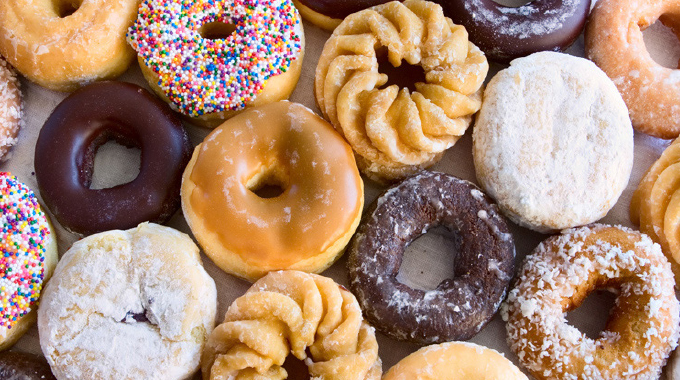
So Sweet
RING donuts, with their iconic shape and delightful taste, have a rich history that spans centuries and continents. This beloved treat, known for its sweet, fried dough and central hole, has evolved through various cultures and innovations to become a staple of modern confectionery.
The precise origins of the ring donut are somewhat shrouded in mystery, but the most widely accepted story credits an American named Hanson Gregory.

In 1847, Gregory, a ship captain, is said to have invented the ring-shaped donut by punching a hole in the centre of a dough ball. This innovation was not merely for aesthetics; it solved the problem of the dough’s centre remaining uncooked while the outside was perfectly fried.
Before Gregory’s invention, similar fried dough treats existed in various cultures. The Dutch, for example, brought “olykoeks” or “oily cakes” to America, which were essentially balls of sweet dough fried in fat. These early versions often had issues with uneven cooking, which Gregory’s hole-in-the-middle solution effectively addressed.
The concept of fried dough is ancient, with early versions appearing in Greek, Roman, and even Chinese cuisines. The Greeks enjoyed “scriblita,” a type of fried dough, while the Chinese have “youtiao,” a savoury fried dough stick often eaten for breakfast. These early forms laid the groundwork for the donut’s evolution.
In America, donuts became particularly popular during World War I, when women volunteers, known as “Doughnut Lassies,” served them to soldiers on the front lines in France. This gesture provided a comforting taste of home and cemented the donut’s place in American culture.
The term “donut” is a contraction of “doughnut,” which itself is a combination of “dough” and “nut.” The “nut” part likely refers to the original shape of the dough balls, which resembled nuts. Celebrated on the first Friday of June each year, National Doughnut Day was established in 1938 by the Salvation Army to honour the “Doughnut Lassies” who served donuts to soldiers during World War I.
The first automated doughnut machine was invented in 1920 by Adolph Levitt, a Russian immigrant in New York City. His invention revolutionised the production of donuts, making them more accessible and popular. While the classic ring donut is perhaps the most recognisable, there are countless varieties worldwide. From filled donuts to crullers and beignets, each culture has its unique take on this versatile treat.
In many cultures, donuts are more than just a snack. They often hold symbolic meanings and are associated with celebrations and traditions. For example, in Jewish culture, jelly-filled donuts called “sufganiyot” are a traditional treat during Hanukkah.



 Online Reporter