

 Chronicle Editor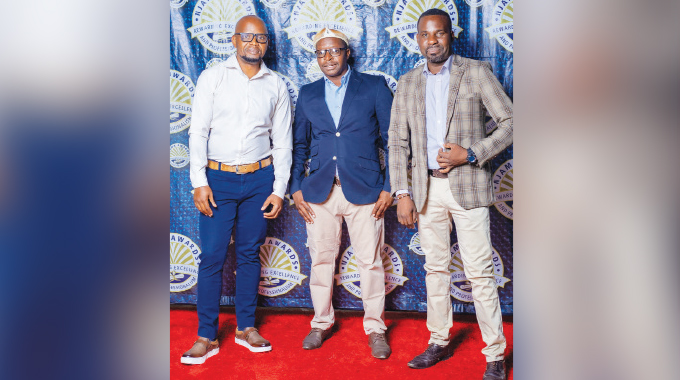
Chronicle Reporter
CHRONICLE journalists are basking in glory after securing several accolades at the annual National Journalism and Media Awards (Njama) held in Harare on Thursday, with the Zimpapers stable dominating the competition.
Journalists from across the media sector participated in the event, which rewards excellence in media coverage. Held under the theme: “Empowering Marginalised Voices: Navigating Gender Dynamics and Harnessing AI-Driven Journalism,” the awards ceremony aimed to reflect on the transformation of the country’s media landscape in light of technology-driven changes.
A total of 30 categories were up for grabs, with Zimpapers reporters taking first and second place in 18 entries.
Raymond Jaravaza won the Agriculture Journalist of the Year award for his outstanding story that demystified the perception that the Matabeleland region is not suitable for tobacco growing.

While most farmers are reeling from the effects of drought, 17 communal farmers in Marula, Mangwe, Matabeleland South, took a risk by opting to grow tobacco and received good dividends.
“This award is a product of the hard work that goes on behind the scenes from the stage when a reporter pitches a story idea until the final product is ready for publication. I would not have won this award without the invaluable support of my supervisors and editors who always encourage us to work hard and make a positive impact on the communities that we serve — our readers. The award is in tandem with the theme of the awards, where communities that were previously marginalised are taking part in mainstream economic activities,” said Jaravaza.
Mkhululi Ncube won the Gender and Social Inclusion Journalist of the Year award. His winning article unpacked the mainstreaming of women in traditional leadership positions, as a woman was named Chief Hikwa.
Ncube said his passion for inclusive development, as pronounced by the Government, drove him to write the award-winning story.
“From the adjudicators’ report, it was a tough category, and winning the award means we went the extra mile in the reportage of the story. While the story involved a woman assuming a chieftaincy, we employed multiple sourcing to show the strides that have been made in women empowerment and also the challenges of navigating a patriarchal society. It was a team effort, and I’m happy to have represented the stable well,” said Ncube.
He noted that it was his third consecutive win in the competition, proving that he is cementing his position as a journalist to reckon with in the country’s media landscape.

Nqobile Tshili won the Environmental Journalist of the Year award for his coverage of sand poaching activities fuelled by the booming construction of residential houses in Bulawayo.
“For most people, they just want to build a home for their families but are not so aware of the land degradation that results from illegal sand poaching activities. Communities on the outskirts of Bulawayo are feeling the impact of the land degradation, which is costing them their livelihoods,” said Tshili, reflecting on his winning article.
He was also named a runner-up in the Alternative Energy Journalist of the Year award.
Tshili, a multi-award winner, said it was a humbling experience to have his work recognised in a competition that brings together the best of Zimbabwean media.
“It’s an honour to win again. I would like to extend my thanks to my colleagues and supervisors who continue to sharpen me while also guiding me as I do my work. This is not a mean achievement, and it is encouraging me to aim even higher,” said Tshili.
Sukulwenkosi Dube-Matutu was a runner-up in two categories: Community Engagement and Rural Reporter of the Year Award and Gender-Based Violence Reporter of the Year Award.
Sikhulekelani Moyo was also a runner-up in the Business Reporter of the Year award.
She said she felt encouraged as it was her first time participating in the prestigious awards ceremony.
Gibson Mhaka was named the Anti-Corruption Journalist of the Year runner-up.


 Online Reporter