

 Online Reporter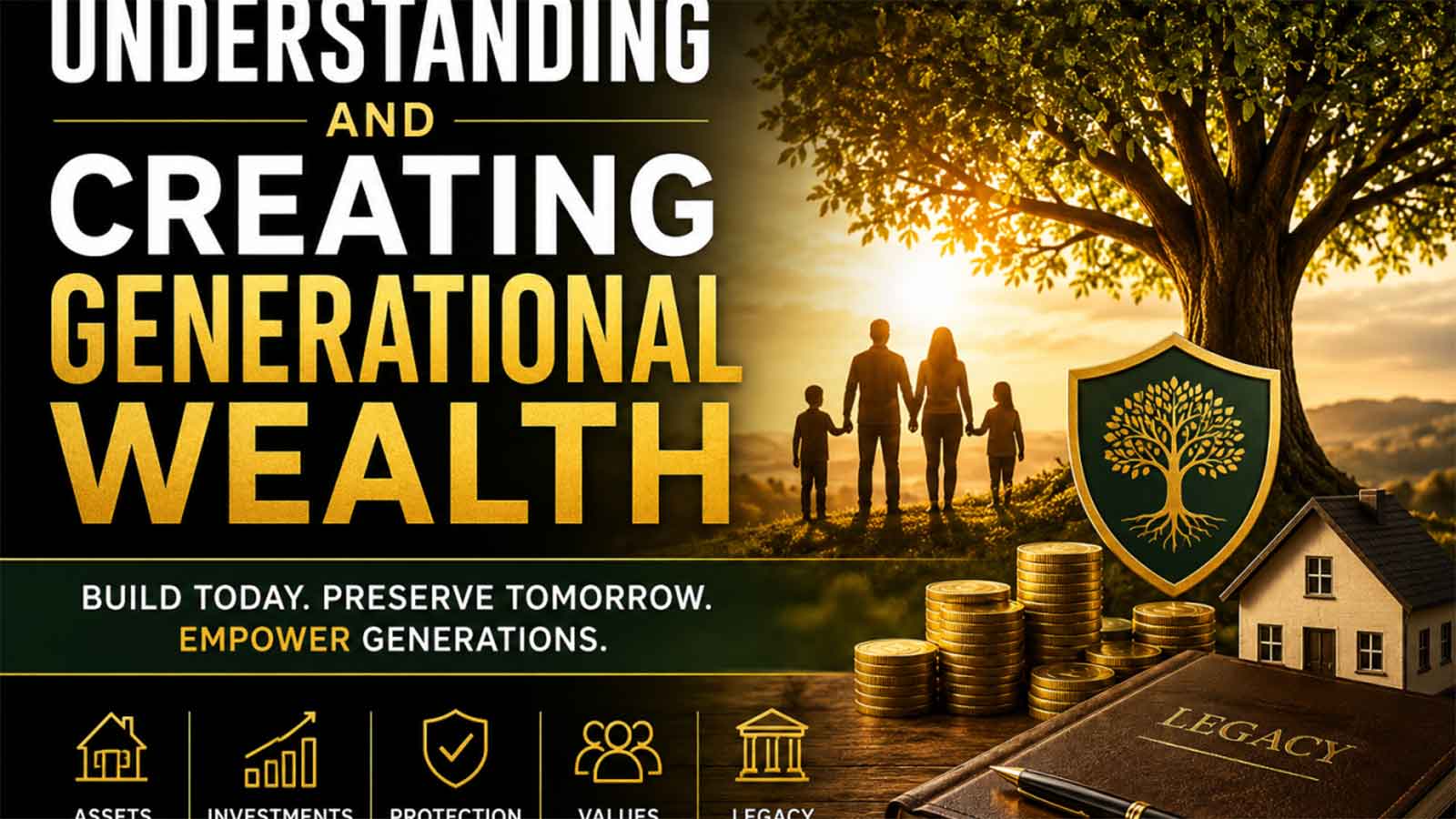
Dr Grace Musandirire
Building Generational Wealth
Many people spend their entire lives working hard to provide for their families, yet very few take the time to ask one important question: What will remain when I am gone?
Building generational wealth is not simply about accumulating money.
It is about creating a lasting legacy that empowers future generations to live with purpose, dignity and opportunity.
Generational wealth is built intentionally.
It is the process of transferring financial resources, knowledge, values, businesses, skills and opportunities from one generation to the next.
Families that understand this principle do not focus only on surviving today’s challenges. They prepare their children and grandchildren to thrive tomorrow.
Across Africa, many families are trapped in a cycle in which each generation starts from zero.
Parents work tirelessly to educate their children, but when they retire or pass on, there are no sustainable assets, businesses or investments left behind.
The next generation begins the struggle all over again. This pattern has continued for decades, but it does not have to define our future.
True wealth begins with a change in mindset. Before we build businesses, buy property or invest in shares, we must first believe that we are capable of creating wealth that outlives us. A legacy mindset encourages us to think beyond our own comfort and consider the future of those who will come after us.
Education remains one of the strongest foundations of generational wealth. However, education should go beyond obtaining academic qualifications. Our children must be taught financial literacy from an early age.
They should understand the value of saving, investing, budgeting, entrepreneurship and responsible borrowing. Financial education equips young people to become wealth creators rather than lifelong consumers.
Entrepreneurship is another powerful vehicle for creating generational wealth. A successful family business can provide employment, generate income and become an asset that grows over time. Unfortunately, many businesses collapse after the founder passes away because succession planning was never discussed.
Every business owner should deliberately prepare the next generation to understand the vision, values and operations of the enterprise. Legacy is protected through preparation.
Property ownership is equally important. Land and real estate often appreciate in value and provide long-term financial security.
Families that invest wisely in property create assets that can generate rental income, support business expansion or be passed on to future generations. Such investments become stepping stones that help children achieve greater success than their parents.
Building generational wealth also requires discipline. It is impossible to create lasting wealth without managing finances wisely.
Living beyond our means, accumulating unnecessary debt and spending to impress others can destroy opportunities that would have benefited future generations. Every financial decision should be guided by a long-term vision rather than short-term gratification.
One of the greatest gifts parents can leave their children is not simply money, but strong values. Integrity, hard work, resilience, faith, generosity and accountability are forms of wealth that cannot be stolen or diminished.
Families that intentionally pass down positive values often preserve their financial wealth because character becomes the foundation upon which prosperity is sustained.
Women have an increasingly significant role to play in building generational wealth. Across Zimbabwe and throughout Africa, women are leading successful businesses and investing in agriculture, hospitality, manufacturing and other sectors, while nurturing families and communities.
When women are financially empowered, entire households benefit. Children receive better education, nutrition, healthcare and opportunities for growth. Empowering women is therefore not only a matter of equality, but also an investment in future generations.
Building wealth should never be an individual journey. Families should openly discuss financial goals, inheritance planning, wills, trusts and succession.
Unfortunately, many people avoid these conversations until it is too late, often resulting in conflict and the loss of valuable assets. Open communication strengthens unity and protects the legacy that families work so hard to build.
Faith also plays an important role in wealth creation. Wealth should be viewed as a resource entrusted to us for responsible stewardship rather than personal consumption alone.
When we use our resources to uplift others, create employment, support education and strengthen communities, our legacy extends far beyond financial success.
Every family has the potential to rewrite its story. Whether you begin with a small business, a savings account, a piece of land or a commitment to educate your children, every step taken today contributes to tomorrow’s legacy.
Generational wealth is not reserved for the privileged. It is built through vision, consistency, discipline and a commitment to leave the next generation better equipped than the current one.
The greatest inheritance we can leave is not merely wealth stored in bank accounts, but empowered people who possess the knowledge, character, confidence and resources to continue building upon the foundation we have laid. That is the true meaning of legacy.
Profile
Dr Grace Musandirire is a businesswoman, entrepreneur and generational wealth advocate. She is the founder of the Anthill, Kopje Hill and Mount Nyangani Business Development Initiative, a platform that equips women entrepreneurs at different stages of business growth. She is the Managing Director of Graceland Waters Resort, the founder of Grabster Pvt Ltd and Mukaba Commodity Brokers, and a passionate speaker on entrepreneurship, leadership, family business succession and building generational wealth. She is committed to empowering families to create sustainable businesses and lasting legacies for future generations.


