admin
admin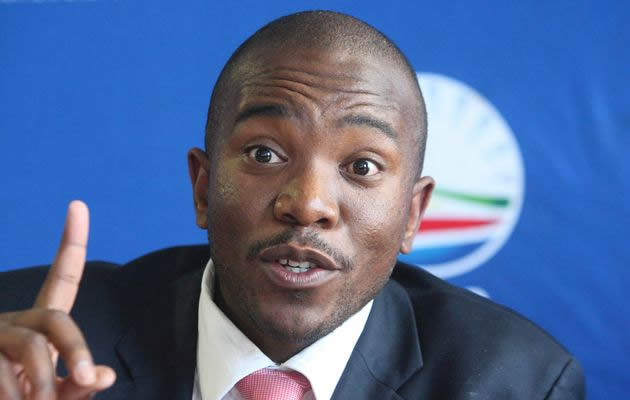
Natasha Marrian
DEMOCRATIC Alliance (DA) leader Mmusi Maimane is impressive — he is charismatic, attractive and comes across as a genuinely nice guy. Like the hero in a romantic comedy, he seems to be playing a part and playing it well. In politics, though, one’s track record where it matters — at the polls — is a more accurate testament to leadership ability. For instance, Helen Zille’s legacy as DA leader is growing the support of the party nationally. Part of Jacob Zuma’s legacy at the helm of the African National Congress (ANC) is the party’s huge growth in KwaZulu-Natal.
While the ANC and parties across the spectrum should be concerned about the prospect of the DA’s election machinery behind a black leader, it is worth reflecting on Maimane’s track record in last year’s polls, where he was the face of the party’s Gauteng campaign. His campaign cost the DA about R100 million, more than the national campaign of the Economic Freedom Fighters (EFF). The ANC suffered a big slide in support in Gauteng, while the DA grew considerably, to 30 percent, in the province and the EFF received 10 percent of the vote.
If one isolated Maimane’s home ground, Soweto, the DA was beaten by the EFF in most wards, in all except two, in fact — Dube, won by the Inkatha Freedom Party, and Eldorado Park, again won by the DA.
Even in Dobsonville, where Maimane was born, the EFF obtained 13.5 percent of the provincial vote and the DA obtained 9.3 percent. In Naledi, where Maimane campaigned with Zille, the EFF obtained 13.6 percent provincially and the DA only 5.8 percent. Naledi is among the voting districts in which the ANC dropped dramatically — from 88 percent provincially in 2009 to 77 percent last year.
While the DA increased from 1.9 percent in 2009 to 9.3 percent last year, it failed to replace the Congress of the People (COPE) as the official opposition. Rather, the EFF replaced COPE.
In Tladi, the EFF got 25 percent of the vote to the DA’s 7.2 percent. In Klipspruit, the DA obtained 6.9 percent of the vote to the EFF’s 17.6 percent and the ANC slipped from 84.5 percent to 72.1 percent.
It appears that the DA’s growth in Gauteng resulted from COPE’s decline, while the EFF largely ate into the ANC vote. It does not then follow that, led by a black candidate, the DA would necessarily fare better than the ANC. Even in the ANC, Gauteng had opposed Zuma’s second term as president and he was booed at key national events in the province vote in the province swung hugely in favour of the ANC.
The DA may have a shot in urban areas; by all accounts this is where its growth stemmed from.
A Maimane leadership of the DA should be and is a concern for the ANC in terms of its urban support, but the former has a long way to go to capture the grassroots or rural vote, even with a black leader, if last year’s election results are anything to go by.
The “protest” vote in Gauteng’s townships largely went to the EFF — due to unhappiness with the ANC in the province driven by e-tolls and perceptions of corruption. Still the ANC emerged with 53 percent of the vote in Gauteng and it remains the governing party, despite the deep unhappiness over its national leadership.
The DA’s challenge is not one of a black leader — that is superficial. The party’s challenge is to reflect the aspirations and desires of the majority of South Africans. Does it really? I don’t think it does. I find Maimane’s comment this week on a referendum on the death penalty as offensive as it was when it was raised by Zuma and EFF leader Julius Malema. Capital punishment offends the spirit of the Constitution, which embodies the hopes and desires of all those who sacrificed their lives for our freedom.
The DA’s response to an e-mail on misogyny in the party was found wanting when women in the party have been dealing with this problem way before the e-mail catapulted it into the public domain.
It also does not offer anything different from the ANC on the economy or on many other issues.
Where it should be lauded is its approach to governance. But the party’s focus remains on personalities, not governance.
I agree with Zille that change will come to politics in South Africa not through one party, but through a realignment of the country’s politics. It will come when parties put their fixations aside and put South AfricaA first. — bdlive.


 Online Reporter