Vusumuzi Dube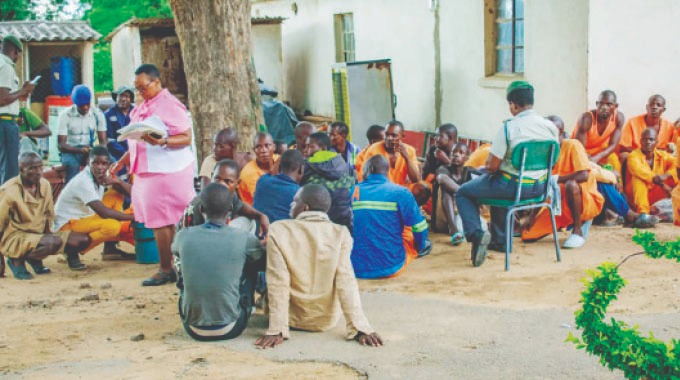
Ronald Mpofu, [email protected]
THERE was joy at Plumtree Prison on Monday as 43 inmates were released following the 2026 Presidential amnesty granted by the President and Cabinet through the Ministry of Justice, Legal and Parliamentary Affairs.
It was the sort of joy that begins quietly, like a breeze drifting across the dusty prison courtyard, before swelling into something almost tangible — a mixture of disbelief, relief and the fragile hope of second chances. Forty men and three women stepped through the gates, some with hesitant smiles, others with trembling hands, all of them blinking into the sunlight as though reacquainting themselves with a world they once knew but had begun to forget.
“Almost all the inmates released today are from Plumtree; they are local people and will be reaching their homes in no time,” said Acting Officer-in-Charge of Plumtree Prison, Sezwe Dube.
His voice carried the solemn pride of a man who had watched these individuals walk a difficult path — stumbling, learning, hardening, softening — and now finally taking those first steps back into the embrace of their communities. Around him, wardens stood observing the scenes with a mixture of duty and quiet satisfaction, as family members waited beyond the fence with wide smiles, waving hands and hopeful eyes.
Among the released inmates, the person travelling the farthest was going to Chipinge but insisted on travelling via Bulawayo to spend the night before proceeding. The decision, seemingly small, hinted at the symbolic weight of freedom — the luxury of choosing one’s route, one’s pace, one’s pause.
Perhaps he wanted to stretch the feeling of liberation, letting it soak into his bones before continuing home. Or perhaps Bulawayo held memories, loved ones, or simply the promise of one last night of transition before fully stepping back into the life he left behind.
One of the three women released, Sharon Nyathi (20), the youngest and longest serving, who was sentenced 33 months for theft in 2024, said she was very happy to be selected. She looked almost too young to have endured the harsh regimentation of prison life — her face carrying both the softness of youth and the subtle shadows of experience.
“During my prison term, I learnt how to plant trees and sew clothes. I’m willing to do a course in needle knitting to make a living,” she said.
Her words floated gently, carrying the earnestness of someone who understood the value of a skill acquired in confinement, the dignity of work, and the quiet determination to rebuild. If freedom is rebirth, Sharon seemed ready to step into her new life with her palms open and her spirit steady.
Another inmate, Thumani Moyo (36), who was sentenced for theft in 2024, expressed gratitude, thanking the President for the amnesty. He walked with the easy confidence of someone who had spent many sleepless nights dreaming of this moment, rehearsing what he would say, imagining how the world might receive him.
“I’m happy to be a free man. I’ve learnt a lot here, and my passion for music has grown. I’m ready to record my own music and make a living. I am a fully reformed man now,” he said.
His eyes lit up as he spoke, and for a moment it was easy to picture him in a small recording booth somewhere, headphones on, pouring stories of regret, resilience and redemption into a waiting microphone. For him, freedom was not just a release from confinement — it was the first note in a long awaited song.
As the newly freed men and women drifted out of the prison grounds, clutching small bundles of belongings, shaking hands with wardens who had become unlikely mentors, and stepping into the arms of those who had never stopped believing in their return, Plumtree Prison buzzed with an unusual tenderness.
Amnesty days carry their own kind of magic — a reminder that justice can be firm but mercy can be transformative, that mistakes do not have to be lifelong sentences, and that even behind high walls and barbed wire, growth can blossom quietly until the day it is finally allowed to unfold.


 Online Reporter