malvernmugadzikwa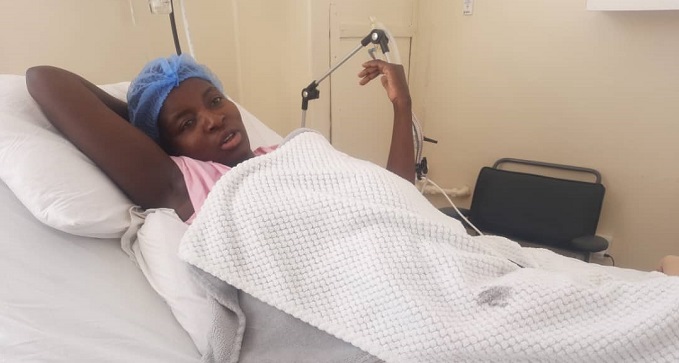
Fatima Bulla-Musakwa
Gender and Community Editor
THE newly opened Kangaroo Mother Care Unit at Parirenyatwa Group of Hospitals brings to life Dave Grohl’s words that “there is no love like a mother’s love”.
Here, mothers cradle their premature babies, mimicking the kangaroo’s pouch.
This offers a lifeline to the young ones.
Normal pregnancies culminate in babies being born at 40 weeks, weighing a healthy three kilogrammes.
But for the mothers in this unit, their babies’ journeys begin much earlier.
The babies, born before 37 weeks and often weighing less than half the average, begin their lives in a constant fight for survival.
Seconds after birth, defying the usual order, the baby’s umbilical cord is clamped.
It then finds its new home on its mother’s chest, where it gets special respiratory support.
The mother’s body temperature acts as a natural incubator.
This constant skin-to-skin contact, scientifically proven to be immensely beneficial, becomes a necessity for the baby’s survival.
For the mother, it is a test of love and resilience. The experience involves mothers sitting in the same position for hours with the baby perched on their chest.
The babies are fed at three-hour intervals for weeks until they gain enough strength to breathe on their own. They are only removed from the mother’s chest when she needs to eat, bathe or go through medical check-ups.
This constant care for the baby takes its toll on the mother. Their bodies ache, they suffer exhaustion and the sweltering temperatures in the unit test their limits.
Ms Patience Chinembiri (33) recently gave birth at 28 weeks to a baby weighing around 1kg.
The mother of three had a condition known as placenta previa, which caused consistent bleeding from 13 weeks of pregnancy.
During that time, she struggled to breathe, walk and eat. Now, after 10 days in the unit, her determination to ensure her child’s survival has kept her going.
“I have pain all over the body from sitting in one position for hours,” she told The Sunday Mail last week.
“But because I want my child to survive, I have to be strong. The temperatures here are so high that at one time I suffered nosebleed. But because the baby needs warmth to survive, I have to endure.”
Fear of the unknown from handling such a delicate life is eclipsed by the fierce protectiveness of a mother.
To add to her troubles, Ms Chinembiri grapples with the anxieties of separation from her older children left at home.
“It is difficult because I left my children alone,” she said.
“Their father at the time was away from home at work.”
But amidst the worry, a quiet determination burns, showing the unwavering bond between mother and child.
Fight for survival
Ms Shupikai Chari, a young mother from Chegutu, knows all too well the difficulties of fighting for survival.
At just 22, pregnancy became a desperate struggle. For five long months, she moved between hospitals, desperately seeking affordable care as the threat of losing her baby loomed large. Ms Chari eventually secured a bed after experiencing heavy bleeding.
Once she had been admitted, doctors delivered some difficult news.
The baby was too small, the amniotic sac protecting it had leaked and surgery was necessary. With a heavy heart, she consented to surgery.
However, fate had other plans.
Labour pains set in concurrently, culminating in the birth of a tiny baby — a 28-week-old baby weighing a mere 1 090 grammes.
Since arriving at the Kangaroo Mother Care Unit, Ms Chari has witnessed her baby’s strength first-hand.
The baby’s weight, initially just over 1 kilogram due to a recent illness, has begun to climb steadily, filling her with immense joy.
“What I am experiencing is tough,” she said.
“I wake up at 6am and also feed him at three-hour intervals.
“I am enduring so that my baby grows.
“The doctors are loving, so I have the courage to go through this.
“Maintaining the same posture for hours is painful, but I see other mothers who have babies who are smaller than mine and this gives me courage to stay strong.”
Terrifying
First-time mother Ms Rumbidzai Savaya faced the terrifying reality of unexpected bleeding that led to her baby’s premature birth at 33 weeks.
The sight of her tiny baby was overwhelming.
She had no idea how she would care for such a fragile life.
During the first days in the unit, she required assistance in properly positioning the baby on her chest, a process that solidified her understanding of a mother’s vital role.
“I was instructed to remind my baby to breathe, as premature babies can sometimes forget,” Ms Savaya explained.
“But the closeness is truly precious.
“Unlike the nursery, where breastfeeding meant leaving the baby behind, here we are inseparable.”
Ms Savaya’s voice radiates a newfound joy.
“Now, I sleep with my baby on my chest, or sit upright, as long as they remain skin-to-skin.”
The Kangaroo Mother Care Unit represents a true demonstration of the profound depths of a mother’s love.
It is a place where science merges with an instinct as old as time, creating a haven where mothers become incubators, protectors and nurturers.
Despite the physical challenges and emotional strain the mothers go through, they persevere.
Their love is a constant source of strength for their fragile babies.
What is a kangaroo mother care unit?
Kangaroo mother care (KMC) is a method of caring for premature or low-birth-weight babies.
A kangaroo mother care unit is a specialised hospital section dedicated to this practice. It allows mothers to provide constant skin-to-skin contact with their babies, mimicking the nurturing environment of a kangaroo pouch.
Benefits
KMC helps regulate the baby’s temperature, heart rate and breathing. It also promotes breastfeeding, weight gain and development.
Studies show a decrease in infections and hospital stays for babies receiving KMC.
The constant closeness between mother and baby fosters emotional connection and attachment.
Mothers also actively participate in their baby’s care, increasing confidence and reducing anxiety.
Environment
The rooms are kept at a higher temperature to maintain the baby’s warmth.
Mothers wear special clothing to allow for continuous skin-to-skin contact with their babies.
They receive training on breastfeeding, positioning and kangaroo care techniques.
Medical staff provide ongoing support and monitoring. — Wires



 Online Reporter